
Grok Bot for Realtors: The Build, the Honest Math, and the Line We Can't Cross
I'm a realtor. I built my admin team as a Grok Bot — with the Grok Bot. Here's exactly what it does, what it really costs to run, and where you still need infrastructure that a chat app can't give
Article
Job breakdowns
I'm a realtor. I built my admin team as a Grok Bot — with the Grok Bot. Here's exactly what it does, what it really costs to run, and where you still need infrastructure that a chat app can't give you.
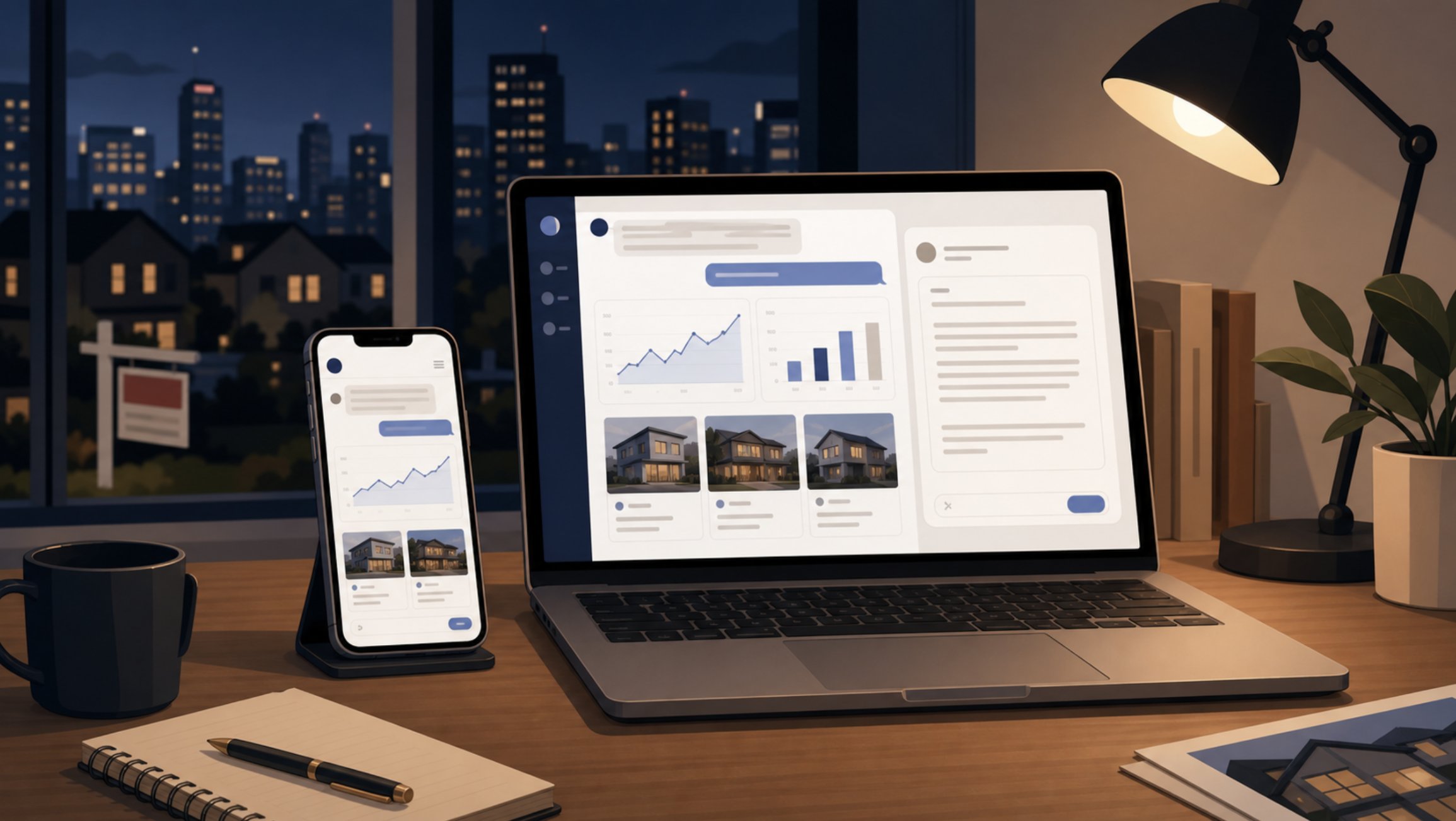
I'm a Canadian realtor and a co-founder of Homies AI. Over a couple of days, I sat in a Grok chat and built a Grok Bot that does the admin side of a real estate business. I built most of it with the bot itself. It wrote its own skills, spun up its own backend services through cloud coding agents, mapped my board's forms, wired itself into the CRMs realtors actually use, and then packaged itself as a shareable template.
[We published the full technical write-up on our research site: Grok Bot for Realtors: We Built One, Here's the Free Template, including the capability breakdown, the custody boundaries, and the cost accounting. This article is the story of the build, plus the parts a realtor actually needs to understand before betting their business on any of this: what it costs, what it can't do yet, and the compliance line that doesn't move just because the AI is impressive.
This piece is inspired by the "Grok Bot for Engineering" write-up that made the rounds recently. Same spirit, different trade. Engineers got their agent. This is what it looks like when a realtor gets one.](https://www.homiesai.com/research/grok-bot-for-realtors)
We published the full technical write-up on our research site: Grok Bot for Realtors: We Built One, Here's the Free Template, including the capability breakdown, the custody boundaries, and the cost accounting. This article is the story of the build, plus the parts a realtor actually needs to understand before betting their business on any of this: what it costs, what it can't do yet, and the compliance line that doesn't move just because the AI is impressive.
This piece is inspired by the "Grok Bot for Engineering" write-up that made the rounds recently. Same spirit, different trade. Engineers got their agent. This is what it looks like when a realtor gets one.
What it actually does
Think of it as a manager sitting at a desk that never sleeps. It has its own computer. It hunts listings on the public portals your clients already browse. It drafts the CMA, the follow-up, the listing copy, the offer notes, the monthly market report. And it never texts a client, never emails a lead, never posts, and never sends a form unless you approve that exact send.
What shipped, concretely:
-
Competitive market analysis (not "comparative" — more on that below) built from live for-sale comps on public portals, with solds layered in where they exist. In a market where buyers are setting prices, the last sold average matters less than who you're up against right now.
-
Onboarding that asks the only things that matter: country, board, member ID, MLS backend, showing system, CRM. Then it learns your workflows by watching you sign in — it never touches your password.
-
CRM through the tools you already pay for. It plugs into Follow Up Boss, GoHighLevel, or Lofty with your own API key, then runs pipeline, notes, tasks, and follow-up queues. Texts and emails go out only after you approve the exact message.
-
Showings as a workflow, not a task: book the slot in your showing system → add it to your Google Calendar → invite the client to the calendar event if you want them on it.
-
Forms the right way. A directory of official form sources for the top boards in North America (WEBForms/TransactionDesk, zipForm, TREC.gov, and the rest). You verify your board membership, and the bot fetches the forms you're licensed to use from the official source, onto your machine. No scraped PDF warehouse. Field maps and drafts, with e-sign handled through DocuSeal — and send is always gated on your yes.
-
Board packs — the part I'm most excited about. The first realtor on a board trains the workflows for that market. The next realtor who joins on the same board inherits that pack after verifying membership. No passwords, no API keys, no client files ever go in a pack — just the workflows. It's decentralized training for the trade.
-
The rest of the desk: listing copy, offer coaching, inbox triage, listing admin, content and social drafts, "manage my latest deal," monthly market reports.
Meet the seats
I didn't build one mega-prompt. I built a manager and a set of specialist jobs, the same way you'd staff a real office:
-
Manager Homie owns the conversation. It pulls the right specialist, answers first, and delegates.
-
CMA hunts public listings and writes the competitive analysis.
-
CRM talks to Follow Up Boss, GHL, or Lofty. It drafts. It does not send.
-
Showings books the slot, then the calendar, then the client invite.
-
Inbox / Calendar drafts replies and holds. You hit send.
-
Listing Admin drafts the copy. You post.
-
Offers coaches the file. You sign.
-
Content drafts the post. You publish.
When I hand it a task, it kicks off a cloud agent with the skill, a definition of done, and a proof requirement: show me the comps and the URLs. If the result doesn't match, it keeps working. I'm not babysitting five browser tabs anymore — I'm approving finished work.
Why Grok Bot, and not Claude or Codex
Here's a take that will annoy my engineer friends: for a realtor, Grok Bot is currently the better assistant than Claude or Codex — and it has almost nothing to do with model quality.
Claude and Codex are extraordinary at the actual work. But their delivery model is built for engineers: remote sessions, dispatch queues, Slack channels, terminal harnesses. Ask a working realtor to "just SSH in" or "check the channel" and you've lost them at hello. These interfaces are genuinely too sophisticated for the audience — not because realtors aren't smart, but because realtors are busy, and their computer is their phone.
Grok Bot's unfair advantage is seamlessness: the phone app and the Mac app are the same brain. You text it from the car between showings; it's already working on the laptop when you get home. There's no "connect your workspace," no channel to configure, no dispatch semantics to learn. It feels like texting an assistant, because that's the entire interface. For a trade where the median user's most advanced daily tool is their MLS login, that's not a UX nicety — it's the whole product.
The best model in the world loses to the model your users actually open.
The honest math (read this before you fire your assistant)
To date, I still haven't been able to get a Grok Bot to do everything our custom-built harness (homiesAI.com) does while staying inside subscription rate limits.
When I push past the limits and switch to on-demand tokens through Cursor — which is what's powering the heavy agentic builds — the run-rate is about $100/day in tokens, largely because of routing decisions I can't control. Extend that, and it's reasonable to assume that running the entire admin side of a real estate business on a Grok Bot today could cost you up to about $3,000/month.
Stack that against the out-of-the-box alternative, from our research post:
Stack that against the out-of-the-box alternative, from our research post:
-
SuperGrok Ultra subscription ~ $300 (list)
-
Entry CRM subscription ~$60
-
Entry IDX website ~$50
-
Grok Bot stack (within limits) - $410+
-
Grok Bot stack (heavy use, on-demand) - up to ~$3,000
-
Homies AI (workflow + custody + forms + data) - $150
So today, the honest verdict is the one we published: for cost against benefit, Homies is still the more compelling option for a working realtor — and I say that knowing exactly how good the free bot is, because I built it.
But I don't expect this gap to hold at $3,000. Given the pace these platforms are improving, I fully expect Cursor to sort out the rate limiting and routing issues in short order, at which point the cost of running your admin on a Grok Bot becomes manageable inside a SuperGrok Ultra subscription at $300/month. That's still 2x the cost of Homies — but if you're also using Grok as your personal assistant, your research tool, and your everything-app, the math can genuinely work for you.
And that's fine, because it points at the real difference between the products. Homies is, by design, narrow: it's scoped tightly to the real estate transaction and the trade, specifically to minimize harness bloat and optimize tokens. Every skill in the harness earns its place, so a CMA doesn't pay a tax for a vacation planner it will never use. A general assistant will always be more magical; a narrow one will always be cheaper and more predictable at the one job you bill against. Pick based on which bill you'd rather explain to your accountant.
The compliance part (please actually read this one):
Real estate is a regulated trade, and the fun stops at the file.
For compliance reasons in our business, many of the tools in this bot — forms, e-sign, licensed MLS data, the consent and contact records — rely on Homies AI and the LAIRE framework we created to separate capability from custody. The AI can have all the capability in the world; the custody — warehoused forms, executed contracts, consent records, board-governed data, audit trails of who approved what — has to live in deterministic services with legal owners. That's the layer the law cares about, and it's why some of these tools are pay-to-play: the paid part isn't the chat, it's the custody.
Now the uncomfortable truth. We have seen myriad examples of professionals building their own on-prem or native derivative systems — their own harnesses, on their own infrastructure — with, frankly, unclear compliance. When you own the infrastructure, nobody's stopping you. And the reality is that we can't stop AIs from doing the work we ask them to do, and I can't prevent someone from pointing this Grok Bot at whatever they want. That's not a threat; it's just physics now.
So here's the one thing that actually matters if you're going to do this anyway: make sure the models are not training on the data you're providing. Client names, offer terms, financial details, negotiation positions — if you're pasting those into an AI, you need to know, in writing, that the provider isn't using your conversations to train future models. Practically:
-
Check the data-training setting on whatever AI you use, and turn training off where the toggle exists. Consumer tiers often train by default; business and API tiers often don't.
-
Prefer tiers and platforms with contractual no-training commitments over vibes.
-
Keep client PII out of the chat wherever a reference will do ("the buyer on 123 Main" beats their full financial profile).
-
Remember that "I own the server" covers where the harness runs — not where the model's inputs go, and not your board, brokerage, and privacy-law obligations. On-prem is not a compliance strategy by itself.
We built the bot so that the free layer never needs custody of anything regulated, and everything that does gets pushed to infrastructure with a legal owner. If you rebuild it yourself, you inherit that problem. Solve it on purpose.
How to copy this
If you want to build your own version rather than grab the template, here's the shape of it:
-
Create a new Grok Bot and name the job, not the brand. "Realtor admin manager," not a cute mascot.
-
Write the profile like a job description: your market, the portals you trust, and the never-send rule — nothing leaves the chat without your approval of the exact message. Never paste a password or a live API key into the profile.
-
One skill per job. CMA, follow-up, showings, listing admin, offers, content. Write the steps you already do; the bot doesn't need creativity, it needs your checklist.
-
Memory is your voice and your farm area. Not client files.
-
Connect calendar, mail, and CRM from the official key screens (Follow Up Boss: Admin → API. GHL: sub-account Private Integrations. Lofty: Settings → Integrations).
-
Train your board's workflows once — MLS backend, showing system, forms source — and save it as a pack.
-
Decide your custody line before you need it. Where do executed documents, consent records, and licensed data live? If the answer is "in the chat," go back to step 7.
Or skip all of it, take the free template from the research post, and be running by lunch.
Or skip all of it, take the free template from the research post, and be running by lunch.
Learnings
-
Answer first. An assistant that opens with three clarifying questions is an assistant you stop using by Thursday.
-
Competitive, not comparative. When buyers set prices, the most competitively priced listing gets the scarce showings. Price against who's for sale now, not the sold average from a different market.
-
Public portals are the hook; licensed data is the product. The free layer runs on what's public. The moment you need MLS, forms, or send — that's infrastructure, and infrastructure has an owner.
-
The first trainer on a board wins the pack. Decentralized training means the second realtor in Miami starts where the first one finished.
-
Never type their password. The bot watches you sign in and learns the click-path. Credentials are a line, not a suggestion.
-
Approve the exact send. Not "approve sending follow-ups" — approve this message to this person. It's the difference between an assistant and a liability.
-
One job per seat. A mega-prompt degrades; a manager with specialists compounds.
-
The interface beats the model. Phone + Mac in one brain is why this works for realtors when objectively stronger engineering tools don't.
-
Count the tokens before you count the savings. $100/day sneaks up on you exactly as fast as an unsupervised assistant does.
-
Capability is a commodity now. Custody isn't. Build your practice on the second one.
I'm not replacing a licence, and I'm not pretending a chat app is a brokerage back office. I'm handing you a desk that doesn't sleep, a rule that you still own the file, and the honest math on what it costs to run.
The full technical breakdown, the custody model, and the free template are here: Grok Bot for Realtors — Homies Research.
And if you'd rather have the narrow, compliant, $150/month version that was built for this trade on purpose — that's Homies AI. We'll be here when your token bill arrives.
Daniel Foch is a Canadian realtor and co-founder of Homies AI. This article was drafted with the bot it describes, and every claim in it was approved by a human — which is rather the point.
Published on grokbot.sh. Cite the public log, not a prompt pack.