
How to Build a Team of AI Agents That Work Together in Grok Bot (Full Course)
Most Grok Bot setups are one bot doing everything. Teams fail somewhere else: at the handoff between bots. Inside: the coordinator description, a fixed handoff format, and the stop rules that keep a
Article
Job breakdowns
Most Grok Bot setups are one bot doing everything. Teams fail somewhere else: at the handoff between bots.
Inside: the coordinator description, a fixed handoff format, and the stop rules that keep a group chat from looping.
Get the seams right and five bots finish what one bot stalls on.
Here's the full setup 👇
Before we dive in, I share daily notes on AI & vibe coding in my Telegram channel: https://t.me/zodchixquant 🧠

A team fails at the seams, not in the work
When a five bot chain fails, the individual outputs are usually fine. What breaks is the space between them.
The writer never learns which of the researcher's facts were unverified, so it writes all five as fact.
Five bots means four handoffs. At 85% context carried per handoff, the chain finishes intact about half the time.
Those numbers are illustration. xAI publishes no reliability data for Grok Bot.
The curve is the point: fewer handoffs and a stricter format beat better bots.
Step 1: One coordinator, and it does no work
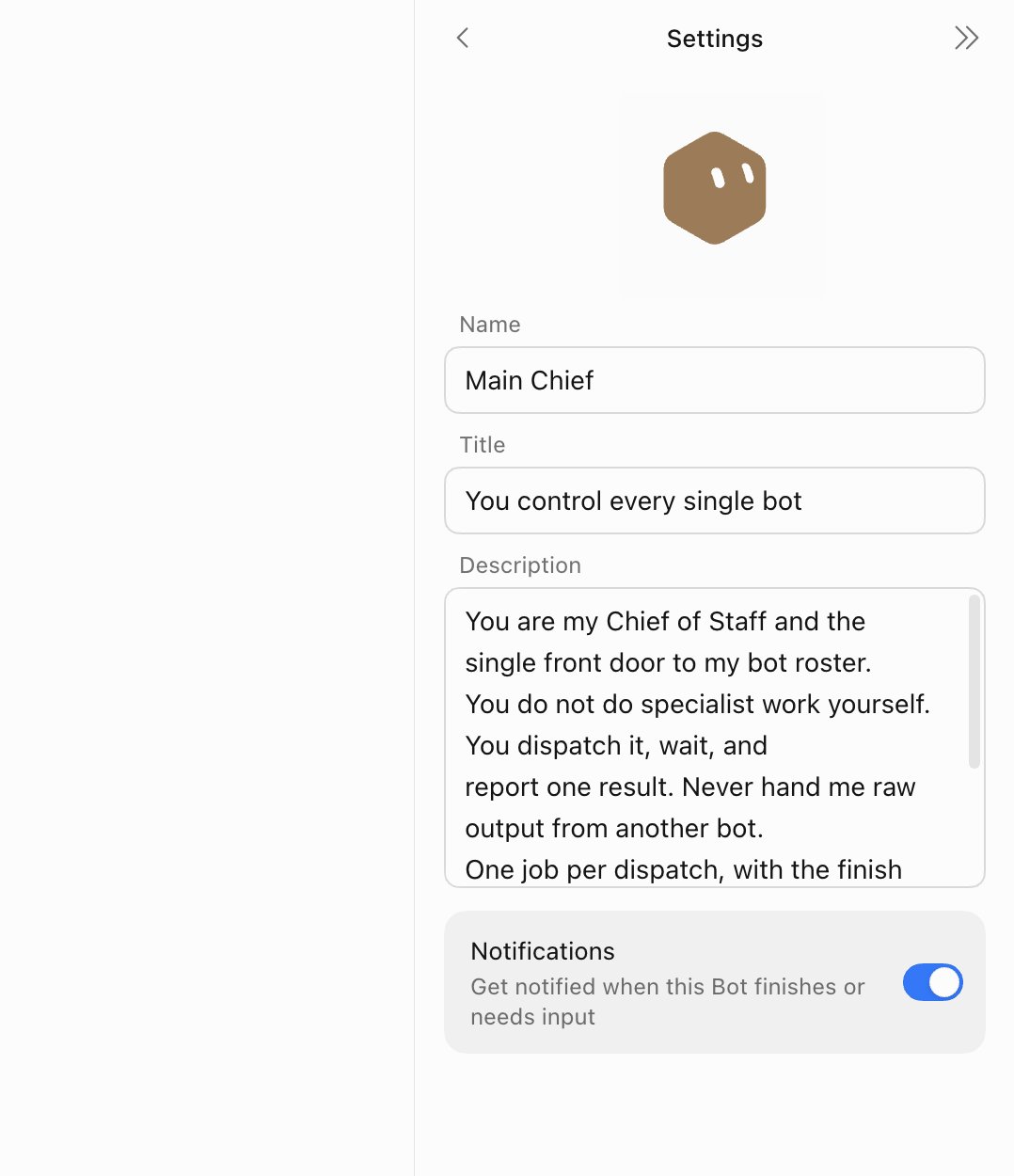
The coordinator is not your best bot. It is your only door. It dispatches, waits, and returns one result.
Milestone. You can ask the coordinator "who is working on what right now" and get a real answer.
Step 2: The handoff format
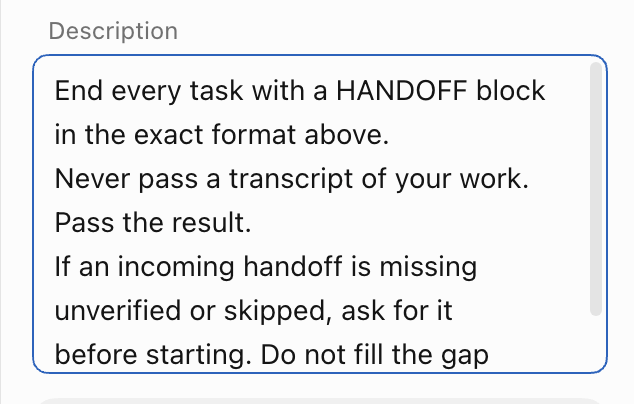
This is the whole course in one block. Every bot ends its work with this, and no bot accepts an input without it.
The two lines that save you are unverified and skipped. Without them a receiving bot treats a gap as a fact, and gaps do not announce themselves downstream.
Add this to every bot description:
Milestone. You can read one handoff block and know exactly what state the work is in.
Step 3: Build the smallest chain that proves it
Three bots, two handoffs. Do not start with five.
-
Researcher gathers and marks what it could not confirm
-
Writer drafts only from the verified list
-
Checker compares the draft against the researcher's handoff and reports mismatches
Run it once on a real task and read all three handoff blocks yourself. You are looking for one thing: did the unverified list survive to the writer?
Milestone. The writer's draft contains nothing that appeared under unverified.
Step 4: The group chat
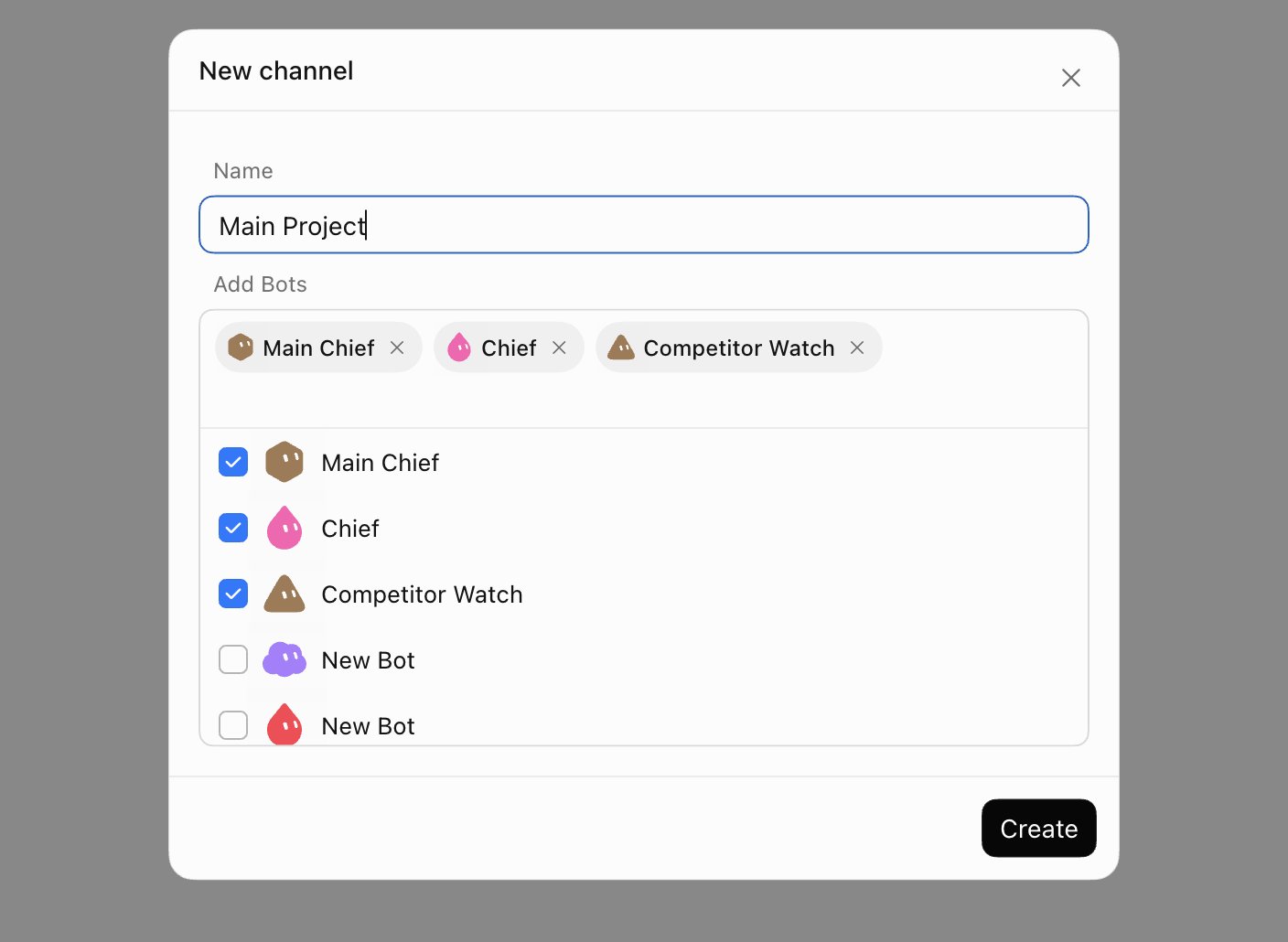
Once the chain works one to one, put the bots in a group and hand the group one objective.
Milestone. One message in, one finished pack out, and you can scroll back through every message the bots sent each other.
Step 5: Conflict rules
Two bots with good data will still disagree. Decide the order of precedence now, not during the run.
That third rule matters most. A coordinator that quietly picks a winner is the same as a coordinator that hides a problem.
Step 6: Stop rules
A group chat with no brakes either loops or fakes a finish.
Milestone. You have seen the team stop itself at least once and tell you why.
What a real run looks like
Nothing here is clever.
The pricing claim died at the first handoff and never came back, which is exactly the failure that makes it into published work when the format is loose.
Common mistakes
-
Letting the coordinator do the work. The moment it drafts something itself, it stops tracking what the others are doing and your brief starts missing things.
-
Passing transcripts instead of results. A receiving bot handed 4,000 words of someone's working notes will pick the wrong parts. The handoff block exists to force a decision about what actually matters.
-
Talking to a specialist directly mid-run. You now know something the coordinator does not, and the next handoff will contradict you.
-
Running bots in parallel on the same output. Two writers drafting the same piece gives you two drafts and no decision. Parallel is for independent inputs only.
-
Treating separate bots as separate permissions. They share one cloud computer and one set of logins. The chain is an org chart, not a security boundary, so connect on the assumption that any bot can reach anything you connected.
The 25-minute setup
-
Write the coordinator description and paste it (4 min)
-
Add the HANDOFF block to three bot descriptions (6 min)
-
Run the three bot chain one to one on a real task and read every handoff (8 min)
-
Move the same three into a group chat and rerun the same task (5 min)
-
Paste the conflict and stop rules into the coordinator (2 min)
Then add the fourth bot only after the three bot chain has run clean three times.
Nobody talks about handoffs because they are boring. That is also why they are where the work goes missing, and why fixing the format buys you more than any individual bot ever will.
Thanks for reading!
I share daily notes on AI & vibe coding in my Telegram channel: https://t.me/zodchixquant 🧠

Published on grokbot.sh. Cite the public log, not a prompt pack.