
How to Use Grok Bot to Make Money
Grok Bot will not print money for you. What it will do is collapse the time between “I should do that” and “it’s done.” If you already have a skill, an audience, a product, or a pipeline of messy
Article
Job breakdowns
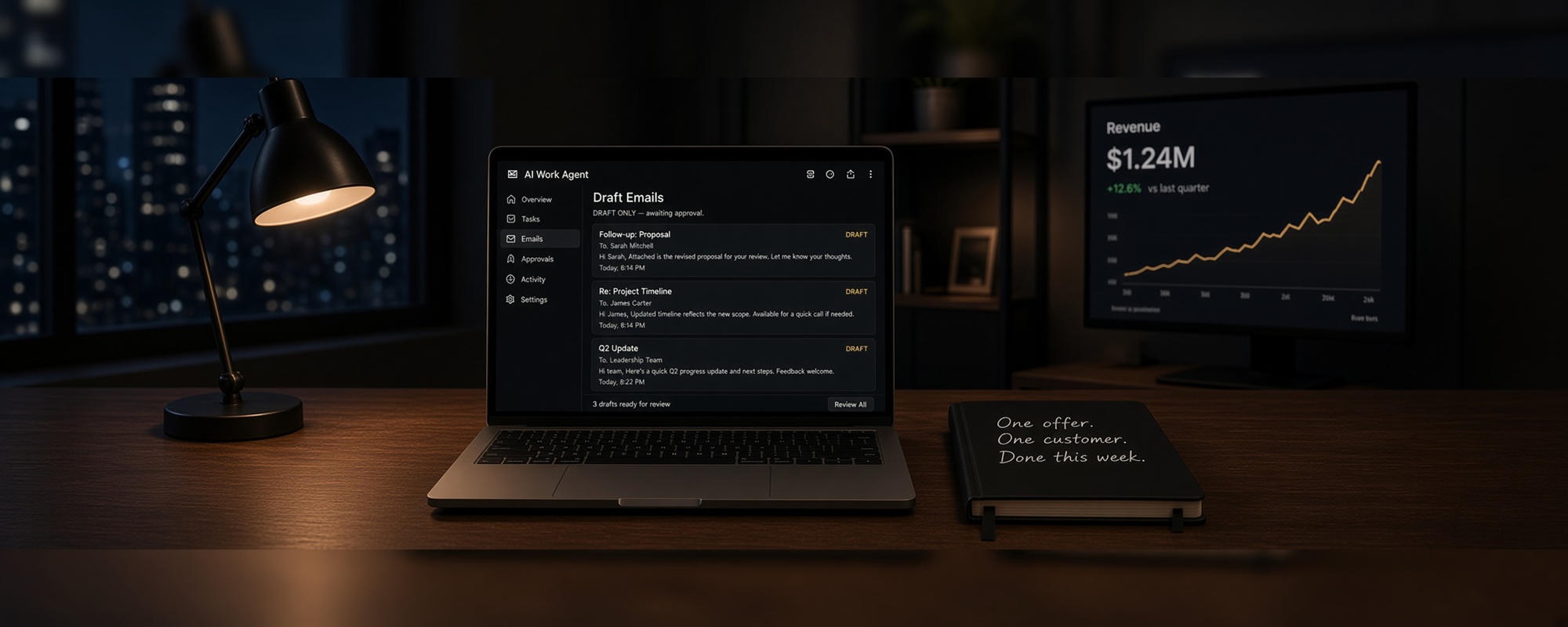
Grok Bot will not print money for you.
What it will do is collapse the time between “I should do that” and “it’s done.” If you already have a skill, an audience, a product, or a pipeline of messy work, that time collapse is cash.
If you have none of those, start there. The bot is a multiplier. Multiplying zero is still zero.
This is the playbook that actually works in 2026.
First, know which Grok you have
There are two different tools people keep mixing up.
Grok (the chat) is the one on grok.com, X, and the apps. You prompt it. It thinks, searches, writes, codes, generates images, and hands the work back to you. Fast. Cheap. Enough for most money-making uses.
Grok Bot is the newer agent product. It gets its own cloud computer, a browser, logins, memory, and the ability to keep working after you close your laptop. You can teach it a task by doing the task once. You can schedule routines. It comes back when something needs your approval.
Chat is for thinking and drafting. Bot is for repeating work across tools. Use both. Do not buy the more expensive stack until chat is already making you money.
The only model that works
Money comes from one of four places:
-
Someone pays you for an outcome.
-
An audience pays attention, then buys.
-
A product you built once keeps selling.
-
You keep more of the money you already earn by cutting waste.
Grok helps all four. It does not invent a fifth.
The people posting “my bot closed a $999 deal while I slept” are usually describing a sales workflow they already had — offer, inbox, Stripe link, follow-up — with the bot drafting instead of them. The offer still had to exist. The buyer still had to want it. The human still had to approve the send.
Steal that framing. Do not steal the fantasy.
Path 1: Sell a narrow service this week
This is the fastest path to first dollars.
Do not sell “AI.” Sell a finished thing a specific person already wants.
Good first offers:
-
Refresh 5 outdated website pages (facts, prices, links, voice)
-
Weekly competitor / market brief for a local business or consultant
-
Turn one long article or webinar into 20 social posts + 5 email subject lines
-
Clean a messy spreadsheet and hand back a working file + short SOP
-
Draft proposals, SOPs, or help-center answers from the client’s own docs
-
Permit / bid / RFP first-pass packages if you already know that world
Price the outcome, not the prompts. $300–$1,500 for a defined package is easier to sell than “I use Grok.”
How to use Grok on the job:
-
Feed it the client’s existing pages, brand voice, and constraints
-
Ask for an outline first, then a draft
-
Fact-check every claim yourself
-
Rewrite the first and last 20% in your voice
-
Deliver a change log so the client can see what moved
A prompt that works:
You are helping me deliver a paid content refresh. Here is the original page, the current product facts, and 3 examples of the client’s voice. Flag anything outdated, invent nothing, keep their phrasing where it still works, and return: (1) a punch list of what must change, (2) a revised draft, (3) a short change log.
The client is paying for judgment. Keep the judgment.
Path 2: Build a content engine that sells something
If you want leverage on X, treat Grok as a research intern and a first-draft machine — not as the author of record.
A simple weekly system:
Monday: Ask Grok to pull what actually performed in your niche on X over the last 14 days. Angles, hooks, objections, not vibes.
Tuesday: Pick one idea. Have Grok outline a thread or Article. You write the hook and the last line.
Wednesday–Friday: Ship. Use Grok to turn the long piece into short posts, a newsletter blurb, and a reply bank for common comments.
Sunday: Ask it what repeated this week and what should become a product or a service page.
Monetize in this order, not the reverse:
-
Inbound clients from the content
-
A simple paid offer (audit, package, call)
-
X ads revenue / subscriptions once volume is real
-
Affiliates only after you would use the thing yourself
Raw AI posts get ignored. Specific posts from someone who has done the work get hired.
If you run a real business, write from the job. Grok can help you turn a permit headache, a site walk, or a lost bid into a post in 20 minutes. That post beats a generic side-hustle thread if you actually live it.
Path 3: Productize what you already know
Digital products work when they are narrow.
They fail when they are “300 Grok prompts for making money.”
Better products:
-
A permitting checklist for one county
-
A proposal template for one trade
-
A 14-day content system for one niche
-
An SOP pack for one operations job
-
A research brief format a consultant can reuse
Use Grok to draft the first version. You add the parts only you know: the gotchas, the phone numbers that actually pick up, the thing inspectors ding, the line that closes.
Sell on Gumroad, Whop, or your own Stripe page. Price $19–$79 until people ask for a higher tier.
Then use Grok Bot, if you have it, for the boring distribution: weekly research into the vault, first-pass replies, a Monday brief of what sold and what stalled. Keep send-rights in your hands.
Path 4: Become the operator, not the talent
A lot of money right now sits with people who are good at a craft and terrible at distribution.
The play:
-
Find someone already producing strong work with a weak pipeline
-
Offer to run research, content, follow-up, and offer packaging
-
Take a rev share or a monthly operator fee
-
Use Grok / Grok Bot for the repetitive layer
This only works if you can sell and if you stay in the loop on anything that touches money, brand, or legal. Drafts only. No unsupervised sends. No invented links. No fake urgency.
If you use Grok Bot here, give it three skills and stop:
-
Draft the follow-up. Do not send it.
-
Prep the call brief from the thread.
-
File what happened into a doc after you close or lose.
That is a business. “Fully autonomous closer” is a demo.
Path 5: Use it on the job you already have
Quiet path. Often the highest ROI.
Use Grok to:
-
Write the email you have been avoiding
-
Turn meeting notes into an action list
-
Build the spreadsheet your manager keeps asking for
-
Prep for the interview or the bid
-
Draft the SOP so you are not the only person who knows the process
-
Analyze a messy dataset before the meeting
People get raises, retainers, and better seats because they ship more finished work. That is making money. It just does not screenshot well.
What to tell Grok Bot, specifically
If you have Bot access, do not start with “run my company.”
Start with one painful loop you already do every week.
Good first routines:
-
Morning sweep of one inbox: categorize, draft replies, list anything that needs a human
-
Weekly research brief dropped into a Google Doc
-
CRM hygiene: find stale leads, draft the next note, do not touch the send button
-
File incoming invoices / receipts into a folder and a simple log
-
Turn approved long-form into a week of scheduled posts (you hit publish)
Rules worth pasting into every bot:
-
Draft only. Never send, post, pay, or sign.
-
Never invent a URL, price, date, or quote.
-
If a fact is missing, ask. Do not fill the hole.
-
Show your sources.
-
When unsure, stop and ping me.
Teach one task by doing it once with the bot watching. Correct it the second time. Only then put it on a schedule.
One bot per lane beats one god-bot that does everything badly.
What does not work
Selling unedited Grok output. Buyers can smell it, platforms penalize it, and it trains you to be replaceable.
Trading bots as a personality. Grok can help you study a market. It is not a licensed advisor and it does not owe you a return.
Prompt packs with no niche and no proof.
“AI agency” as a bio before you have three delivered jobs.
Letting any agent email customers, move money, or post publicly without a human in the loop.
A 7-day start
Day 1. Pick one offer you can deliver in 48 hours. Write it in one sentence: who it’s for, what they get, what it costs.
Day 2. Use Grok to draft the sales page, the outreach message, and the delivery checklist. Cut it in half.
Day 3. Send 20 messages to people who already have the problem. Not “hey I use AI.” “I can update those five dead blog posts this week for $X.”
Day 4. Do the first job, even if you have to discount it for a testimonial.
Day 5. Turn the work into one public post: the problem, the before/after, the lesson.
Day 6. Productize the checklist you used.
Day 7. Keep the loop. Improve the offer. Raise the price after two happy deliveries.
That is the whole game.
The honest close
Grok is unusually good at research, drafting, structuring, and chewing through messy text. Grok Bot is unusually good at doing the same job again tomorrow without you re-explaining it.
Neither one replaces taste, distribution, or accountability.
If you want to make money with it, pick a customer, pick an outcome, and let the model do the first 70%. You own the last 30%. That last 30% is the product.
Start with one paid task this week. Everything else is content.
Published on grokbot.sh. Cite the public log, not a prompt pack.