
I Gave 6 Grok Bots My Entire TikTok Workflow… This Is Insanee
Hi, I’m Sophia 🇮🇹 Former UGC girl. 400M+ views later, now I mostly post how the accounts you keep seeing actually do it. The hooks, the systems and the weird little tests that turn one idea into
Article
Job breakdowns
Hi, I’m Sophia 🇮🇹
Former UGC girl. 400M+ views later, now I mostly post how the accounts you keep seeing actually do it.
The hooks, the systems and the weird little tests that turn one idea into thousands of videos.
So when I realized Grok Bots could run almost my entire TikTok workflow…
Obviously I had to try it 😭
I’ve been running organic UGC at volume for a while, and the hardest part is never making one video.
It’s everything around the video.
Finding the right offer.
Studying what’s already working.
Reading thousands of comments.
Finding new angles before they get saturated.
Writing scripts that sound like actual girls on TikTok.
Tracking which hook made people click.
Then remembering all of that when you create the next batch 😭😭
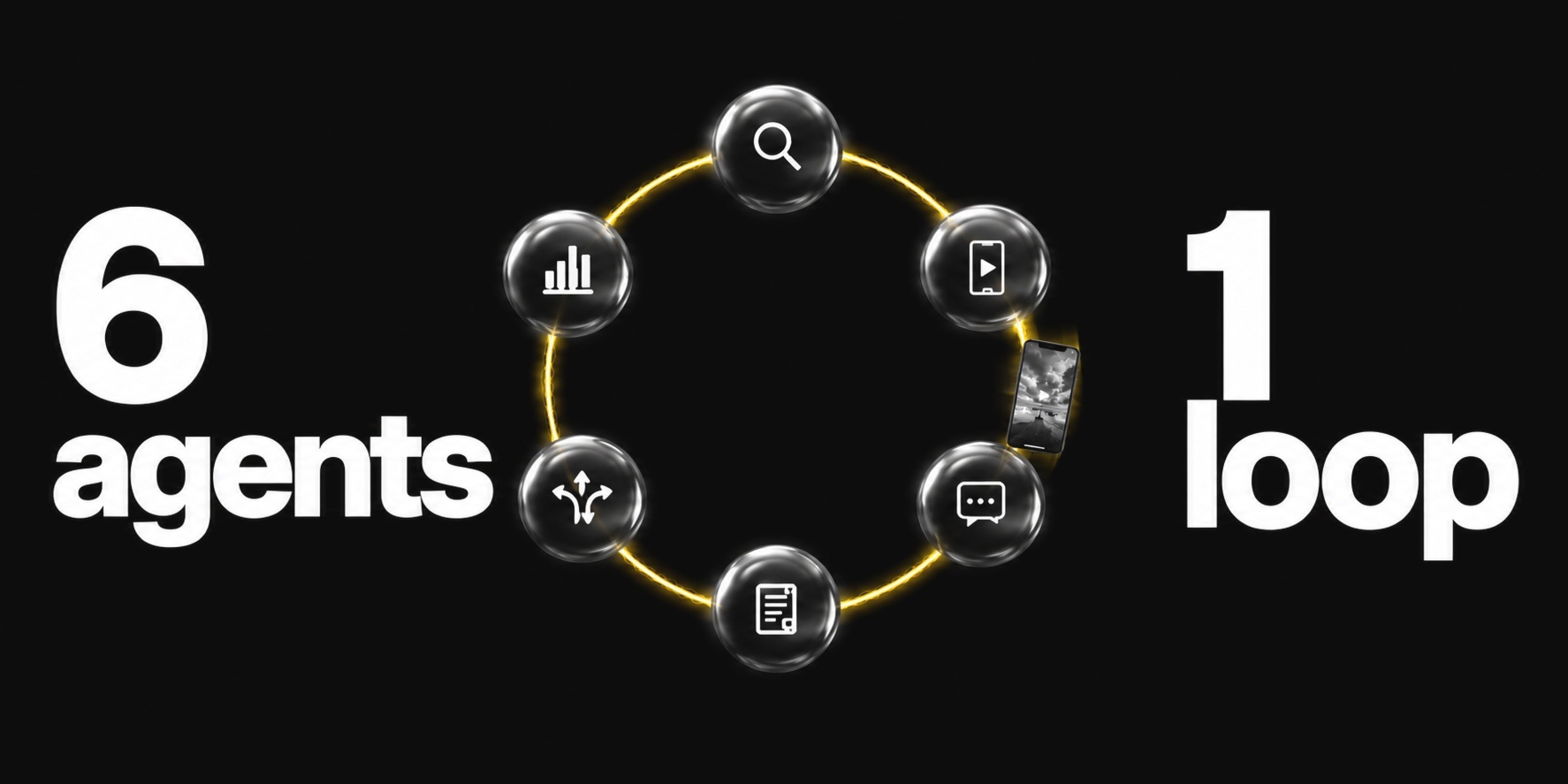
So I gave six Grok Bots different parts of our workflow and connected them through one shared campaign folder.
One bot searched for offers.
One studied winning TikToks.
One read the comments.
One created the angles and scripts.
One turned every winner into variations.
And the last one watched the results and told the others what to change.
I gave them one beauty-savings referral offer to test.
A few hours later, they came back with:
-
214 relevant TikToks analyzed
-
8,700 comments sorted
-
Six customer groups
-
14 creative angles
-
53 hooks
-
18 complete scripts
-
37 controlled variations
-
A full testing plan
-
A performance tracker that fed the results into the next batch
Waitttt 😭
It basically rebuilt the workflow I normally need multiple people and soooo many messages to manage.
Except the bots remembered everything.
Here’s exactly what Grok Bots are, how I connected them and how the system turns into an actual organic content business.
What Are Grok Bots?
Grok Bot lets you create persistent AI agents that work more like teammates than normal chatbots.
Each bot can have its own job, computer and working context.
You can assign a bot a project, let it use tools and have it return with completed work or ask for approval when it needs you.
The important part is that multiple Grok Bots can work on different parts of the same project.
A normal chatbot gives you an answer.
A Grok Bot can receive an input, complete its part, save the result and hand that result to the next bot.
That difference sounds small.
It’s not.
Most creators currently use AI like this:
“Give me 20 viral hooks for this product.”
Then they copy the hooks, close the chat and come back tomorrow asking the same question.
The AI has no idea:
-
Which hook was posted
-
Which creator recorded it
-
Which audience saw it
-
Which version held attention
-
Which one generated clicks
-
Which one actually made money
Our six-bot setup remembers the entire campaign.
Every new video starts with everything learned from the old videos.
That’s the crazy part.
How I Set It Up
First, I created one shared campaign folder.
I called it:
TIKTOK CONTENT HQ
Inside it, I created six folders:
01 OFFER 02 CREATIVE RESEARCH 03 COMMENTS 04 SCRIPTS 05 PRODUCTION 06 PERFORMANCE
Each Grok Bot owns one folder.
When a bot finishes its task, it saves the output there.
The next bot reads that output before beginning its own work.
That creates one continuous chain instead of six random AI conversations.
Grok Bot 1: The Offer Hunter
The first bot searches for things worth promoting.
I told it not to bring me random “viral products.”
A product can be viral and still be horrible to monetize.
The Offer Hunter looks for:
-
A visible problem
-
A result that can be shown on camera
-
Existing customer demand
-
A worthwhile referral or affiliate payout
-
Enough creative angles to make 50+ videos
-
Competitors with weak or repetitive content
-
Proof that doesn’t require exaggerated claims
For every opportunity, the bot creates an Offer Brief.
The Offer Brief includes:
Offer Price Payout Approval conditions Target customer Main problem Main promise Available proof Common objections Competitor weakness Five possible content angles
For our test, it found a savings referral offer that worked especially well with frequent beauty shoppers.
The obvious angle was:
“Use this to save money.”
Boringggg.
Everyone was already saying that.
The bot found a better problem:
Beauty shoppers hate discovering they paid more than they needed to after completing an order.
That changed the entire campaign.
The offer wasn’t the story anymore.
The feeling of realizing you had been overpaying was the story.
Bot 1 saved that inside:
01 OFFER/OFFER_BRIEF.md
Then Bot 2 opened it automatically.
Grok Bot 2: The TikTok Researcher
Bot 2 took the audience, problem and offer from the brief.
Then it searched for TikToks about:
-
Beauty deals
-
Checkout savings
-
Shopping discoveries
-
Sephora and Ulta orders
-
Discount confusion
-
“Why did nobody tell me?” content
-
Receipt and cart reveals
It analyzed 214 videos.
For each one, it recorded:
Opening frame Spoken hook On-screen text Audience Emotion Problem Promise Proof Reaction Call to action
Then it grouped the videos by the reason they worked.
Not by the exact words.
That matters because two videos can sound completely different while using the same psychological mechanism.
The bot found four major patterns.
Discovery
“I’ve been shopping here for seven years and I’m just now finding this?”
The viewer feels like they missed something important.
Warning
“Check this before you place another order.”
The viewer feels like they need to act before making a mistake.
Social Betrayal
“Who was going to tell me?”
The viewer feels like everyone else knew something they didn’t.
Proof First
The video opens directly on a receipt, checkout page or price difference.
No explanation.
The proof creates the question.
Bot 2 placed everything inside:
02 CREATIVE RESEARCH/CREATIVE_MAP.md
Then Bot 3 used that map to find the videos with the most useful comments.
Grok Bot 3: The Comment Stalker
This might be my favorite bot lol!!!
Most brands write ads using marketing language.
People on TikTok do not speak like that.
A brand says:
“Reduce unnecessary spending on beauty products.”
A real comment says:
“wait so I’ve just been paying full price this entire time???”
Obviously the comment is better.
Bot 3 read 8,700 comments from the videos selected by Bot 2.
It separated them into:
-
Buying intent
-
Questions
-
Confusion
-
Skepticism
-
Fear of missing out
-
Personal stories
-
Requests for proof
-
Failed alternatives
But it didn’t “clean up” the language.
It preserved the wording, slang, capitalization and emotion.
These patterns kept appearing:
“How did I not know this?”
“I literally ordered yesterday 😭”
“Okay but what’s the catch?”
“Show the receipt.”
“Does this work for everyone?”
“Y’all gatekeep everything.”
That told us two things.
People loved the discovery.
But they didn’t trust it yet.
So the content needed to create surprise and immediately follow it with proof.
Bot 3 saved the useful language inside:
03 COMMENTS/LANGUAGE_BANK.md
Now Bot 4 had:
-
The offer
-
The audience
-
The winning creative patterns
-
The exact language customers used
-
Their biggest objections
This is where it got soooo good.
Grok Bot 4: The Script Builder
Bot 4 didn’t create 100 random scripts.
It created controlled tests.
That means each test changed one important variable while keeping everything else the same.
For the first batch, it kept these parts constant:
Audience: frequent beauty shoppers Problem: unknowingly paying too much Proof: checkout comparison Offer: same referral offer CTA: check your order before paying
Then it changed only the hook.
Version A: Discovery
“I’ve been shopping here for seven years and I’m just now finding this?”
Version B: Warning
“Check this before you place another beauty order.”
Version C: Social Betrayal
“Who was going to tell me I’ve been doing this wrong?”
Same creator.
Same demonstration.
Same length.
Same call to action.
Only the opening changed.
Now, if one version performed better, we would actually know why.
Every script received an ID:
BEAUTY-DISCOVERY-01 BEAUTY-WARNING-01 BEAUTY-BETRAYAL-01
The IDs followed the videos through production, posting and performance tracking.
Bot 4 saved the scripts inside:
04 SCRIPTS/BATCH_001.md
Bot 5 then turned those scripts into videos a creator could actually record.
Grok Bot 5: The Production Director
A script is not a TikTok.
You can have a good hook and still ruin it with a fake reaction, a slow opening or a screen that nobody can read.
Bot 5 converted each script into a Production Card.
Every card included:
First frame Phone position Creator action Spoken hook Screen demonstration Proof moment Facial reaction Call to action Length Variable being tested
One card looked like this:
VIDEO ID: BEAUTY-DISCOVERY-01
FIRST FRAME: MacBook checkout fills most of the shot.
ACTION: Creator leans toward the screen and points at the original total.
HOOK: “I’ve been shopping here for seven years and I’m just now finding this?”
PROOF: Show the checkout difference clearly.
REACTION: Pause, look back at the camera and give a short confused laugh.
CTA: “Check yours before you pay.”
VARIABLE: Discovery hook.
That is much easier to record than a paragraph written by a chatbot.
The creator opens the card, records the exact actions and uploads the finished video using the same ID.
Bot 5 also created 37 variations of the strongest concept:
-
Laptop checkout
-
Phone screen
-
Receipt reveal
-
Reply to a skeptical comment
-
Friend sending the discovery
-
“It worked again” follow-up
-
Failed first attempt
-
Different retailer
-
Different product
-
Different creator personality
But it changed only one major thing per variation.
The core idea stayed recognizable.
The finished cards went inside:
05 PRODUCTION/
After the videos were posted, Bot 6 took over.
Grok Bot 6: The Performance Brain
This bot watches what happens after posting.
It doesn’t call a video successful because it received views.
That was one of our biggest problems before.
A video can get 500,000 views and produce almost nothing.
Another video can get 25,000 views and generate actual referrals.
Bot 6 tracks:
Views First-second hold Three-second hold Average watch time Completion rate Profile visits Link clicks Approved referrals Revenue per 1,000 views
Then it diagnoses each video.
Weak Hook
People leave immediately.
Weak Retention
The opening works, but the middle becomes boring or confusing.
Weak Proof
People watch but don’t believe the result.
Weak Offer
People understand everything but don’t want it.
Weak Distribution
The video converts well, but the platform doesn’t push it far.
Every concept goes into one category:
KILL KEEP MODIFY SCALE
Then the bot sends the findings backward.
That is the part most people miss.
The results don’t sit in a spreadsheet nobody opens again.
Bot 6 tells:
-
Bot 1 which audiences convert
-
Bot 2 which creative patterns are rising
-
Bot 3 which objections keep appearing
-
Bot 4 which hooks deserve another test
-
Bot 5 which concepts need more variations
Then the bots create the next batch.
At this point I was like…
Wait, why is this better organized than most content teams?? 😭
What Happened in the First Test
We posted 36 controlled videos.
The Discovery hook produced the strongest profile-visit rate.
The Social Betrayal hook came second.
The Warning hook received views but produced fewer referral clicks.
So Bot 6 didn’t say:
“Make more viral videos.”
It sent Bot 5 a specific instruction:
Preserve the discovery mechanism and checkout proof.
Create new variations using:
- Different first frames
- Different retailers
- Skepticism responses
- Friend-to-friend delivery
- Follow-up videos
Do not change the main audience or offer yet.
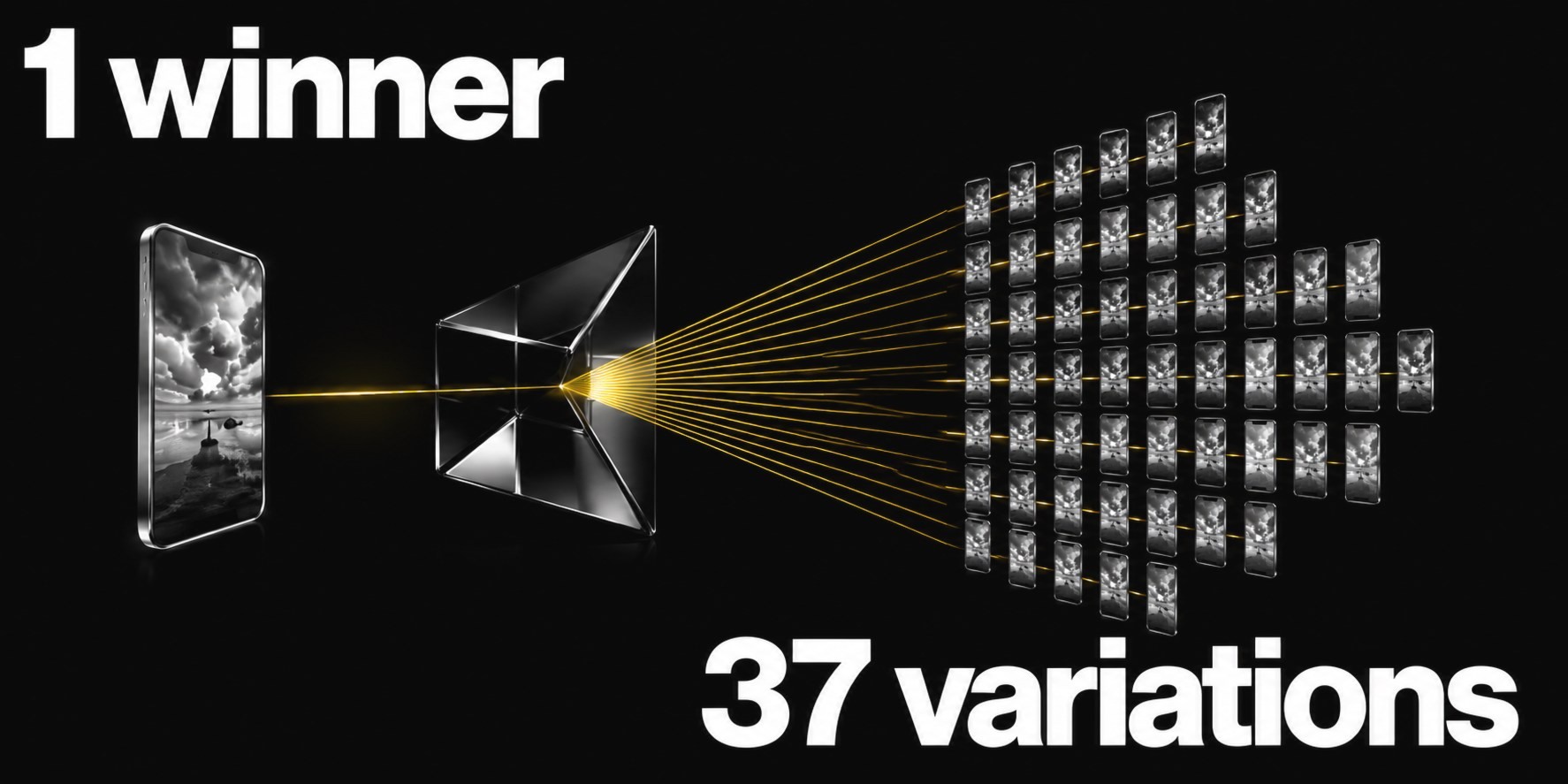
One winning concept became 37 variations.
Those variations produced more useful data.
That data created the next variations.
The system kept learning instead of restarting.
The Money Case Studies
Okayyy, getting views is cute.
But how does someone actually make money from this?
There are several ways to use the same six-bot system.
Case Study 1: Referral Payouts
One campaign promoted a consumer savings offer.
The creator received money whenever a referred user completed the required action.
The campaign produced:
8,917 approved referrals $18.40 average payout $164,073 generated
The strongest creative family started with a discovery hook and used visible checkout proof.
Case Study 2: Paid-Per-View Campaigns
Some creator campaigns pay based on qualified views.
One campaign generated 16.4 million eligible views at an average payout of $3.50 per 1,000 views.
16,400,000 ÷ 1,000 = 16,400 16,400 × $3.50 = $57,400
The Grok Bots helped creators produce, analyze and improve new variations without manually reviewing every post.
Case Study 3: TikTok Shop Commissions
Another campaign used shoppable TikToks.
The bots researched customer complaints, found underused demonstrations and built variations around the products already converting.
That campaign generated:
$33,664 in creator commissions
The money came from different campaigns.
The content system stayed almost identical.
How to Build the Small Version
You do not need six Grok Bots immediately.
Start with three:
- TikTok Researcher
- Script Builder
- Performance Brain
Choose one offer.
Give the Researcher 20–50 relevant TikToks.
Have it identify:
-
Three audiences
-
Five hook mechanisms
-
Three proof formats
-
Five common objections
Give that report to the Script Builder.
Create 15 videos using controlled variations.
Post them.
Then give the results to the Performance Brain.
Tell it to choose:
-
Five concepts to kill
-
Five to modify
-
Five to scale
Use those findings to create the next 15.
That is the loop.
Automate the Whole Thing
Once the workflow works manually, connect every video to one tracker.
Use columns for:
VIDEO ID OFFER ACCOUNT CREATOR AUDIENCE HOOK PROOF CTA VIEWS WATCH TIME PROFILE VISITS LINK CLICKS CONVERSIONS REVENUE DECISION
Every night, Bot 6 reads the new data.
Every morning:
-
Weak concepts are stopped
-
Promising concepts receive modifications
-
Winning concepts go to Bot 5
-
Bot 5 produces new Production Cards
-
The creator receives the next recording queue
No one needs to remember what happened.
The bots remember.
No one needs to open a blank document and think of another hook.
The next hook comes from actual performance data.
Most people are using AI to make more content.
That’s not the interesting part.
The interesting part is giving six Grok Bots one shared campaign memory and letting every piece of content teach them what to create next.
Same offer.
Same creators.
Same accounts.
But the system gets smarter every time something is posted.
Published on grokbot.sh. Cite the public log, not a prompt pack.