
I Wired TypeSafe's Jev Into Grok Bot. The Cheapest and smartest Agent I've Ever Run
Jev doesn't write a single word. It just decides. And the first time I tested it, it lost to a model 12x more expensive. I'm @razeden0 i track all about ai tools for my own business, and share the
Article
Job breakdowns
Jev doesn't write a single word. It just decides. And the first time I tested it, it lost to a model 12x more expensive.
I'm @razeden0 i track all about ai tools for my own business, and share the most intresting insights here on my X account
Every day my agency gets 2,000 to 3,000 replies to cold emails. Somebody has to sort them. Positive. Out of office. Automated. Angry. Asking for a price.
Grok Bot can do it. But Grok Bot is a writer. It reads the whole reply, thinks, and writes an answer - and you pay for every token of that thinking, 2,500 times a day.
Then on September 15, TypeSafe launched Jev.
A model that cannot write. It only picks from answers you give it - in about 240 milliseconds, for $0.042 per million tokens, with output free.
That's roughly 238x cheaper than a frontier model's input price.
So I put Jev in front of Grok Bot. Jev decides. Grok Bot does.
prompt → Grok Bot → Jev decision → Grok Bot execution → result
Here's what happened, including the day it scored 62.6% and I almost deleted it.
Jev is not a chatbot. That's the whole point.
TypeSafe was founded by Diogo Almeida, a former OpenAI researcher who worked on ChatGPT. They raised a $40 million seed led by DCVC.
Jev is what they call a System One model. Fast, reflex-like, no essays.
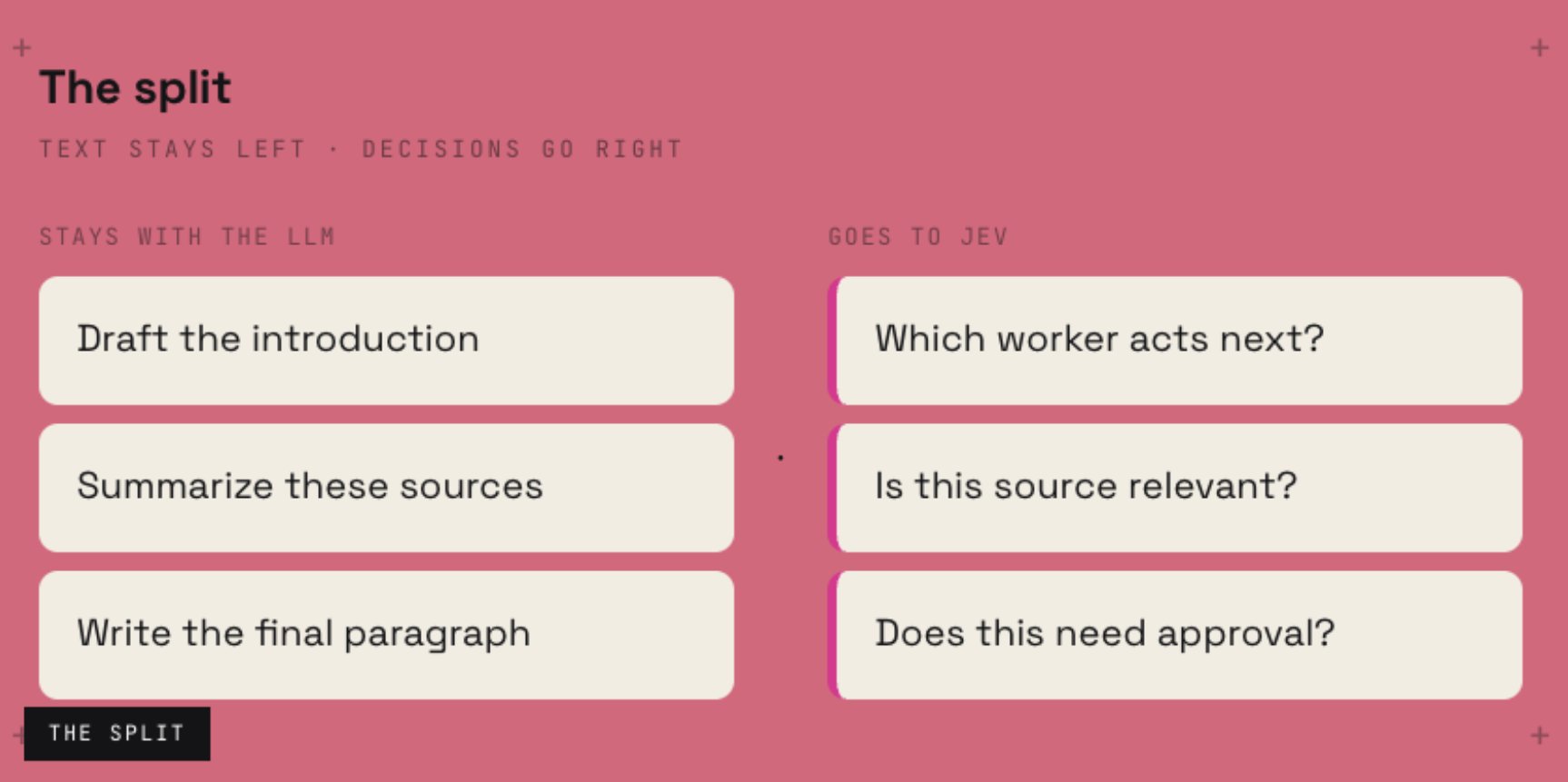
You send it a situation and a few typed questions. It sends back answers with probabilities. Only three kinds of questions:
Here's the trick that makes it cheap. All questions in one request run in parallel. Ask 1 question or 25 - you wait about the same.
It can't make things up in the usual way, because it can only choose from answers you allowed. Almeida put it like this:
"Most intelligence should eventually live inside software, running quietly in the background."
People noticed fast. On Vercel, around 13% of paid AI Gateway teams were calling Jev within 24 hours of launch.
Why Grok Bot needs a reflex in front of it
Grok Bot, from xAI and Cursor, gives every agent its own computer in the cloud. Browser, files, terminal, your logins, always on. It's the best pair of hands I've used.
But hands are expensive. Every step, the model gets everything - the whole conversation, plus every tool it might use.
A developer called Dan measured exactly how much waste that is. He wired Jev into Grok Build, xAI's open-source coding agent - same family, same problem:
Jev asked 25 yes/no questions in one call: will this job need this tool? Tools under 0.30 probability got dropped. The chat model still wrote every line of code. Jev only decided what was on the table.
He also found something xAI doesn't document: the prompt cache seems to need a minimum of about 10,200 tokens. Prompts from 10,050 to 10,220 never got cached. From about 10,280, they did.
That's Grok Build, not Grok Bot. But it's the same idea I used: let the cheap model decide, let the expensive model do.
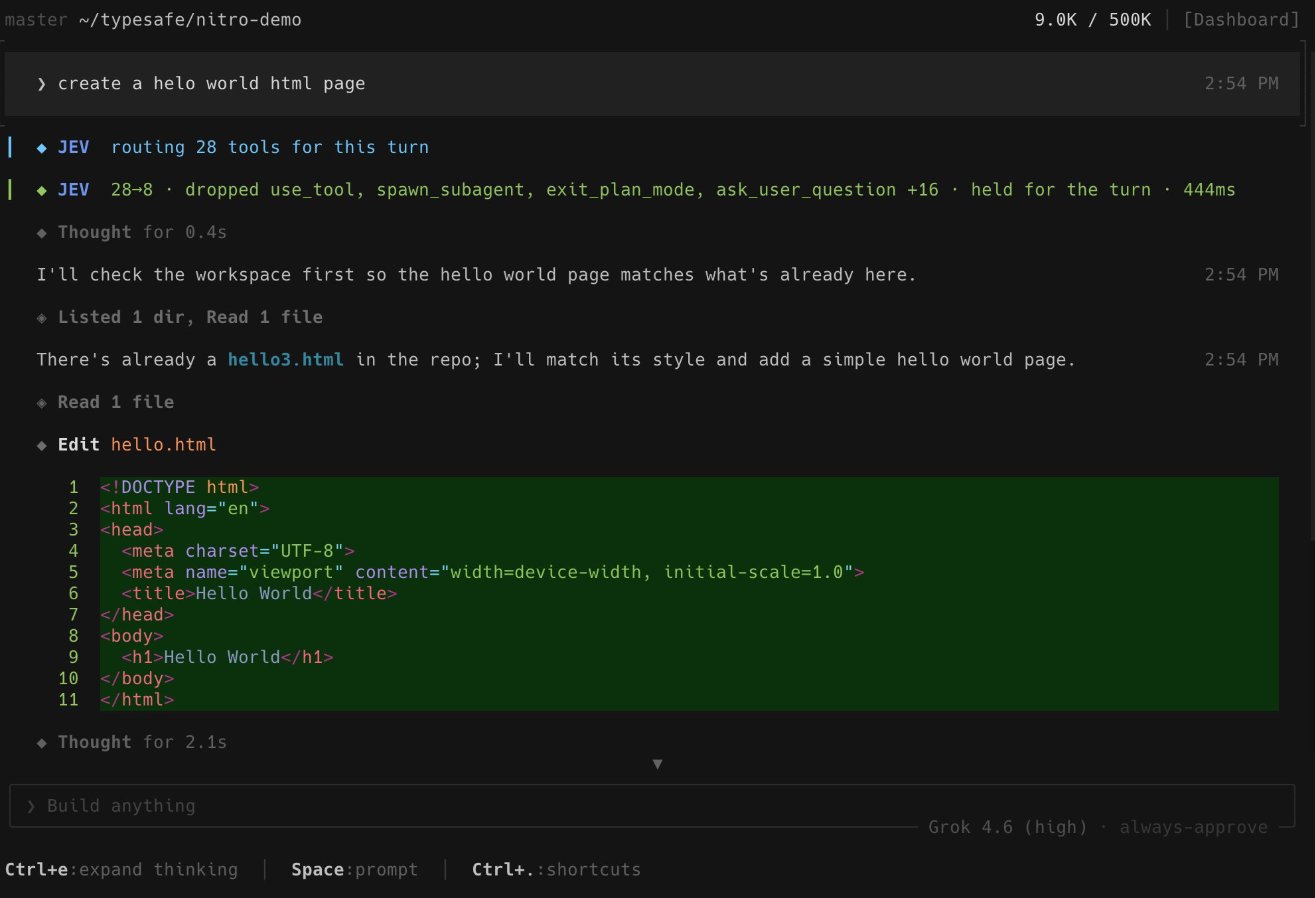
How I wired it. 7 steps, about 7 minutes.
Step 6 is the one people skip. Shadow mode means Jev makes every decision but nothing acts on it. You just read what it would have done.
That step saved me. Because the logs were bad.
Day one: 62.6%. It lost to a model 12x more expensive.
I did what everyone does. One question per reply: "Is this a positive reply?"
The public test tells you exactly what I saw. On 2,000 emails, with one question each:
Jev caught only 43.2% of the cases it was looking for, and raised 18% false alarms.
That is not a smart agent. That is a coin with a bad attitude.
I almost switched back.
Then I split the question five ways. 95%.
Here's the part nobody posting "Jev is insane" talks about.
Jev is bad at big vague questions. It's great at small sharp ones. So instead of one question, you ask five tiny ones, and combine the answers.
Same test, same 2,000 emails, split into five narrow questions with weights fitted on 1,000 labeled examples:
62.6% → 95.0%. Same model. Same emails. Only the questions changed.
For my replies, the five became:
Jev answers all five in one call, in parallel, in under a second. Grok Bot only wakes up for the replies that need a human-sounding answer.
This is where "smartest" comes from. Not from the model. From the split.
The bill. One formula, and it's arithmetic.
My inbox, 2,500 replies a day:
$34.67 a year. For sorting almost a million replies.
And it's not just my inbox. When an indie dev ran Jev + GPT-6 Astra through Minecraft and beat the Ender Dragon in 8:43, the whole run cost $0.97. Jev's share was $0.01. About 1% of the bill, making every fast decision.
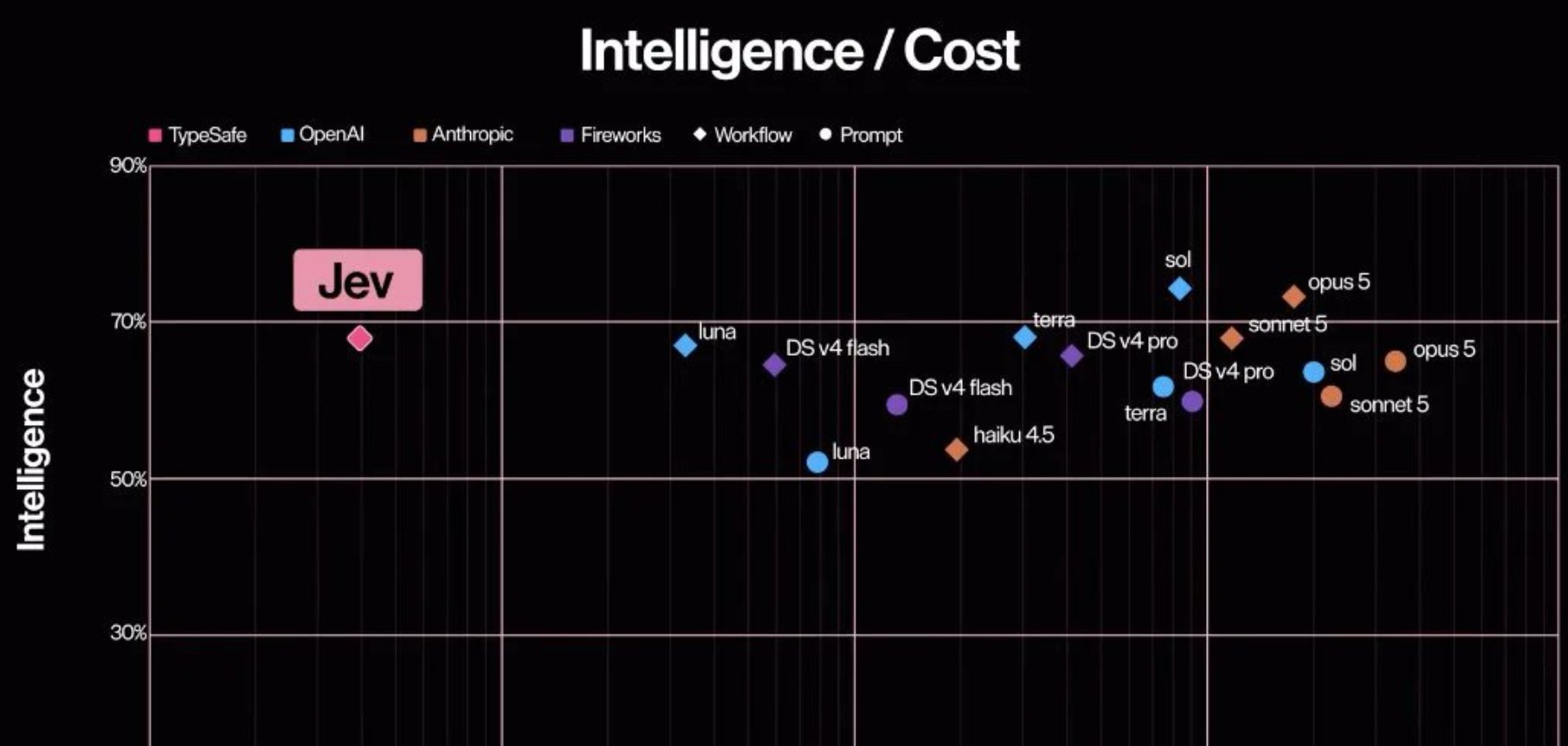
Cheaper didn't make me spend less. It made me ask more.
The name is not an accident. Jev is a nod to the Jevons paradox: when something gets more efficient, people don't use less of it. They use way more.
That's exactly what happened to me.
When one decision cost real money, I asked Grok Bot one question per reply. Now a decision costs almost nothing, so I ask five. Then I added more checks before every expensive step: should Grok Bot open a browser here? Retry? Spin up another bot?
Jev's rate limit is 1,200 requests a minute. That's 1,728,000 decisions a day if you want them.
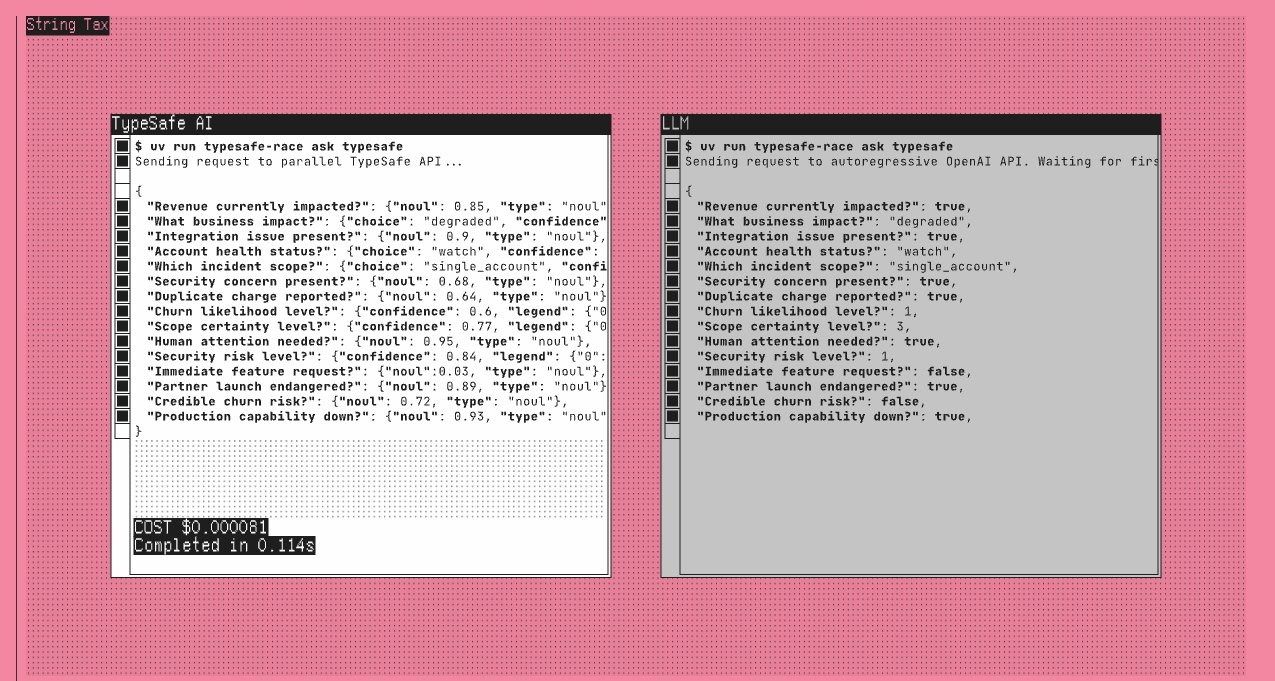
The cheapest agent I've run isn't cheap because it thinks less. It's cheap because the thinking moved to the place where thinking costs nothing.
What you actually walk away with
Most people run one expensive model for everything. Every tiny yes/no goes through a writer that bills by the word.
Split the work in two. A reflex that decides in milliseconds. A worker that only wakes up when there's real work.
And when the reflex gets it wrong, don't swap the model. Break the question into smaller questions. That's what took Jev from 62.6% to 95%, and it's free.
So here's the one action. Find the decision your agent makes hundreds of times a day - sorting, routing, "should I even do this?" Write it as five small questions instead of one big one.
A lot more testing is needed but I'll keep in experimenting and run more complete test with long running tasks and share the results.
GitHub links and useful resources are already on my profile.
Published on grokbot.sh. Cite the public log, not a prompt pack.