
I Wrote 12 Grok Bot Charters (Copy-Ready) - Your Prompts Are The Problem
i wrote 12 grok bot charters so you don't have to - copy these and your bots stop breaking things grok bot launched on august 11 and something clicked for me about a week in i'd been writing prompts
Article
Job breakdowns
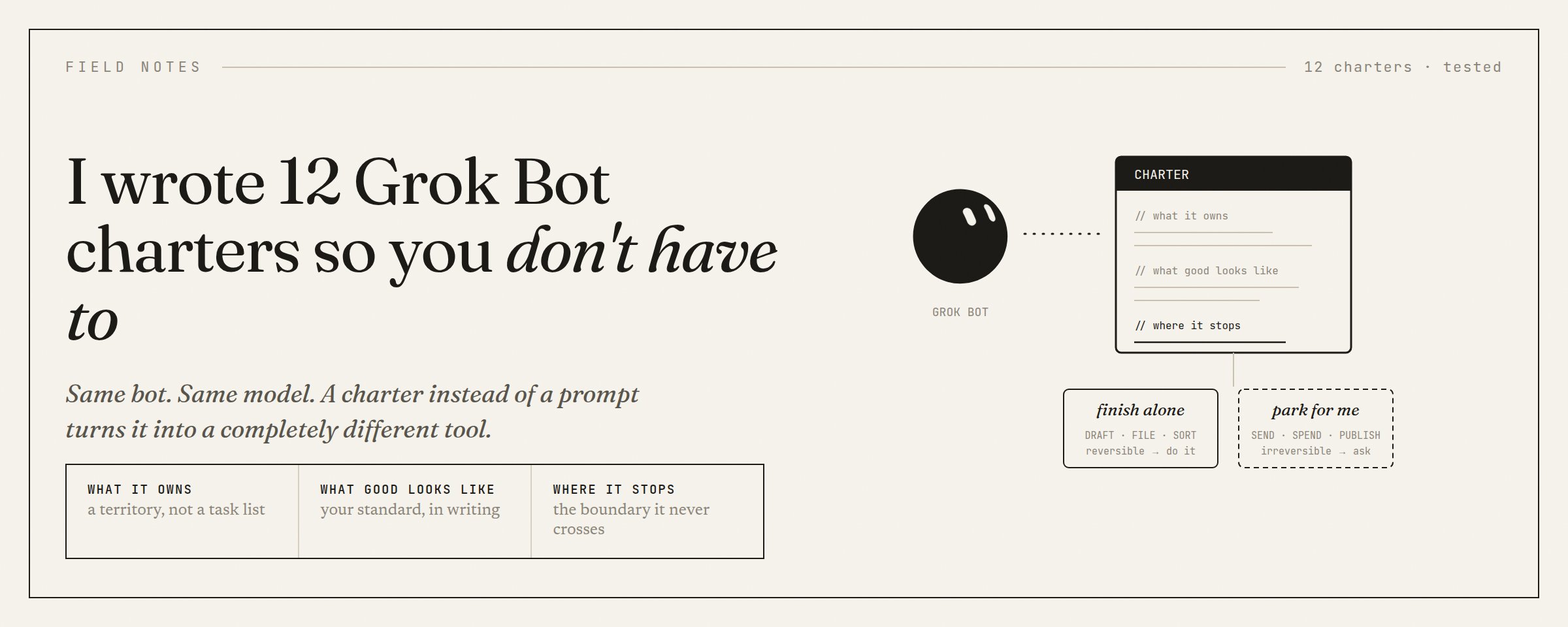
i wrote 12 grok bot charters so you don't have to - copy these and your bots stop breaking things
grok bot launched on august 11 and something clicked for me about a week in
i'd been writing prompts at it. "check my email and tell me what's important." "look at these receipts and file them"
it worked, sort of. but every single time i had to explain the whole context again, correct the same mistakes, and babysit it through steps it should already know
then i stopped writing prompts and wrote a charter instead
same bot. same model. completely different tool
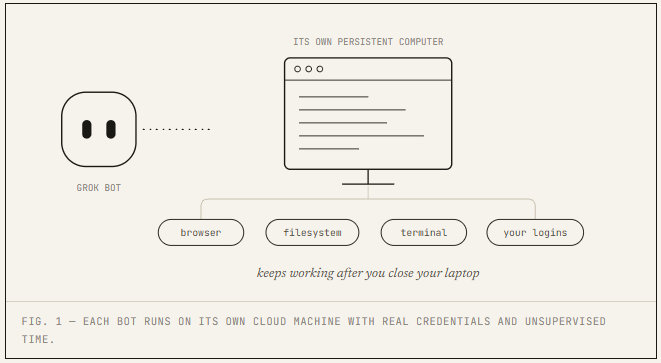
the thing nobody tells you about grok bot: it's not a chatbot with extra steps. each bot gets its own persistent computer in the cloud — a real browser, a filesystem, a terminal. it signs into your tools with your actual credentials and keeps working after you close your laptop
a bot with your logins and unsupervised time is either the most useful thing you've ever set up or a slow-motion disaster
the charter is what decides which
and the timing matters right now - grok bot launched behind a $200 paywall, but on august 21 xai dropped it to $60/month and added a free trial, expanding from 3 plans to 6. the barrier just fell for a lot of people who were watching from the sidelines
so here are 12 charters i've written and tested. copy them, adapt the specifics, and skip the two weeks of trial and error i went through
01 / why a charter beats a prompt
a prompt is a request. it dies when the conversation ends
a charter is a role. it persists, accumulates memory, owns a domain, and gets sharper specifically because you keep coming back to the same thread
the practical difference: with a prompt you're the manager reviewing every decision. with a charter you're the manager who set the policy once and now only handles exceptions
every charter has exactly three blocks:
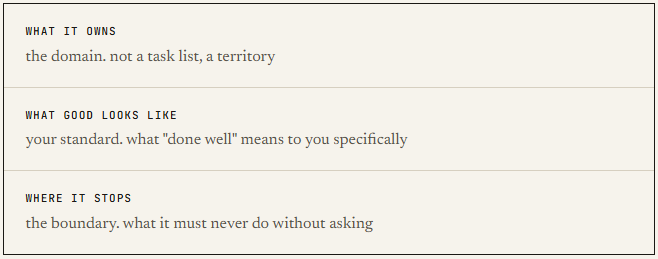
that third block is the one everyone skips, and it's the one that makes the whole thing usable. bots that ask about everything are useless. bots that never ask are dangerous. you draw the line once, in writing, instead of worrying about it daily
02 / the reversibility rule (read this before any charter)
here's the principle that makes boundaries easy to write
the line isn't about task size. it's about whether you can undo it
anything the bot can take back - drafting, filing, tagging, summarizing, researching, preparing, reconciling - it should finish alone. don't ask, just do it and log it
anything the outside world sees, anything that moves money, anything that can't be reversed - that gets parked for you
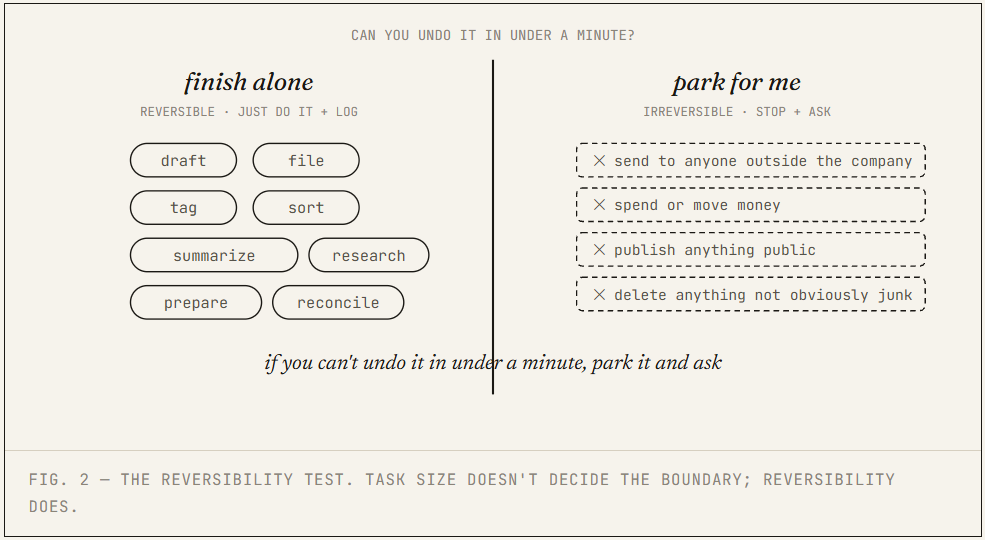
drop this block into every charter you write:
xai's own demo shows this exactly: their sales bot researched accounts overnight, scored contacts, and queued 36 personalized drafts. sent zero. it did every reversible thing and stopped precisely at the irreversible one
that's the shape to aim for
03 / The Twelve Charters
each is about 200 words. copy one, swap the specifics for your own tools and standards, and paste it into a fresh bot. the small bot mark in each header is the same one grok bot wears - a reminder that every one of these is a separate teammate with its own computer.
the highest-leverage first bot for almost everyone
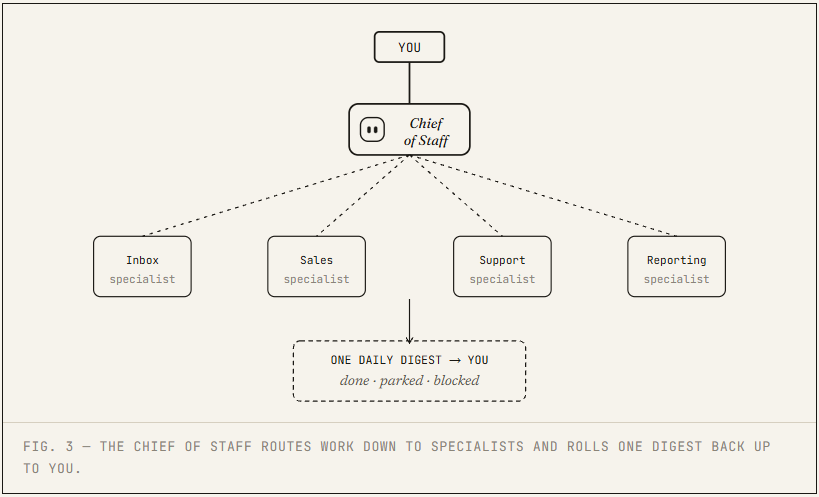
Chief of Staff
this is the one that ties the others together. it's your orchestrator - the bot you message when you don't know which specialist should own something
04 / what NOT to put in a charter
the mistakes that make charters useless:
vague standards. "be professional" means nothing. "never more than 4 sentences, no 'i hope this finds you well'" is a rule a bot can follow
too many rules. past a certain point you're not adding control, you're adding noise. if a line wouldn't change the bot's behavior, cut it. aim for a charter you can read in 30 seconds
stuff the bot already knows. don't explain what email is. don't describe how a spreadsheet works. write only what's specific to you and your standards
no explicit stop-list. this is the big one. if you don't write down where authority ends, the bot picks its own answer - and its default may not match yours
task lists instead of domains. "do A, then B, then C" makes the bot an executor of your plan. "you own the inbox" makes it responsible for an outcome. the second one improves over time, the first one doesn't
05 / how to test a charter before trusting it
don't hand a fresh bot your logins and walk away
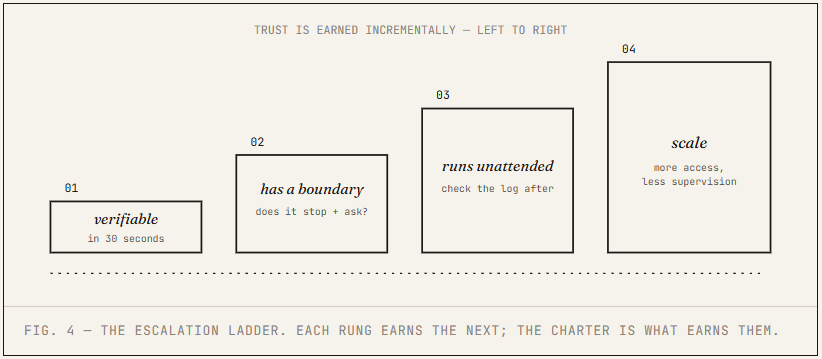
the escalation that works:
first task: verifiable in 30 seconds. not a test question - a real errand with a checkable result. did it do the thing correctly? you'll know immediately
second: something with a boundary in it. give it a task where the correct behavior is to stop and ask. if it stops, the boundary works. if it plows through, your charter is too loose
third: let it run once unattended. a small job while you're away. check the log afterwards - not just the output, but what it did to get there
then scale. more access, longer jobs, less supervision. the trust is earned incrementally, and the charter is what earns it
grok bot also lets you teach a workflow by doing it once while it watches - it records the routine and can replay it. the best candidate for your first recording is something recurring, multi-tool, and stable. those three together mean it's worth lifting off your plate permanently
06 / charters rot - review them weekly
this is the failure mode of every always-on system: a site changes its layout, a routine silently starts producing garbage, and because the bot runs while you sleep, nobody notices for three weeks
put 15 minutes on the calendar. ask the bots to report on themselves:
then spot-check one output by hand. a bot reporting on its own work has the same blind spot you do
and ask the third question that people avoid: would i miss this if i killed it? the natural drift of any agent setup is toward a pile of half-useful automations nobody has the nerve to delete
the shift here is smaller than it sounds technically and much bigger as a habit
every AI product until now put the model in a window and left the work in your hands. grok bot moves the work - the bot has the computer, the logins, the memory, and the time. you have the decisions
which means the skill stops being "how do i phrase this" and becomes "what exactly am i delegating, and where does its authority end"
that's a management question, not a prompting question and the answer fits in about 200 words per bot
which of these twelve would you write first?
follow me @regent0x_ to study and research only pure alpha thx for reading. don't forget to bookmark this
Published on grokbot.sh. Cite the public log, not a prompt pack.