
Ledger Architecture: How 6 Autonomous Agents Run a $102,870/Month Portfolio on Kimi K3 for Ledger Ar
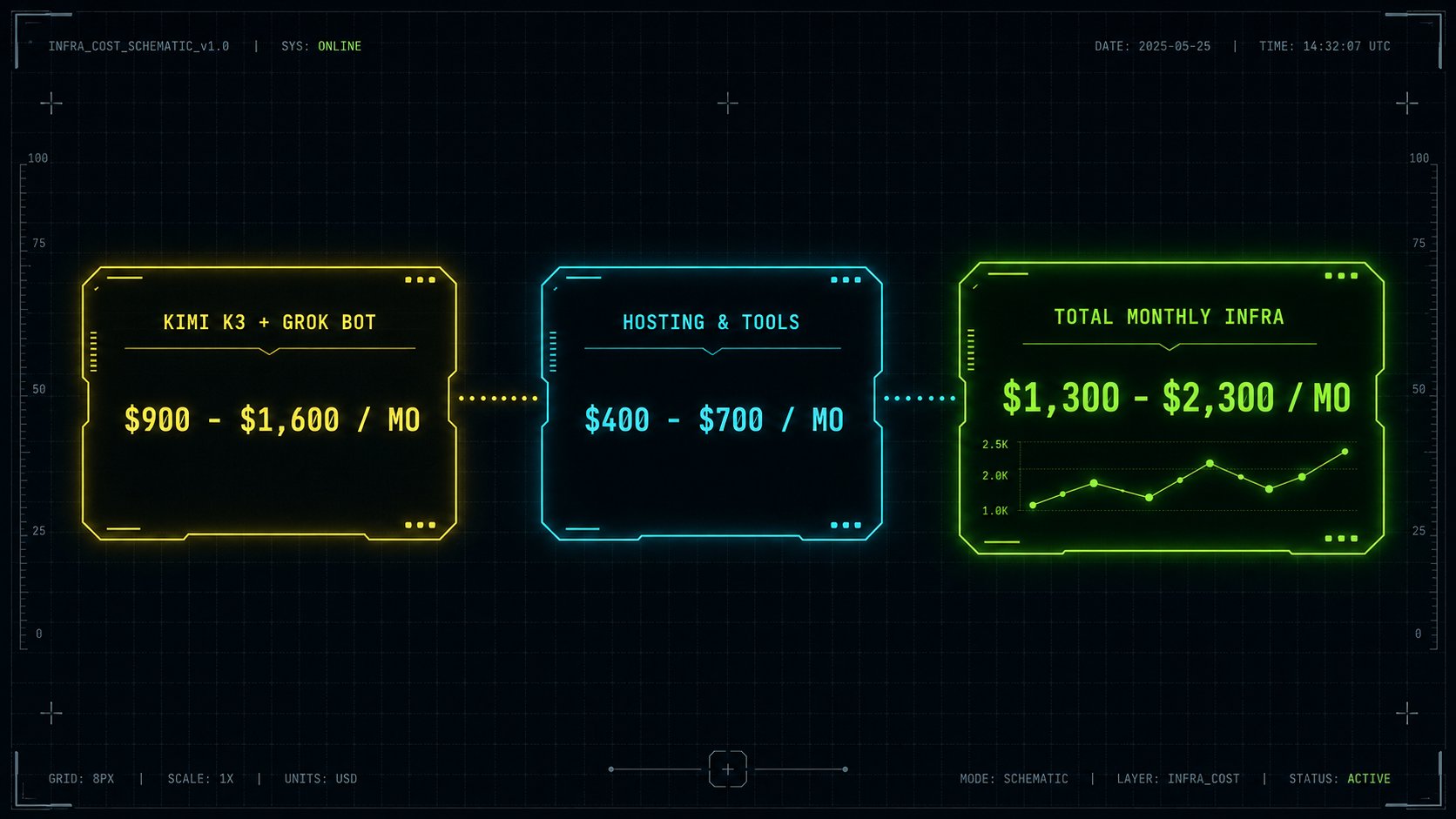
six businesses generating $102,870 a month do not need six operators. they need six bounded ledgers, one routing desk, and an infra bill between $1,300 and $2,300 across Kimi K3, Grok Bot, and
Article
Job breakdowns
six businesses generating $102,870 a month do not need six operators. they need six bounded ledgers, one routing desk, and an infra bill between $1,300 and $2,300 across Kimi K3, Grok Bot, and hosting.
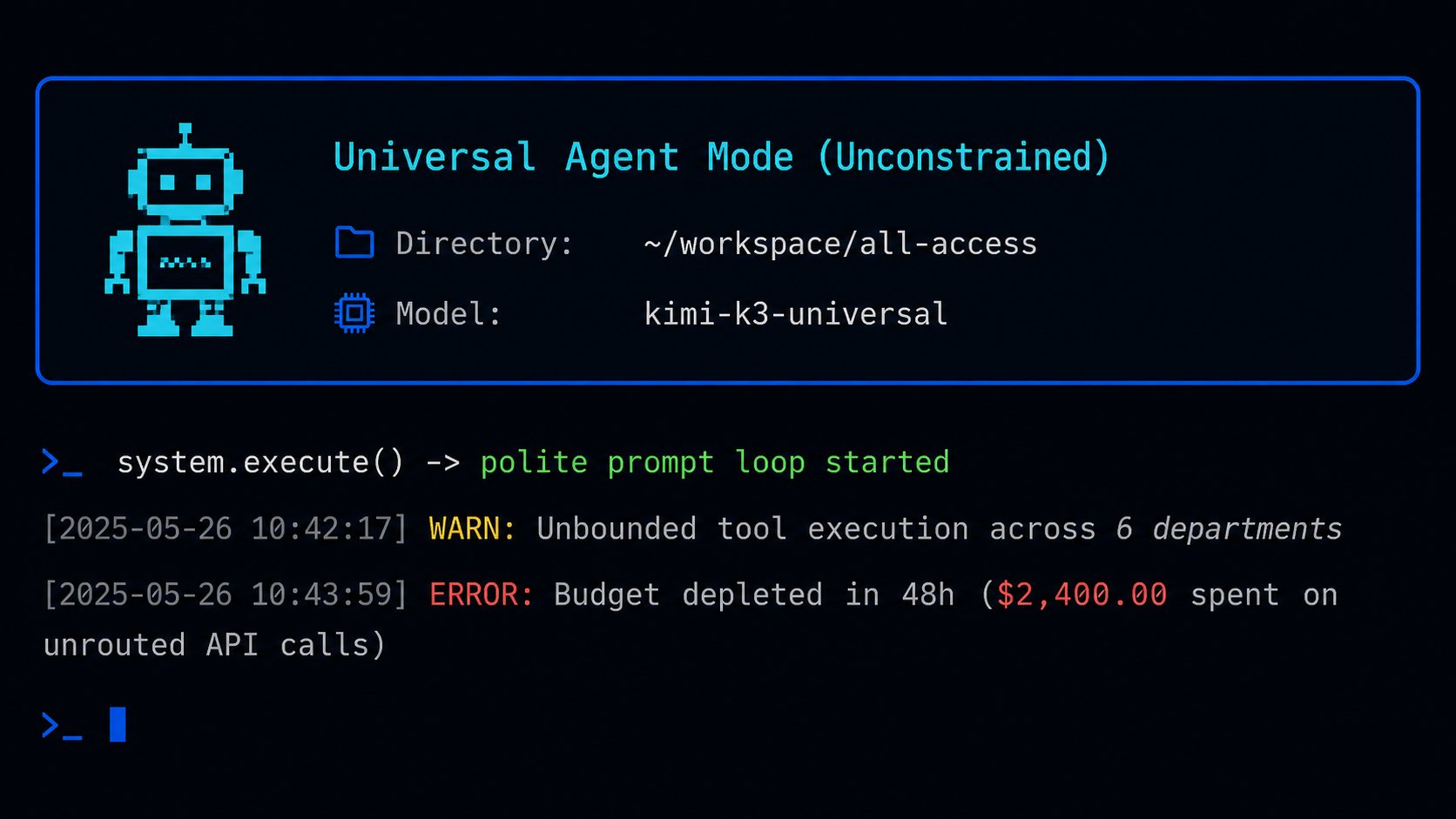
most autonomous setups fail because builders treat models like universal employees. giving an agent an open terminal and a polite prompt burns cash within 48 hours. what actually works is constraining autonomous scope into strict data charters and isolating execution through deterministic permission gates.
the one-desk org chart
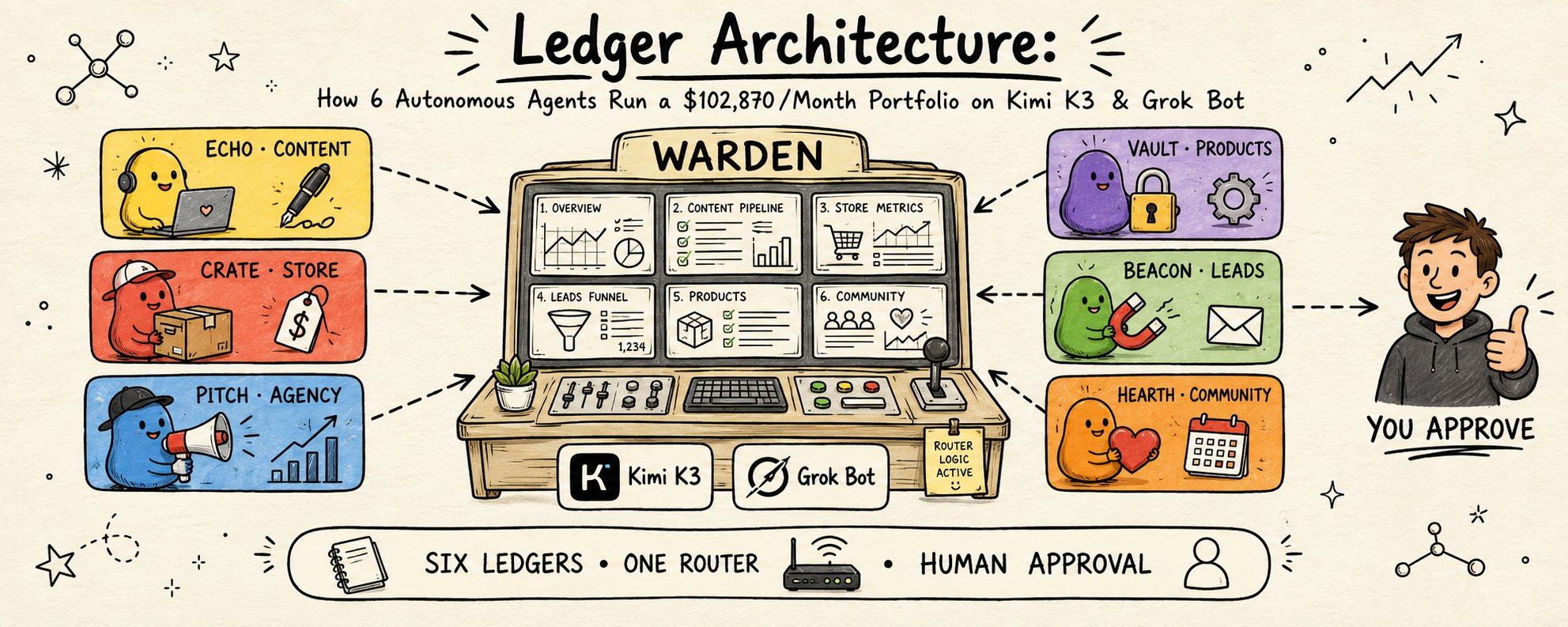
every business runs as an independent ledger with exactly one owner metric and hard operational boundaries. a single routing desk, WARDEN, arbitrates priorities and handles inter-agent state without ever touching the underlying work.
ECHO (content studio): owns published reach and list growth. never pitches clients, never issues invoices.
CRATE (ecommerce): owns shipped orders and sku margin. never adjusts pricing without human sign-off.
PITCH (service agency): owns booked calls and retainers. manages $36,000 across 8 accounts at $4,500 each, but never executes delivery.
VAULT (digital products): owns sales and refunds across 620 units at $39. never buys paid ads.
BEACON (lead generation): delivers qualified pipelines across 3 retainers at $3,500. never negotiates contract rates.
HEARTH (community): owns active retention across 410 members at $19. never issues credits directly.
traffic-light permissions eliminate prompt failure
agents do not enforce rules through system prompts. they enforce rules through tool-call interception at the runtime layer before any action reaches an external API or database.
green actions run unattended continuously. reading inboxes, scoring inbound records, tagging tickets, pulling analytics, and scraping run without human checks.
amber actions execute and queue a report. scheduling content, drafting support replies, and moving CRM deal stages hold state until the daily sweep.
red actions halt instantly and require explicit manual authorization. moving bank balances, editing product prices, launching ad spend, issuing refunds, and deleting database records trigger an approval card to your terminal.
if CRATE flags a reorder for 400 units of SKU-118 at a supplier cost of $2,940, WARDEN cross-references the live cash balance and 30-day sell-through (71%). it passes the evidence pack forward, but the money never moves until you hit approve.
the closed daily feedback loop
the six ledgers run on a synchronized 3-phase cycle rather than uncoordinated loops.
at 07:00, the morning pull executes across all nodes. each operator queries its data layer and writes a single verified state line. WARDEN compiles the six lines into an integrated priority stack.
at 12:00, the midday build limits operators to their top two items. amber events queue up; red actions generate cards.
at 18:00, the evening close summarizes daily contribution margins, logs exceptions, and feeds a single 10-minute approval queue to the operator.
the system compounds through automated cross-wiring. an ECHO post that spikes traffic triggers BEACON to score inbound leads. BEACON routes qualified candidates to PITCH. once signed, HEARTH onboards the client, logs recurring pain points, and passes the patterns to VAULT to generate product assets. profits routed through WARDEN systematically fund BEACON data credits and VAULT distribution tests.
the bottleneck in automated operations was never model reasoning. it was lack of structural constraints. when permissions live in code and numbers require schema proofs, multi-business management becomes a deterministic routing problem.
Published on grokbot.sh. Cite the public log, not a prompt pack.