
They re always trying to sell you a useless second brain, when you should really be using Grok Bot
You have a habit you’re not even aware of: you’re constantly rewriting your own past. Not the events themselves - the events are actually fine as they are. You’re rewriting the reasons. The reasons
Article
Job breakdowns
You have a habit you’re not even aware of: you’re constantly rewriting your own past.
Not the events themselves - the events are actually fine as they are. You’re rewriting the reasons. The reasons why you acted the way you did back then.
And you don’t do it out of malice. It’s just the way memory works.
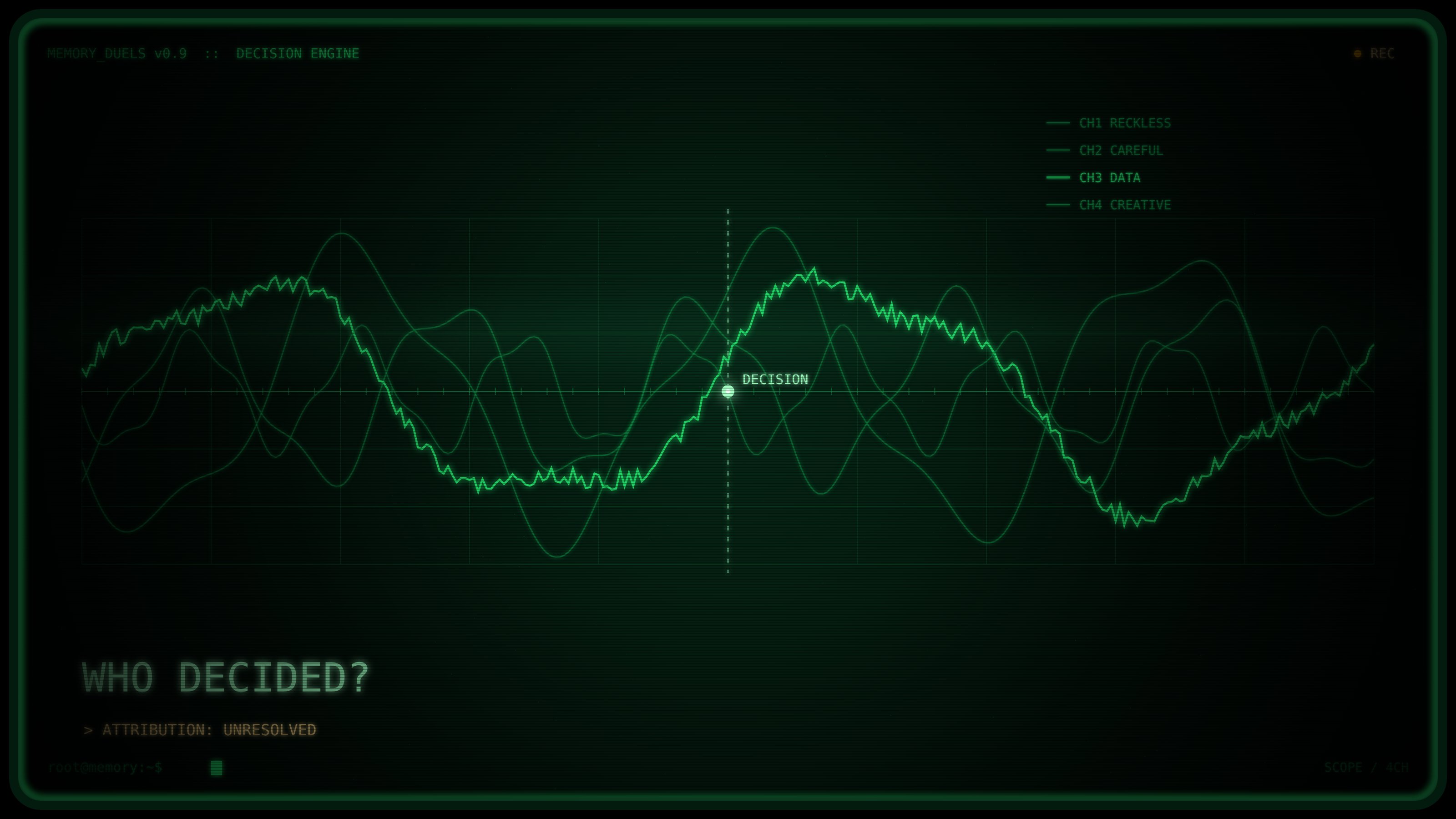
Open your diary from last year - if you keep one at all - and find an entry about a decision that turned out badly. Now be honest: as you read it back now, do you find yourself arguing with your past self? Almost certainly not. You nod. ‘Well, yes, it seemed sensible at the time.’
That’s exactly why your diary didn’t help you.
For the past year, you’ve been sold a ‘second brain’. Notion, Obsidian, Mem, and now even armies of AI agents that capture your every thought. They’re all rushing to save the same thing - facts. Links, notes, meetings, articles you haven’t finished reading. And they’re all fixing the wrong problem.
Because losing facts isn’t what hurts the most.
What hurts the most is losing the "you" who used to make decisions. And no ‘second brain’ has managed to preserve that yet.
Below, I’ll discuss a tool that attempts to preserve precisely that. And why, behind the gimmicky slogan ‘AI clones argue amongst themselves’, lies something far more unsettling than just another note-taking app.
A world where memory still existed yesterday
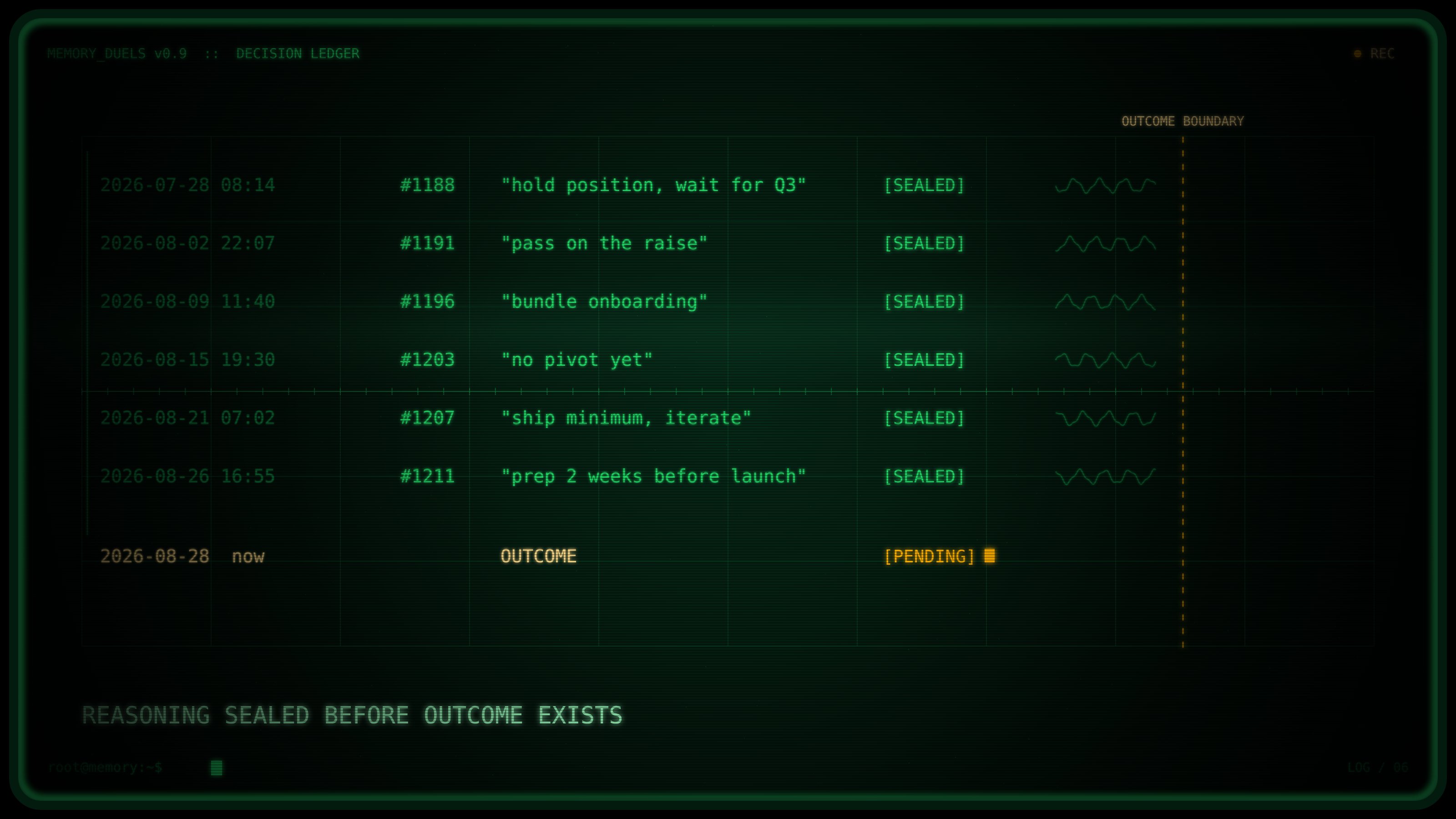
To see the shift, remember what a ‘second brain’ actually promises.
It promises high throughput. Your brain can’t keep up with the incoming flood - email, Slack, three tools, each containing a third of your notes - so an external system takes on this workload. It’s a straightforward task, and it really does get the job done: capture, index, retrieve on demand. A repository with a nervous system.
But this ‘second brain’ has a blind spot that isn’t mentioned in the presentations.
It stores what you’ve written down. It doesn’t store who you were when you wrote it down.
Let’s say you’re even disciplined. You’ve made a note: "Decided not to pull out of the deal because I’m waiting for the report." A month goes by. You reread it. And this is where the trick happens, one you don’t notice: you read this note already knowing how it all turned out.
If the deal took off - you’re a genius, "I just knew it" If it failed - "What was I thinking?". In both cases, you no longer see that line of reasoning. You see it through the lens of the outcome.
Psychologists call this ‘hindsight bias’: as soon as the outcome is known, the brain retroactively rewrites the probabilities as if everything had been obvious from the very beginning. Your own note isn’t immune to this. It lies there, but it’s you-the ‘you’ of today, who knows the answer-who’s editing it.
A diary preserves your words. But those words have no advocate. Your past reasoning stands defenceless against your present self - and always loses.
What, exactly, has changed?
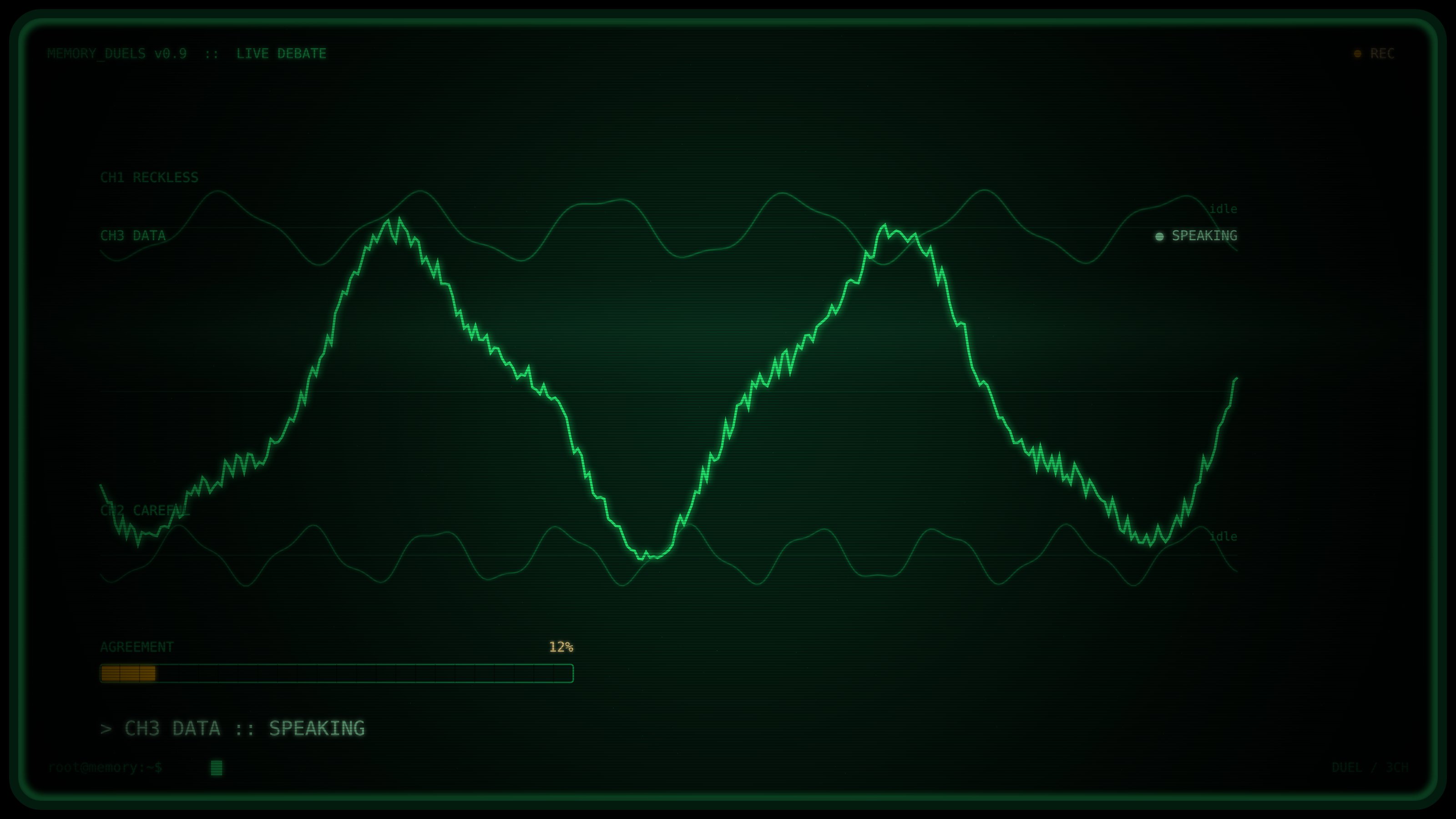
A new class of tools has emerged that record not notes, but decisions.
The difference is subtler than it seems, which is why the change is gradual. A note is something you’ve decided to save. A decision is what you chose, when, and based on what reasoning at that very moment. Persistent agents, which now run on people’s devices round the clock, are doing this cheaply for the first time: they log the choice and its rationale the very second it is made - before the outcome has even come to light.
And now look at the door this opens.
If the system has enough of your recorded thought processes - how you made decisions under pressure, how you hesitated, what you ignored - it can do more than just compile a summary. It can construct a version of you. The person who reasoned in precisely that way.
This is precisely the idea I want to explore. The system reconstructs several versions of your thought process - from your own past decisions, messages and code - and pits them against one another regarding what you should do next.
You’re deciding whether to pivot. On the screen are three boxes.
The first one remembers all the times you acted quickly and it paid off: ‘You always work best under pressure. One week – and go.’ The second one remembers all the times rushing cost you money: ‘Last time you rushed into it, you lost fifty thousand. Get ready.’ The third one doesn’t argue, but simply states: “Your success rate for pivots is sixty per cent, and only when you’ve spent over two weeks preparing.”
They’re arguing. You’re watching.
It sounds like a psychological game. But the ‘game’ here is merely a façade.
How to set this up on Grok Bot
And this isn’t just a thought experiment. It’s the very same runtime that people are already using to hire teams of assistants, and it can be deployed here with almost no modification.
In Grok Bot, an agent consists of a name, a job title and a description, and the entire team resides on a shared cloud-based computer that isn’t reset when you close the tab. Usually, people use this to assemble a team of staff: chief of staff, content, research. Instead of staff, assemble versions of yourself. ‘Reckless’ is an agent whose job description sounds like ‘extract instances from my history where speed paid off’. ‘Cautious’ is the one whose job is to look for where rushing cost money. ‘Data’ is the one who doesn’t argue, but analyses the log of decisions. And at the top is the dispatcher, the equivalent of Grok Bot Brain: it doesn’t pass judgement; it stores decisions, brings the relevant debate to the relevant choice, and ensures that every argument is based on recorded facts, not on something made up after the event. Not a single line of code - you define this through roles, just as you would when hiring people.
And this is where it becomes clear why persistence-rather than yet another chat- is the key to this whole endeavour. A clone is worth exactly as much as it remembers between sessions: a window that forgets you when you log out cannot, in principle, reconstruct you-it has nothing to go on. But triggers provide the second, and most important, element. The discussion doesn’t start when you remember it, but when you’ve made a decision: the new choice is logged - and it initiates the debate itself, before you even begin to refine your version of events. What Grok Bot marketed as ‘always on’ doesn’t actually boost productivity here. It’s designed to catch you out before the source code does.
A team of 25 agents - but not staff members, just you
A typical team at Grok Bot would consist of a salesperson, a researcher and a content creator. Here, the team is different: twenty-five agents, and almost none of them ‘do the work’. They capture, store and pit your decisions against one another. Don’t look at the names — look at what each one safeguards.
Capture - catching a decision before it cools off
Input (raw voice or text). Decision (records the very fact of the choice). Rationale (extracts the ‘why’ in the very same second). Context (a snapshot of the moment: deadlines, stakes, pressure). The fork in the road (what else was considered and discarded).
Versions of you - those who argue
Reckless. Cautious. Data-driven. Creative. Lazy. Five ways in which you already make decisions - it’s just that usually they argue one at a time in your head, rather than all at once and out loud.
Your model - the source from which the clones draw
Decision index. Pattern graph (where you falter). Triggers (under what pressure you crack, which argument always wins you over). Voice (how you phrase things — so that the clone sounds like you, not a bot). Updating (what makes each clone more accurate with every decision).
Recording integrity - the group for which this whole endeavour was conceived
Freeze (seals the line of reasoning before the outcome emerged). Outcome (records in a separate layer what actually happened). Anti-rewrite (prevents past entries from being retroactively altered). Confidence (assigns a rating to each connection, rather than simply labelling it a ‘fact’). Corroboration (elevates a conjecture to a fact only upon receiving a second independent confirmation).
Argument - match and present
Dispatcher (equivalent to Grok Bot Brain: maintains the entire graph and brings up the relevant argument for the relevant choice). Moderator (manages the queue of replies). Guess-Yourself (hides signatures and catches you out when there’s a mismatch). Face-to-Face Confrontation (once a month, replays an old debate against the current outcome). Contradiction Detector (detects when clones diverge from your own behaviour).
Twenty-five sounds like a lot until you realise it’s five tasks: capturing the decision, deriving versions of you from it, refining them with a model, protecting the record from lies, and pitting them against one another. Any decent ‘second brain’ can handle four out of the five. The fifth - the one that prevents you from rewriting your own past - is something no one else has. Remove it, and it’s just another app with AI characters. Leave it in, and you get something a diary simply cannot be.
The part that everyone overlooks
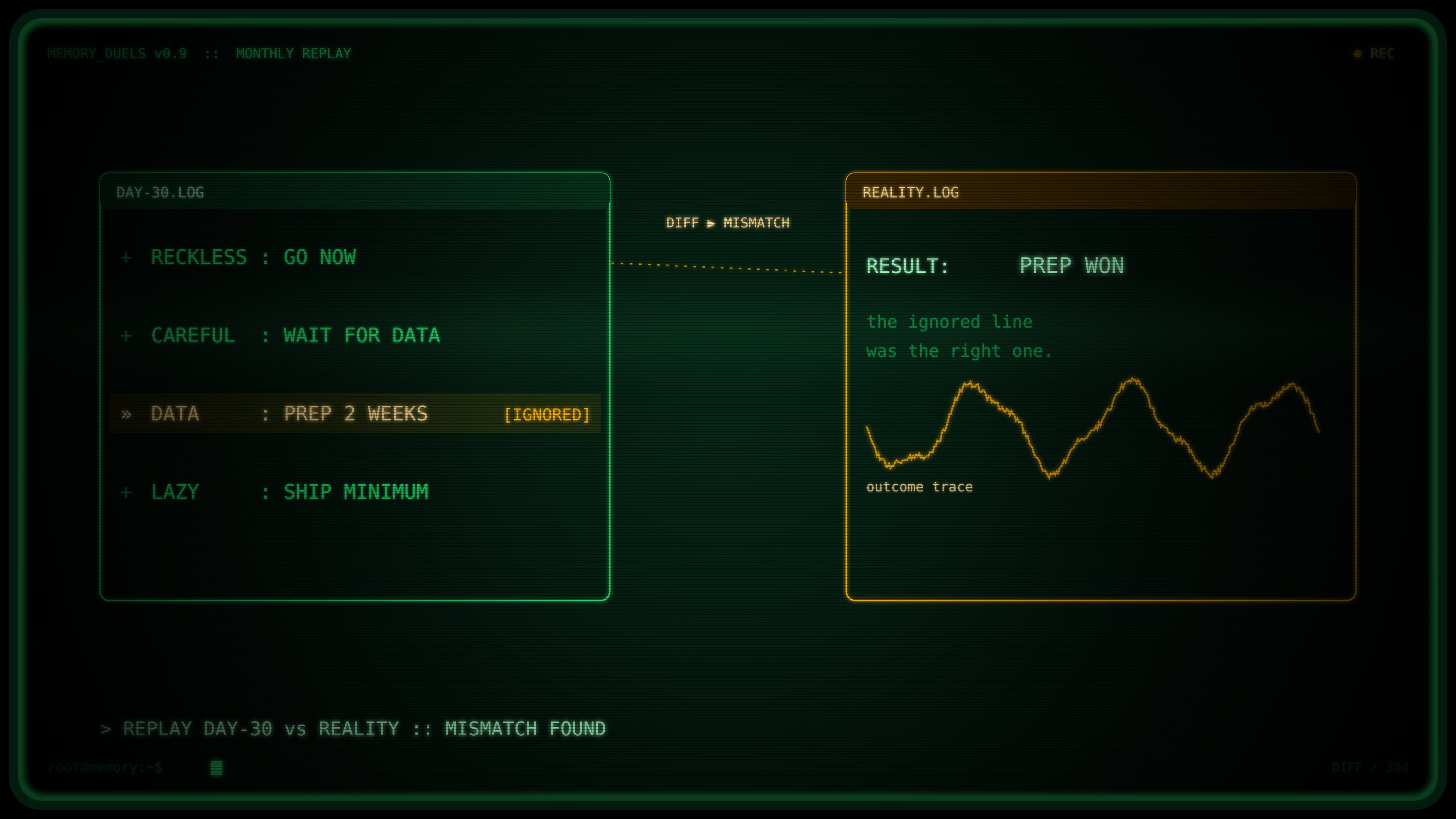
Memory has never been a scarce resource.
What was scarce was an honest witness.
A diary records your reasoning, but cannot defend it - because it cannot contradict your present self. But a reconstructed version of you can. Its value isn’t that it’s clever. Its value lies in the fact that it’s inconvenient: it holds onto the version of you that you’d quietly rewrite at the very first slip-up - and won’t let you rewrite it.
That’s the first moment when it clicks.
You’re not arguing with an AI. You’re arguing with your track record. The very one that, all this time, you’ve been quietly assessing on a lenient scale.
And here, the idea has a feature that, at first glance, seems like a bit of fun, but in reality hits right at the heart of the matter. The system shows you arguments without signatures – it doesn’t tell you which version is currently on the screen – and asks you to guess who it is. Whether you’re cautious or reckless.
And you get it wrong.
Because the person you think you are and the person you actually turn out to be are different people. The misstep in this guessing game is the product itself. It catches you out on the discrepancy between who you think you are and how you actually behave - precisely at the point you’ve spent your whole life trying not to look at.
The second point concerns that very figure. "Sixty per cent of successful pivots".
Just think about why this figure exists at all. It exists solely because the system recorded the decisions before it knew the outcome. A person who were to reconstruct the same statistics from memory would count the wins and, to put it mildly, forget the losses - not out of dishonesty, but because that is how recall works. The machine’s real advantage here does not lie in its intelligence.
It lies in the fact that it was not allowed to rewrite its memory once the final outcome became clear.
Why does this build up?
There’s one detail that turns a handy tool into a game-changer.
Every decision you make provides data for a more accurate model of you. Not a more helpful assistant. A more accurate opponent.
In a month’s time, the "cautious you" will be nothing more than a crude stereotype. A year on, it’s a map of your specific failings: exactly which situations make you hesitate, what kind of pressure causes you to crack, and which argument always wins you over, even though it shouldn’t. The system isn’t building a flattering portrait. It’s compiling a record of your recurring mistakes - and presenting them in your own voice.
And as soon as your line of reasoning has become a file, you can do things with it that were impossible with a live line of reasoning. You can replay it. You can compare today’s argument with last year’s on the same subject -and see that the arguments haven’t changed, even though you’re convinced you’ve grown. In theory, you can even pass it on: not "my notes" but "how I thought"
Think about what becomes a commodity at this level. Not a model. Not an app. The way in which a specific person makes decisions. Something that used to disappear along with the person themselves.
To be honest – on the issues
Firstly, and this undermines the whole pretty picture: a model built on your decisions sees choices, not reasons. It knows what you did - but can only guess why. "You’re reckless" is a label the system has come up with. And labels become a script: give a person a role, and they’ll start playing it. A tool that promises to get to know you can imperceptibly reduce you to a stereotype, and then you yourself will conform to that stereotype.
Secondly. That very figure I’ve just used to praise the system is flawed from another angle. "Sixty per cent" is the proportion of the decisions you’ve bothered to log. The system knows which past choices ‘worked’, and every reconstructed version of you is imbued with the outcome precisely where it sounds most confident. It is confident in a past that it has recorded only halfway.
Thirdly, and this is subtle. Memory reinforces just as easily as it corrects. By replaying your patterns, the system can cement them. The ‘cautious you’, pieced together from your moments of fear, will one day talk you out of the one risk worth taking - and will do so in your own voice, which is far harder to brush aside than any advice from a stranger.
The fourth point is the most unpleasant. If you take the argument with yourself out into the three boxes on the screen, you can stop having it inside your head. A tool designed to force you to confront yourself just as easily turns into
What has actually changed
We were promised a second brain that would remember things for us.
This one is trying to remember us.
And here’s the uncomfortable realisation: the version of you that it pieces together from your decisions is almost a stranger. Not because the system is lying. But because, all your life, you’ve been quietly rewriting that person every time they turned out to be wrong. The "second brain" filled in the gaps in the facts for you. This one fills in the gap you’ve been carefully ignoring - between who you remember yourself to be and who you actually were.
A year ago, we were debating whether AI would take over our tasks. Whilst we were debating, it quietly crept closer to the heart of the matter – not to what we do, but to how we decide to do it.
So the question for you isn’t whether your clones are intelligent.
The second brain asked: "What have I retained?"
This one asks a tougher question: will the "you" who made that decision agree with you - and will you be enough to check it?
If you enjoyed this article, please give it a like and leave a comment
If you enjoyed this article, please bookmark it
If you’d like to find out more about the world of AI, subscribe to my Telegram channel
Published on grokbot.sh. Cite the public log, not a prompt pack.