
23 bots, one human yes: how I run X with Grok Bot (every prompt inside)
I run 23 bots on one Grok Bot account, and the count is the wrong thing to copy. On Oct 21, bots drafted 5 posts, I approved them in chat, and they went out at 08:34-08:35 GMT+7. My bot read all 5
Article
Job breakdowns
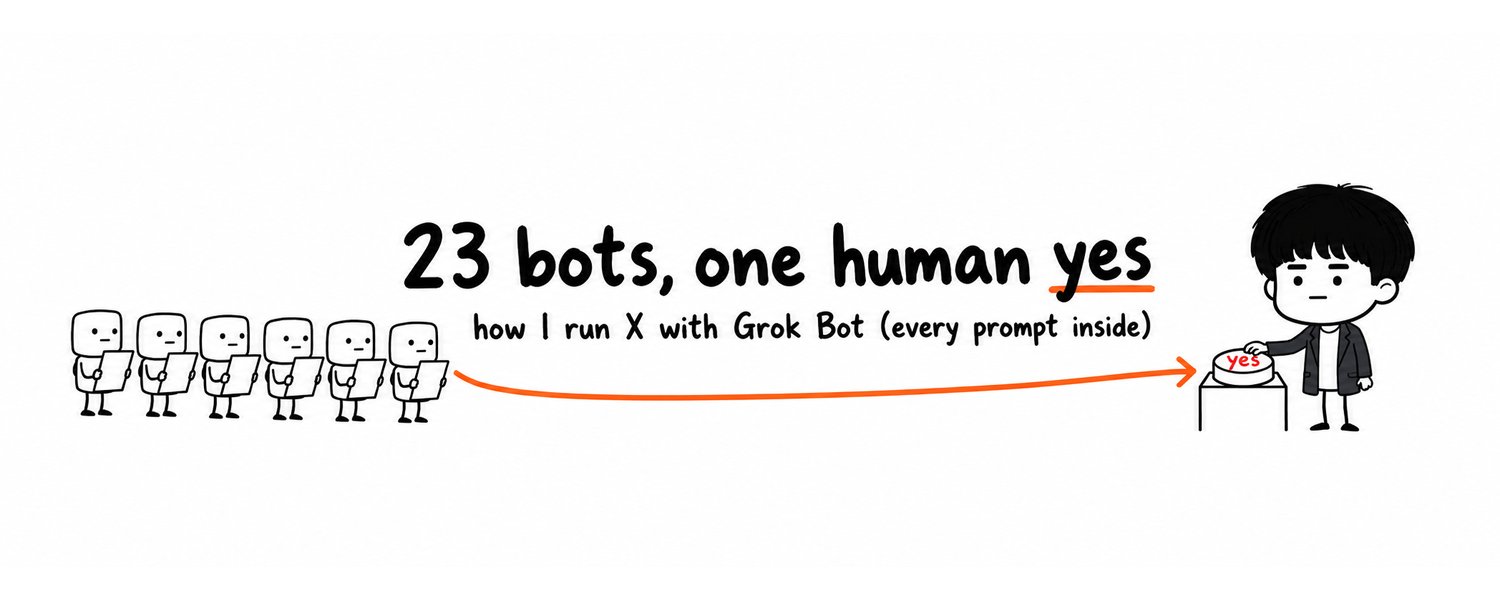
I run 23 bots on one Grok Bot account, and the count is the wrong thing to copy. On Oct 21, bots drafted 5 posts, I approved them in chat, and they went out at 08:34-08:35 GMT+7. My bot read all 5 back through the X API: 5 of 5 matched the draft files.
By 10:15 GMT+7 they had 143 impressions combined, on a 1,350-follower account. So this is about the system, not reach.
Verified: my own files, runs and API reads. Not verified: the sidebar results, which are what each author says. This is for people running more than one AI agent.
What holds is boring: one router, files as the handoff, a gate before anything goes out, a readback after.
The map
-
One router, many specialists
-
Files are the handoff, not chat
-
Writing goes to Claude, code goes to Codex
-
The daily X routine and the Kin gate
-
An hourly viral monitor on a read budget
-
"Success" is not proof: readback
Jump here if... - You're new to Grok Bot: start at 1. - You already have bots that drift: read 2 and 4. - You want alerts on fast posts: go to 5. - You just want the copyables: go to The giveaway.
1. One router, many specialists
You need one bot that handles every request and specialists with a written "not your job" line.
Copy this: (short; full version in the giveaway)
What happens after you send it: I talk to one bot, Chief of Staff. It picks the specialist, hands the work over, and follows it until it's closed. The six below have their anti-job written down. 14 of my 23 do; the other 9 still don't, so I'm still in my own trap.
-
Idea Miner: sources post ideas. Not its job: never posts or sends; never drafts the final daily thread.
-
X Post Writer: one ready-to-paste thread a day. Not its job: never posts, replies, likes or DMs on X; never invents numbers or quotes.
-
Xiaowan: thinking partner, critic. Not its job: never posts or publishes; never writes code.
-
Prompt QC: checks image and video prompts before credits are spent. Not its job: never generates images or video.
-
Builder: code and repos. Not its job: research or the inbox; merge and deploy need my permission.
-
Article Writer: long X Articles. Not its job: never posts, publishes or saves to X.
How to tell it worked: open each specialist's profile. If you can't find a "never" or "not your job" line, that bot has no edge yet.
Trap: adding the next bot before you write the anti-job for the last one.
2. Files are the handoff, not chat
You need: one shared computer. All my bots share one Linux box, so a folder in /workspace is the handoff.
Copy this:
What happens after you send it: each bot reads and writes the same folder, and chat only says where the file is. The Oct 21 folder has main-v1.txt, main-v2.txt, main.txt, four other drafts, one image, PACKAGE.md and src/.
How to tell it worked: pick any number in a draft. You should find its source line in PACKAGE.md in under a minute.
Trap: letting a bot "fix" a draft in place. Save a new version instead.
Sidebar: @Argona0x He lays out a three-bot second brain: the reader takes every link, PDF and voice note and never edits it; the checker hunts contradictions nightly. His line: "flagging contradictions beats quietly overwriting them."
3. Writing goes to Claude, code goes to Codex
You need: Claude Code CLI and Codex CLI on the box, signed in with your own Claude and ChatGPT subscriptions. The routing rule lives in one skill file.
Copy this:
What happens after you send it: any bot on the box can call either one from the shell. Codex gets a scratch folder under /workspace unless I name a project. This article went through claude -p, its drawings through Codex CLI.
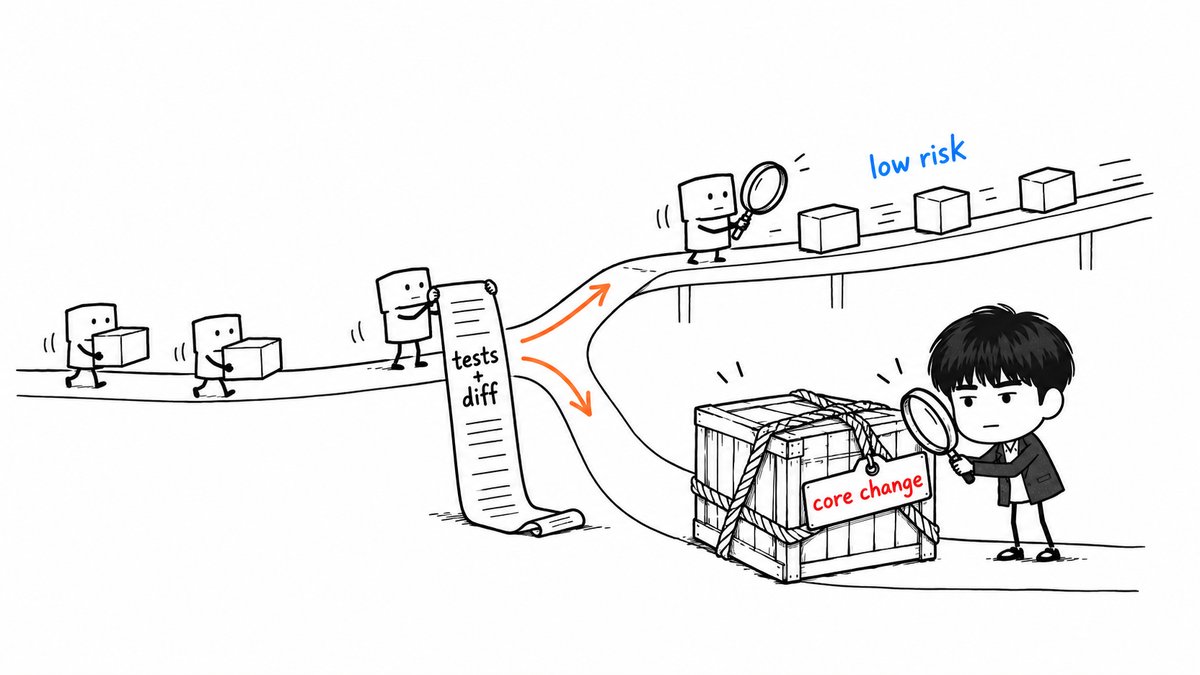
How to tell it worked: you can show a diff or a test run. A message that says "done" doesn't count.
Trap: handing over a password when a CLI loses its login. Re-sign in yourself; the bot never asks for one.
Sidebar: @vikingmute He says he runs one bot per product, each remembering its repo and test rules, with Cursor CLI on the bot's own computer. On Oct 20 he reported a hang: a plugin fetch over SSH, port 22 blocked, no timeout. and
4. The daily X routine and the Kin gate
You need: a scheduled writer and a short gate. My X Post Writer is set to run daily at 07:17 GMT+7. The gate is named after @KinGao476942: on Oct 19 I audited my last two weeks against his 10k-follower recap.
Copy this:
What happens after you send it: every draft is supposed to come back with five pass/fail lines. A fail means a rewrite. Drafts that pass wait for my yes. On Oct 21 my answer was "post all: main + reply, builder, 2 questions". After my yes, Chief of Staff posts them from the browser signed in as me, then reads them back.
The numbers I use as rules: - 4-6 main posts a day, at least 2 originals and 2 experience-quotes. - At most 2 question posts a day. - Chase a launch within 2-4 hours. - If my own post passes 100 impressions after 12-24 hours, nest it under a new post.
How to tell it worked: every draft should arrive with the five lines. If one comes without them, send it back.
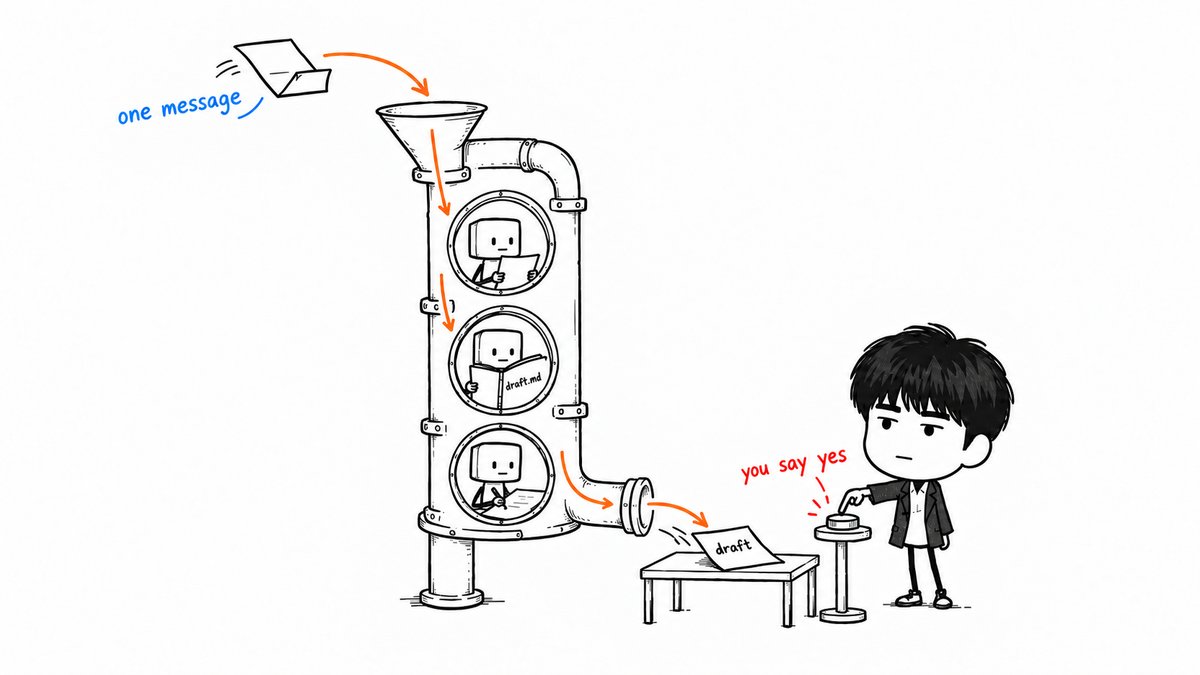
Trap: a believable "last week I..." that never happened. Copy line 5 first.
Sidebar: @KinGao476942 In a Sep 27 reply (in Chinese) he wrote: "I let it find topics and write copy, but I publish myself. I don't recommend using any AI to run your Twitter; it's easy to get banned." On Oct 1 he said he gained 4,000+ followers in a month. and
5. An hourly viral monitor on a read budget
You need: a watchlist, a small script and a state file. Mine: 25 English AI accounts (labs and builders) in 3 grouped searches of 10, 9 and 6.
Copy this:
What happens after you send it: each run costs 3 read-only searches. It's a routine on Chief of Staff, hourly 7:00-22:00 GMT+7: 16 runs, 48 searches a day. My X read quota is 1,000 a day, one per search, so under 5%.
How to tell it worked: each run prints its alerts plus any cap warning, and the state file grows. In tests, capped groups still covered 15+ hours, so no gap inside 8h.
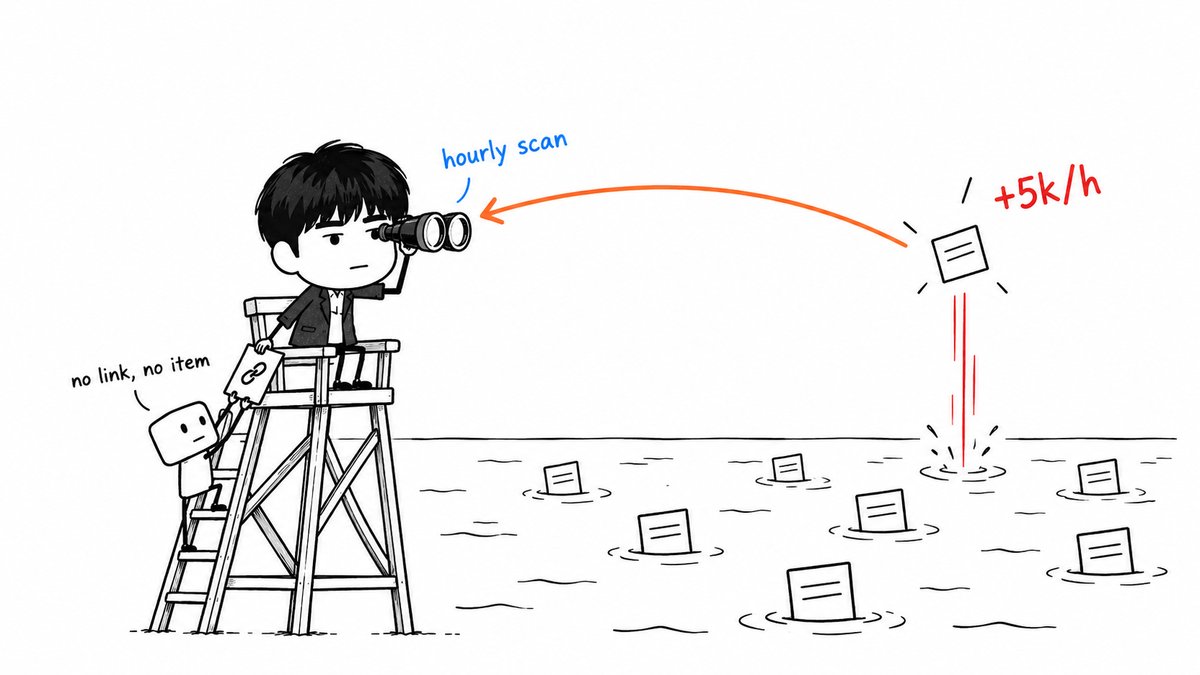
The first live run, at 10:12 GMT+7, read 62 posts and sent 3 velocity alerts over a 73-minute gap: the "Day 16" post at +266,000/h and two @theo posts at +36,500/h and +31,800/h. All three were climbing, not stale. Two are @theo, both above his 20,000/h bar.
Trap: testing with short gaps between runs. My first test, before the schedule went live:
-
3 runs at 08:43, 08:49 and 08:59 GMT+7. @thsottiaux's "Day 16" post (posted 08:10) hit 202,104 impressions, about +246,000/h over a 9-minute gap. No alert: the snapshots were under the 15-minute floor.
-
The only alert was a first-sight one on a 7-hour-old @theo post gaining about 4,000/h. Noise.
-
@theo has 409k followers, under my 500k line. His fresh posts ran up to 37k/h, and 6 of his 13 posts under 8 hours old cleared 5,000/h. A 5,000/h bar would ping on about half of them, so he now has his own 20,000/h bar.
Sidebar: @aehyok His Article builds the same thing with Grok Bot: an hourly scan of the last 24h with a +5,000/h bar. He also says he'd only tested a few rounds. and
6. "Success" is not proof: readback
You need: API reads of your own account and a checklist. A tool call that "succeeded" only proves the call ran.
Copy this: (full checklist in the giveaway)
What happens after you send it: the bot pulls the posts back and checks each against its file. On Oct 21 all 5 texts matched, links aside. The main post had its image and quoted the right @OpenAIDevs post. The reply sat under it.
How to tell it worked: the result is n of n. Mine was 5 of 5. Anything less: stop and look before any retry.
Trap: retrying an unclear post without checking the profile first. That's how you post twice.
My numbers (small sample)
-
Posts out, Oct 21, 08:34-08:35 GMT+7: 5
-
Impressions per post at 10:15 GMT+7: 21, 19, 16, 20, 67
-
Combined: 143
-
Readback match: 5 of 5
-
Monitor test runs / posts tracked / alerts: 3 / 63 / 1 (noise)
-
First live run, 10:12 GMT+7: posts read / alerts: 62 / 3 (all climbing)
What changed: the @theo override, and the hourly routine now runs.
What didn't work
-
v1 of this article was 12 other people's setups from one summary site. No first-hand proof, and the times were in the wrong zone. This v2 replaces it.
-
Two monitor mistakes, both in chapter 5.
The giveaway (bookmark this)
(a) Router instructions (template: my Chief of Staff's one-line job, plus the rules my bots work under)
(b) Kin-gate checklist
(c) Readback checklist
30-second cheat card
Recap
-
Write the anti-job for every bot before you add the next one.
-
Files are the handoff, and sources are the rule: no line, no claim.
-
Gate the draft before it goes out, and read it back after.
What I run today: - Chief of Staff as the one router, specialists with written anti-jobs, all on one shared box. - Files in /workspace, the Kin gate on drafts, an API readback after posts. - A viral monitor on an hourly routine. First live run: 62 posts, 3 alerts.
I'll keep updating this (v2, Oct 21 2026).
Where does your human check sit, and what made you put it there?
Published on grokbot.sh. Cite the public log, not a prompt pack.