
Grok Bot for Polymarket: How to Run a 24/7 Research Desk That Digs While You Sleep
On Polymarket, the trade takes three seconds. The loss usually got decided ten minutes earlier, the moment you skimmed the resolution rules instead of reading them. Here's the shape of it. A market
Article
Job breakdowns
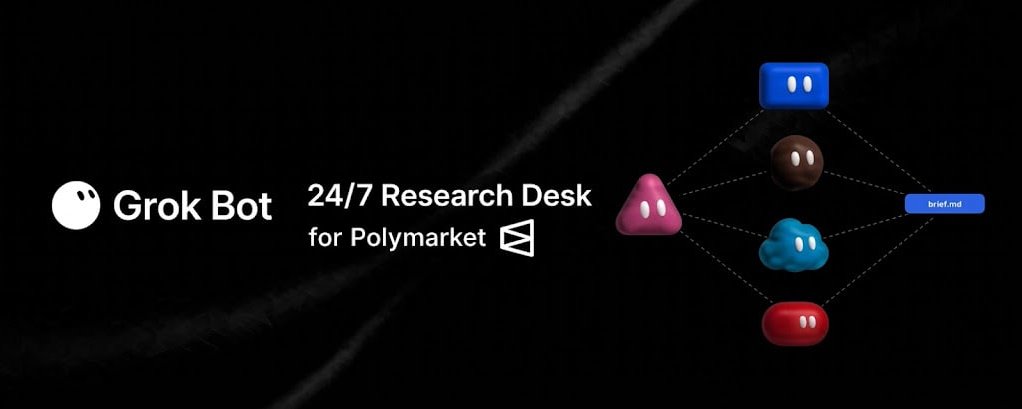
On Polymarket, the trade takes three seconds. The loss usually got decided ten minutes earlier, the moment you skimmed the resolution rules instead of reading them.
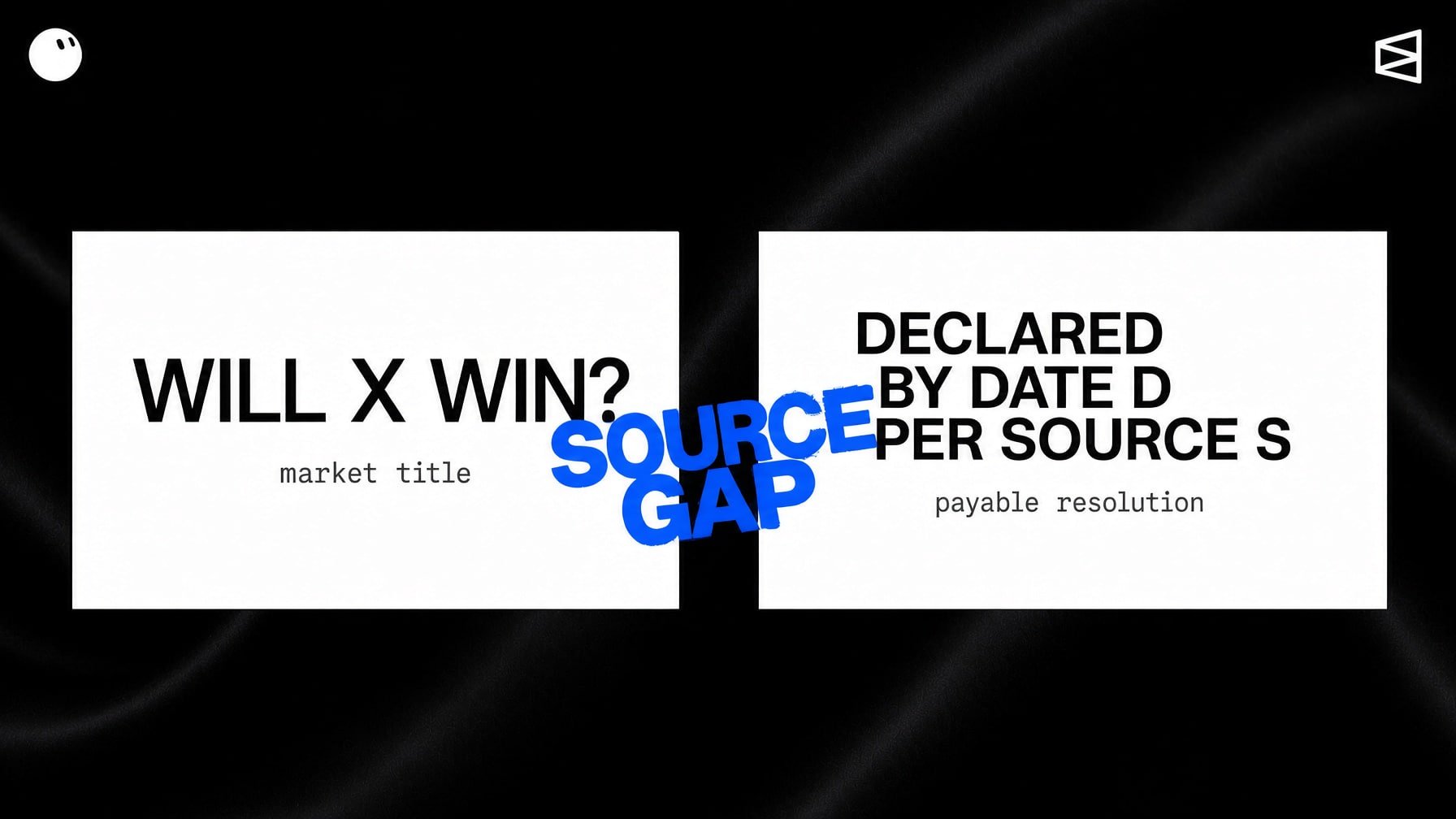
Here's the shape of it. A market title reads "Will X win?" The resolution text actually pays out on "Will X be declared winner by date D, per source S." Those are not the same sentence. If S never issues a ruling, or D passes first, the title's obvious YES can resolve NO while the crowd is still celebrating. Hypothetical, but it's the exact gap that eats stacks.
So instead of pasting a market title into a chat window and asking for a vibe check, build a desk. Grok Bot can run one 24/7: it pulls the packet, rereads the fine print, estimates a base rate, and writes a brief to disk. The desk doesn't output a trade. It hands you red flags. You still click.
Grok Bot is a persistent night desk writing into /workspace, not a chat tab. Close the laptop around 11 PM. The briefs keep landing.
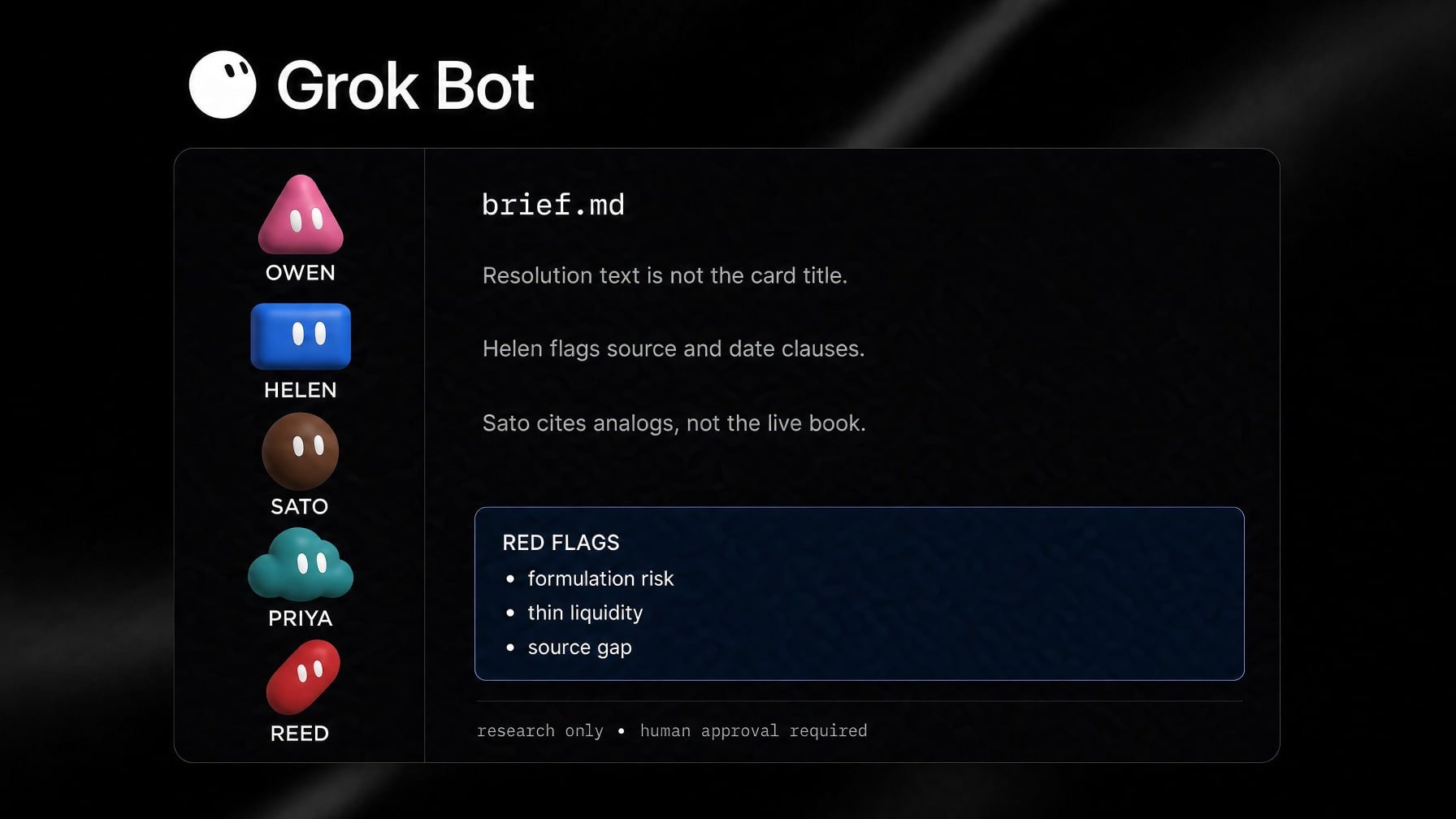
Here's how to set it up.
Stop asking "is this cheap." Assign a charter instead
Edge lives in the contract, not the card title. Ask an AI to guess the outcome and you're one confident hallucination from broke. A charter fixes scope, hands over specific tools, and draws a hard line where the bot stops and you take over.
Step 1: Build the Five-Question Desk
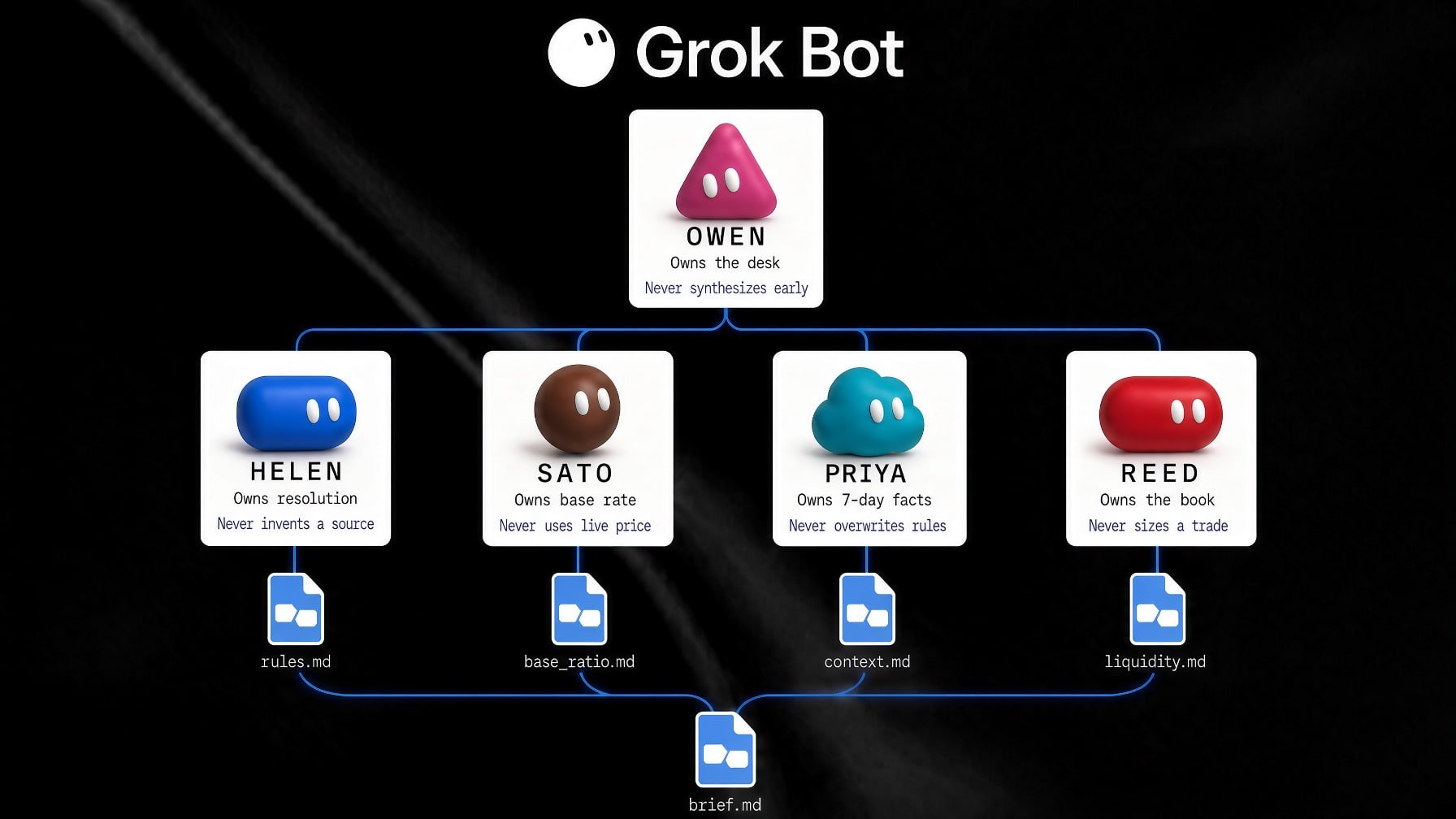
One bot doing everything produces noise. Split the work into one desk lead and four clerks, and don't let the brief get written until all four files exist.
-
Desk Lead ("Owen"): the single inbox. Takes a slug, splits the work, refuses to synthesize until four specialist files land.
-
Resolver ("Helen"): owns the resolution text, not the card title. Tracks YES conditions, the named source, dangerous clauses, and where the headline diverges from the payable outcome.
-
Base-Rate Clerk ("Sato"): owns historical analogs. Book says 45%, base rate says 20%, he flags that the crowd is paying for narrative.
-
Context Scout ("Priya"): owns the last 7 days of news, facts and dates only. Separates what's already priced in from what the book may have missed.
-
Book Checker ("Reed"): owns book size. A thin book taxes both your entry and your exit.
The Roster Rule
In Grok Bot, a profile description is a job title, and Owen routes by reading it. Helen's description has to say, in plain text, that she owns resolution text and formulation risk.
Five questions, baked into every charter:
-
What does this market actually resolve? (Title ≠ rules.)
-
What's the historical base rate for similar events?
-
What fresh context isn't in the price yet?
-
Will liquidity carry the size you want?
-
Where does the "obvious" outcome diverge from the payable one?
Step 2: No vibes before the packet
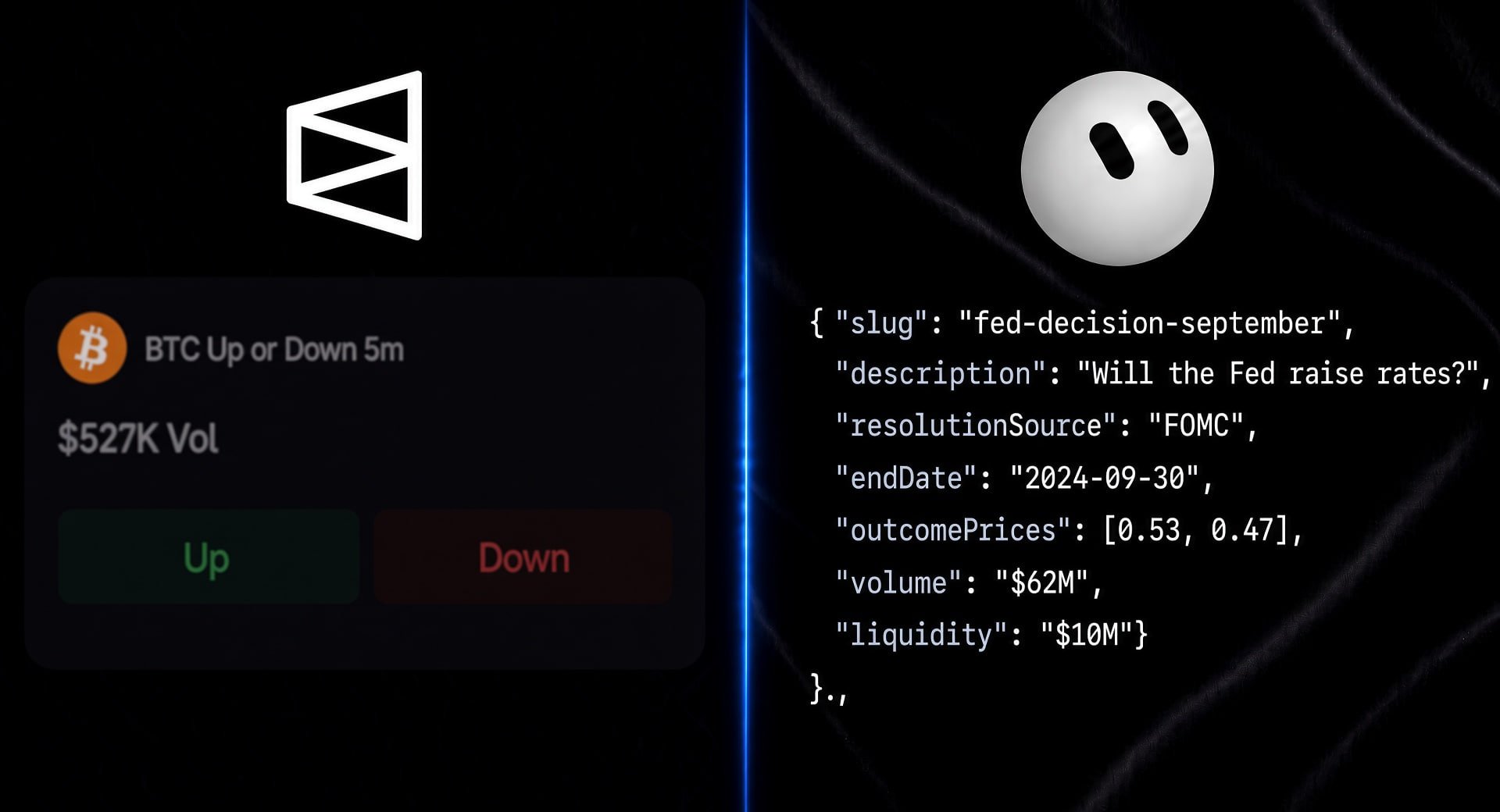
Run a title through a chat window and you get a hallucination back. You need official rules, a named source, a hard end date, and real book depth. First artifact out of the desk is always raw.json, never a paragraph.
The bot pulls the Gamma API from a cloud terminal. Read access needs no API key. Never paste a wallet key or seed phrase into any of this.
If a rule is buried behind a login wall, use a session handoff through Agent Computer. The bot hits the wall and sends a screen request so you can complete 2FA yourself. Passwords never enter the chat. The session stays shared across the whole desk.
The pull skill, word for word:
Endpoints:
https://gamma-api.polymarket.com/events?active=true&closed=false
https://gamma-api.polymarket.com/markets?slug=YOUR-SLUG
Gamma is the rules and the quoted price. The CLOB is Reed's territory: actual depth, not mid-market. Search tools (Tavily, Brave) belong strictly to Priya. Search never overwrites resolution text. Missing a field means the desk writes "not in payload," never a guess.
Step 3: Teach the contract once, reuse it forever
The title is not the truth. The resolution paragraph is. Owen drops the slug and the raw.json path. Helen reads the description from the packet, never from the site card. If the rule is buried in a messy UI, open the Agent Computer, click Teach a Task, scroll to Resolution, highlight the text, stop, and save it as a reusable skill.
The Helen prompt:
No source in the text: flag FORMULATION RISK: SOURCE GAP. Two plausible readings: list both, don't pick a winner. Never paraphrase a dangerous clause.
Step 4: The Hard Stop
Research runs all night. Capital doesn't move without you. If your desk starts ending memos with "buy YES, size 40%," the whole setup has failed.
Every researcher profile ends with this, unedited:
Bind Owen to the same rule. An orchestrator that "helpfully" adds a size number breaks the desk from the top down.
Step 5: Everything lives in /workspace
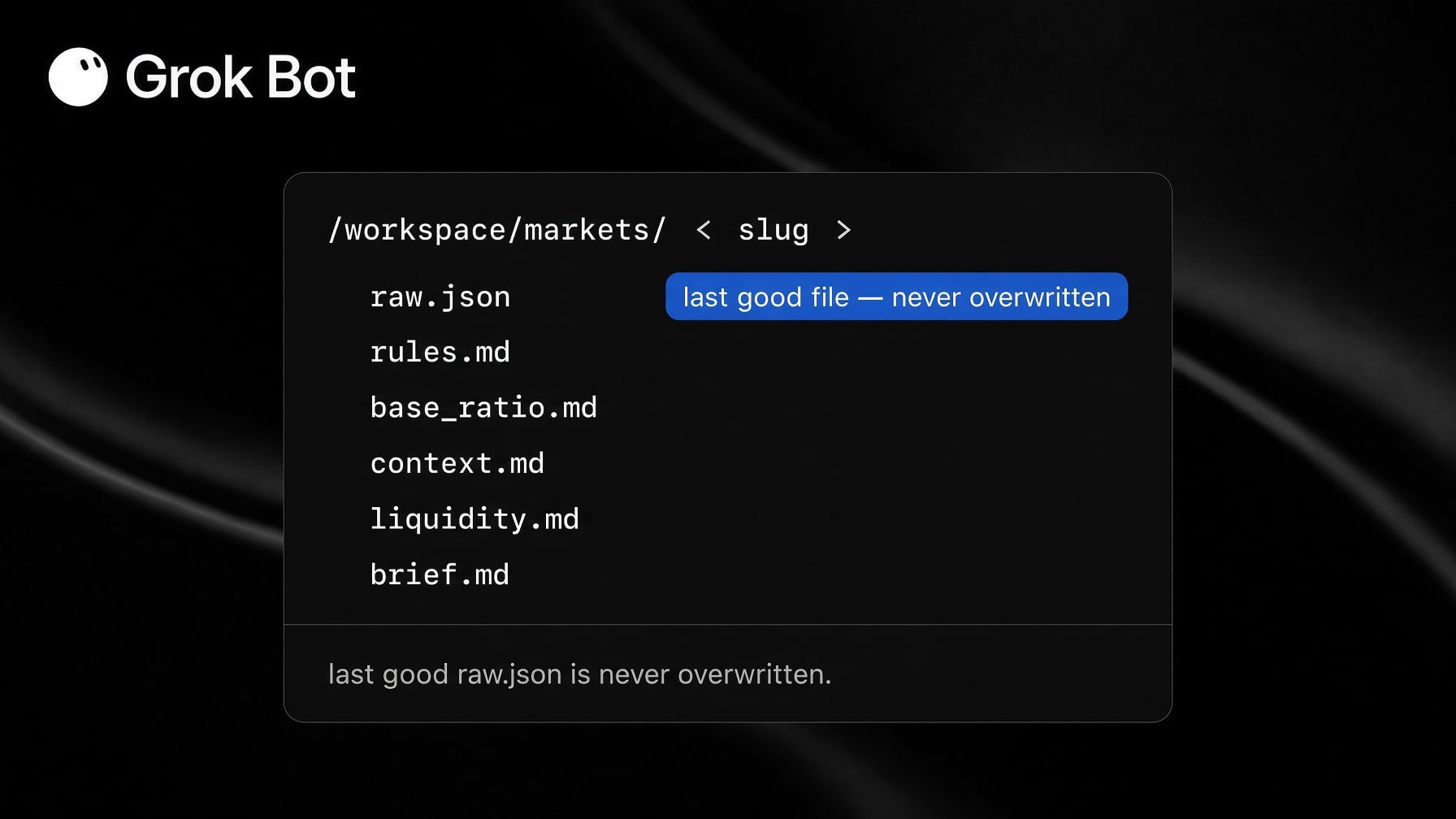
Cloud environments rebuild, reset, wipe packages. Chat history goes with it. The one folder that survives is /workspace. A brief sitting in a thread is gone by next week. A brief sitting in /workspace is still there Friday, quoting the same clause it quoted Monday.
Sato's prompt, no live price allowed in it:
Priya's prompt:
Owen's synthesis prompt:
If requests is missing after a rebuild, reinstall then pull. A failed pull must not overwrite the last good raw.json.
Step 6: The desk writes, you click
Owen and the clerks handle the overnight scan: packet, rules, 7-day context, liquidity note, brief.md. You still adjudicate a contested reading, check whether the edge survives the spread, pick limit vs. take, and place the order.
Four passes, fixed order, every time:
-
Base rate. Analogs only, no live price in the prompt.
-
Update. Dated facts from context.md, nothing else.
-
Adversarial. Helen attacks the rules text, not the timeline mood.
-
Calibration. No track record in this category yet? Write "unknown."
Never ask for a probability first. That's a dressed-up guess wearing a number. Force the five questions, then let a number come out the end, buried in flags.
Set this up tonight
-
Pick one open market. Do not trade it. Force brief.md. If Helen raises a formulation flag, stop there — that's the whole point of building this.
-
Deploy Owen. He delegates by profile text and won't synthesize without four files.
-
Run Teach-the-Contract once, then rerun it against your last five trades. Count how many titles lied to you.
-
Give Priya search access, with one rule bolted on: search never overrides the Gamma packet.
-
Audit every profile description for a stray "execute" or "buy YES." Delete on sight.
-
Move every brief into /workspace/markets//brief.md. No file there means you're not researching this market. You're just in a thread.
The trade takes three seconds either way. Whether you're paying for someone else's headline or your own brief is the only part you control.
Published on grokbot.sh. Cite the public log, not a prompt pack.