
How I’m Using Grok Bot to Make $30K+ a Month Posting Slideshows
I got tired of spending all day fixing AI slop, so I built a system that lets me focus on what actually makes money. AI is genuinely insane for creating content now, but there’s one part of it that
Article
Job breakdowns
I got tired of spending all day fixing AI slop, so I built a system that lets me focus on what actually makes money.
AI is genuinely insane for creating content now, but there’s one part of it that can drive you crazy: you generate an image, notice three tiny things are wrong, regenerate it, something else breaks, you fix that, and suddenly you’ve spent 20 minutes trying to get one image that still isn’t exactly what you wanted.
That was killing scalability for me.
I could use AI to generate the content, but then I was basically becoming the quality control department for every single image. And once you’re trying to make dozens or hundreds of slideshows, sitting there fixing tiny mistakes all day is not a business. You just end up mentally exhausted doing work that shouldn’t require your attention in the first place.
My first thought was to hire a VA.
Then I realized I’d have to teach them everything from zero, explain what makes a good creative, explain what can change and what can’t, review their work, deal with bad results, deal with people getting sick or disappearing, and repeat the whole process every time I wanted to add another angle.
So I built something different.
I started building Grok Bots for my slideshow angles.
Now each bot knows exactly what the angle is supposed to look like, what it is allowed to change, what has to stay consistent, how I want the images generated, how I want them reviewed, and where I want the finished creatives uploaded.
It basically turned the most annoying part of AI content creation into a production system.
And once you combine that with the right offers and enough distribution, you'll have a $30K+ a month system without spending a single dollar on paid ads.
Start With The Offer
Before you build any bots, you need something to actually promote.
Go onto Glitchy and find one or more CPA offers that make sense for the audience you want to reach. The important thing here is not just finding an offer with a big payout. You want an offer with a clear audience and a desire you can actually build content around.
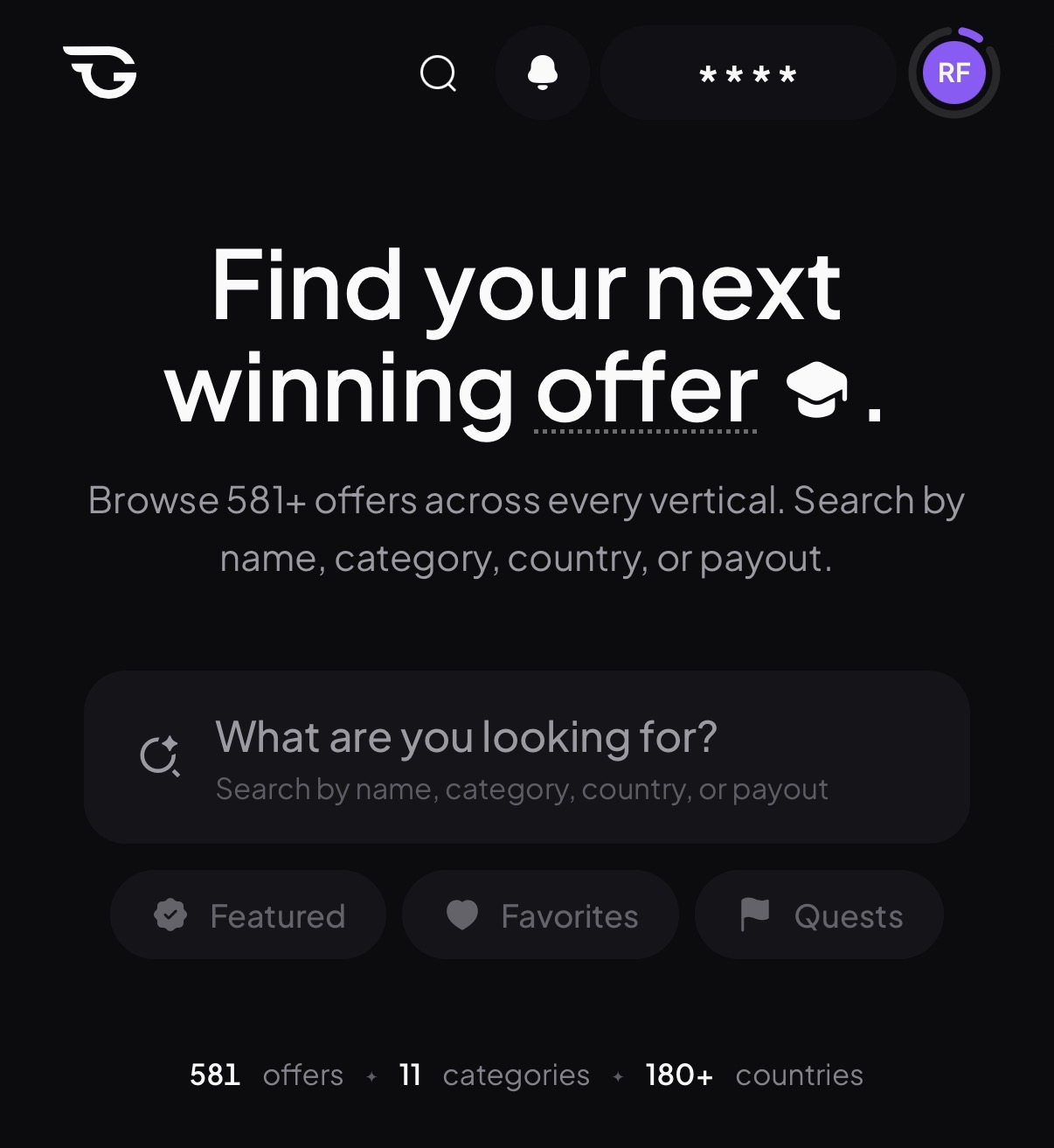
Once you have that, you can start looking at the content already getting attention in that niche.
The goal isn't to sit around trying to invent some revolutionary new slideshow format.
It's to figure out what already deserves volume and then build a system that lets you exploit it.
Find Angles That Are Worth Scaling
This is where I spend most of my actual thinking.
Go on TikTok and look for viral slideshow formats in your offer niche. You can also look at adjacent content, like girl shopping content, product discovery, fashion content, beauty content, lifestyle content, or anything else where the same type of slideshow structure is already getting attention.
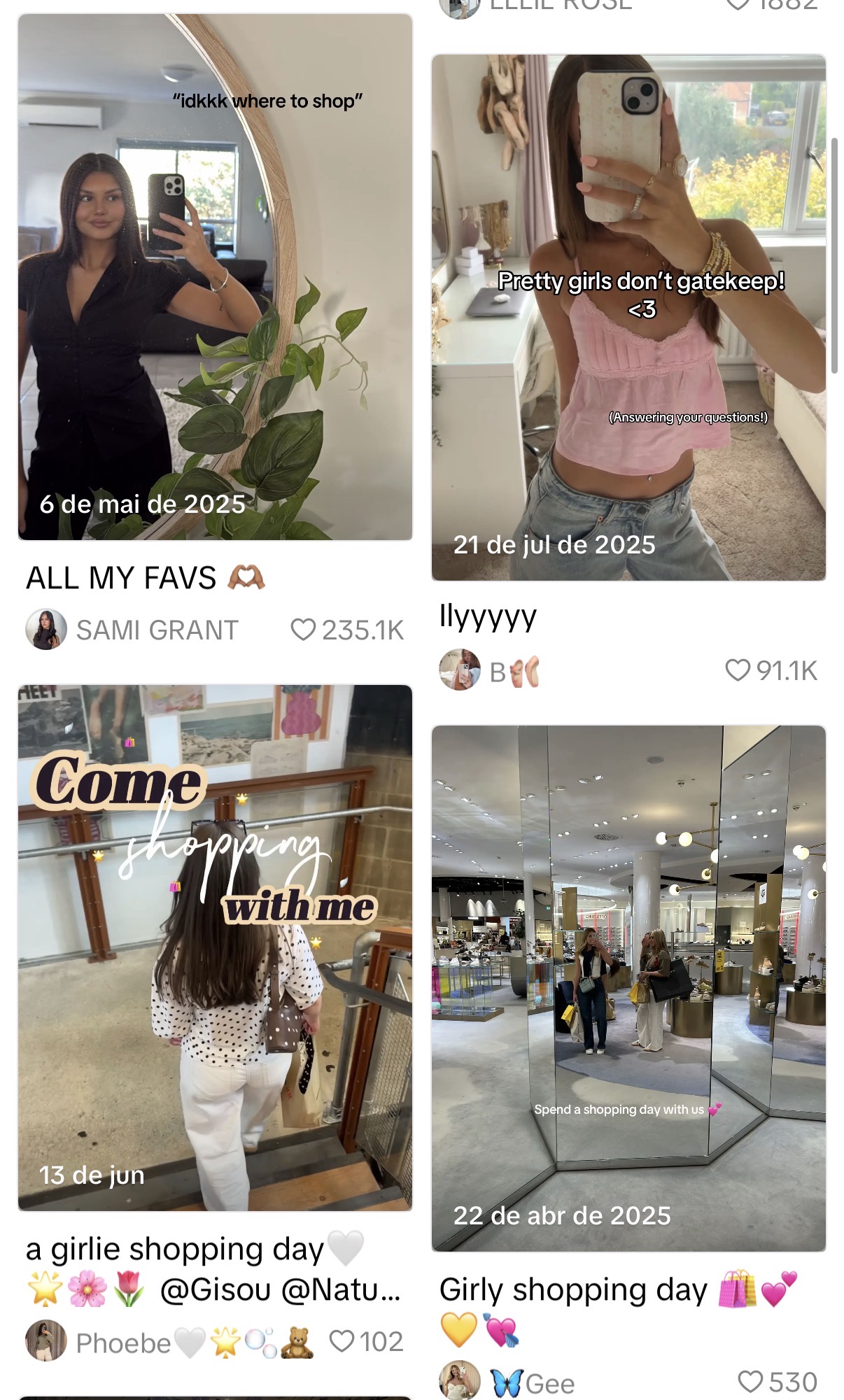
When you find something you like, don’t just save the post and blindly copy it.
Look at every slide and decide what is actually important to the angle and what is just replaceable.
For example, say the first image is a girl and the text says “What I wanted vs what I got.”
The important parts are the female character and the hook.
But that doesn’t mean you need the exact same girl, exact same photo, exact same background or exact same camera angle.
Those things can change.
You might use a different girl, a different location, a different photo angle, different clothes, different lighting, while keeping the underlying concept intact.
That distinction is extremely important because this is what you’re teaching the bot.
You’re not saying, “make me a similar image.”
You’re telling it what has to remain consistent for the format to work and what it is allowed to change so you can create endless variations.
Build Your First Bot
First install the Grok Bot app and create a brand new bot, give him the original example as a reference and explain the rules.
Tell it exactly what needs to stay.
Tell it exactly what can change.
Tell it exactly what you want the final slideshow to look like.
I also have it use Google Flow to generate the images, using Nano Banana Pro, although you can use whatever image model you have access to.
Flow is my go to because it is cheap and the image generation doesn’t cost credits, so the bot can keep generating and iterating without me worrying about every individual generation.
And this is where Grok gets really useful.
You can tell it to make the image, review it, look specifically for AI slop, identify anything that looks wrong, fix it, review it again, and only send me the final version once it passes its own check.
That one change makes a massive difference.
Instead of opening every image and looking for weird fingers, bad faces, incorrect text, inconsistent objects or other obvious AI mistakes, the bot handles that review loop first.
That took the amount of AI slop output down to almost 0.
Teach It Properly
You shouldn’t expect the bot to be perfect on the first try.
The first few generations are basically training.
Have it create an example, look at exactly what came out wrong, and tell it.
Don’t just say “make it better.”
Tell it exactly what was wrong and what was right.
Maybe the girl looks correct, but the camera angle is wrong.
Maybe the image looks good, but the text is in the wrong position.
Maybe the background changed too much.
Maybe the hook needs to be bigger.
Maybe the model changed something that absolutely should have stayed consistent.
Tell it exactly what happened.
Then run it again.
After a couple of iterations, the bot starts understanding the format much better, and once you get it where you want it, you don’t need to keep rebuilding the process from scratch.
That is the whole advantage.
You’re teaching the system once so you don’t have to manually explain the same thing every time you want another hundred creatives.
Scaling
Once one angle works, you repeat the process.
But keep one Grok Bot per angle.
You don’t want one massive bot trying to remember 30 different slideshow formats, because eventually the instructions start getting mixed together and the output gets worse.
One angle gets one bot.
Another angle gets another bot.
Each bot has its own Google Drive, and the only thing that goes into that drive is the finished content you actually approve.
You can then schedule the bots to run every day.
They generate the number of slideshows you want, review the output, fix whatever they find, and upload the approved results to the Drive.
So instead of waking up and starting from zero, you wake up to a folder full of content that is already waiting for you.
From there, a VA can take over the final distribution side.
He isn’t sitting there trying to figure out how to make the images.
He’s not learning your creative strategy from scratch.
He’s just taking finished content, checking it one last time if you want them to, and posting it.
Build A Chief Of Operations
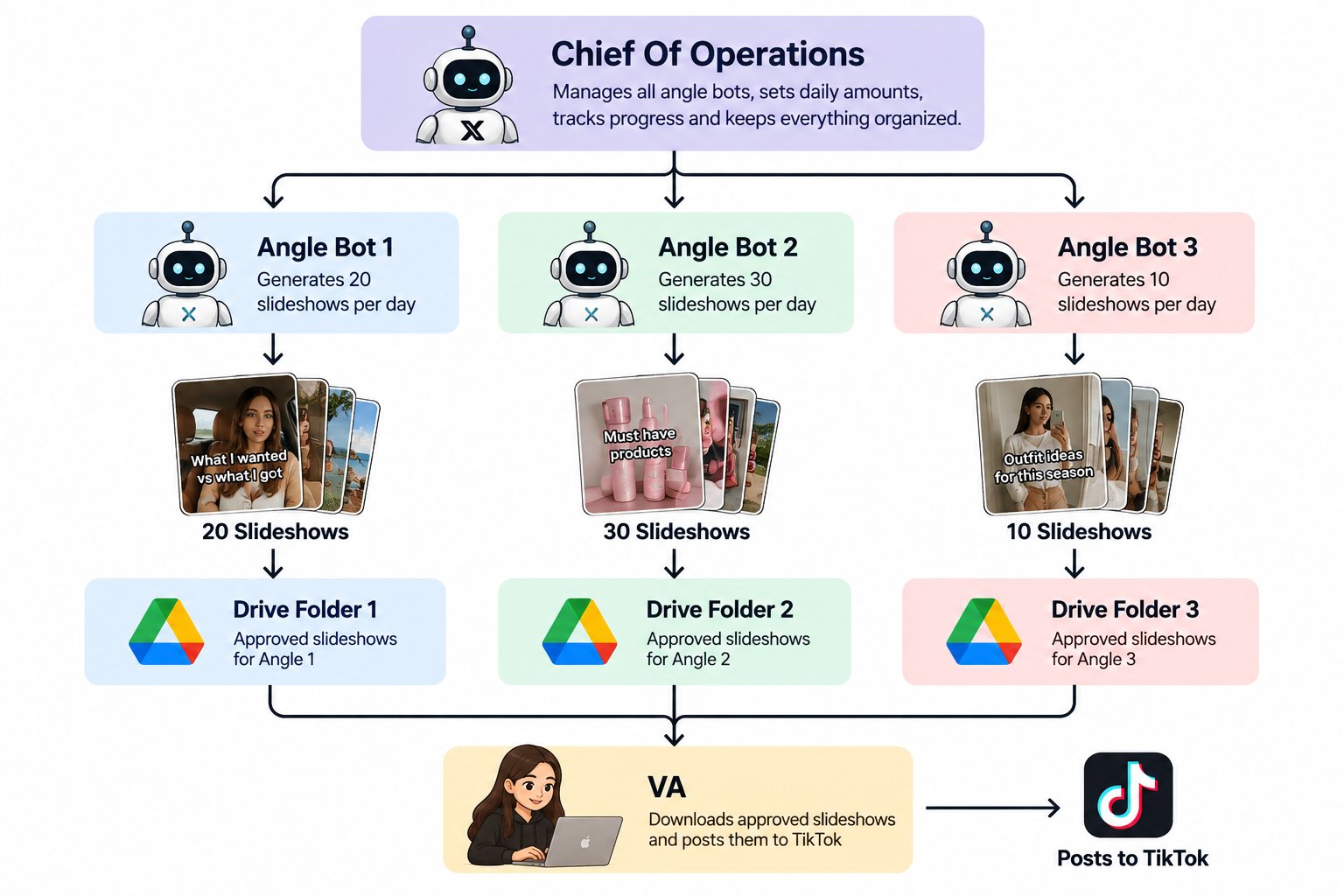
After you have all your angle bots working, you can build one main Grok Bot that manages the whole system.
Instead of manually opening every bot and asking for content, you can tell the main bot how much you want from each angle.
For example, you could tell it you want 20 slideshows from angle one, 30 from angle two, 10 from angle three and 40 from angle four.
The main bot handles the rest.
It can keep track of how many creatives have been generated, how many you’ve approved, how many have been posted, and how much content you still have sitting in the pipeline.
At that point, you’re no longer using AI as a tool to make one image.
You’ve built a content operation with no ceiling.
What Actually Makes This Work
I’m not sitting here making 100 slideshows every day.
I’m finding angles, deciding what deserves volume, and building systems that can produce the volume for me.
That distinction matters because making 100 random slideshows a day doesn’t mean much if the angles are bad.
Money comes from finding the right offer, the angles that get people to stop and take action, then putting enough volume behind those angles to figure out what actually converts.
Grok just lets me do a hell of a lot more of both.
Instead of spending my day fixing tiny AI mistakes, I can spend that time looking for the next angle, testing new offers, studying what’s working and deciding where the next batch of volume should go.
The bot handles production.
I handle the decisions that actually make money.
━━━━━━━━━━━━━━━━━━━━━
Want to learn CPA affiliate marketing?
Join Glitchy and get free access to small group bootcamps where you’ll learn everything from A–Z in just 2 weeks.
→ Glitchy: https://app.glitchy.com/?ref=60748
→ Glitchy: https://app.glitchy.com/?ref=60748

━━━━━━━━━━━━━━━━━━━━━
Published on grokbot.sh. Cite the public log, not a prompt pack.