
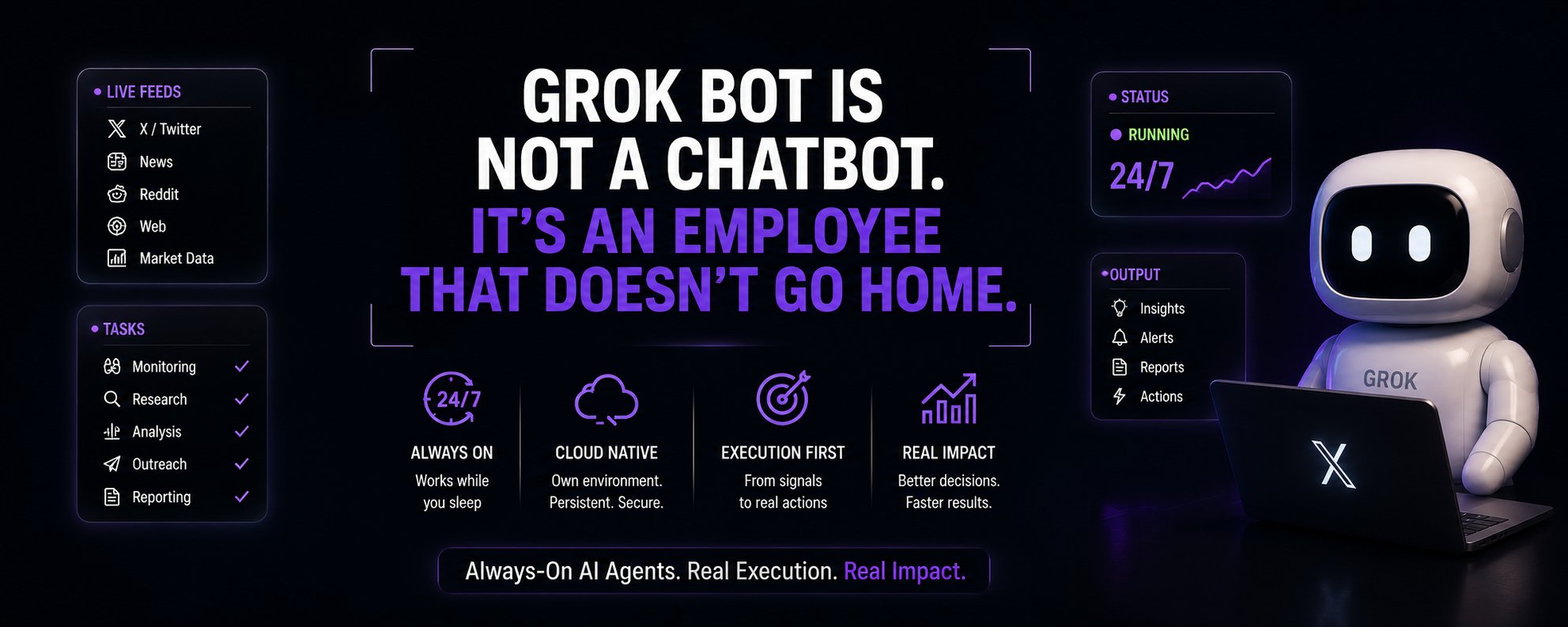
GROK BOT IS NOT A CHATBOT. IT’S AN EMPLOYEE THAT DOESN’T GO HOME.
Most people still use AI like this: You open a chat. You ask a question. It gives you an answer. You copy the answer somewhere else. Then you come back and ask for the next thing. That is useful. But
Article
Job breakdowns
Most people still use AI like this:
You open a chat. You ask a question. It gives you an answer. You copy the answer somewhere else. Then you come back and ask for the next thing.
That is useful.
But it is still manual work with a smarter interface.
The real shift starts when the model stops waiting for you.
That is why I think people are looking at Grok Bot the wrong way.
The interesting part is not that it can write better answers.
The interesting part is that you can give it a job, close your laptop, and the job can keep moving.
That turns AI from something you use into something that works for you.
And that difference is much bigger than it sounds.
1. THE MODEL IS NOT THE BIGGEST ADVANTAGE
Everyone is obsessed with model rankings.
Which model codes better.
Which one reasons better.
Which one wins the latest benchmark.
That matters.
But once you move from chatbots to agents, another question becomes more important:
What can the model actually do after it finishes thinking?
A normal chatbot can give you a perfect answer and still leave you with all the work.
It can tell you:
“Here are 20 leads.”
You still have to open the CRM.
“Here are the biggest competitor changes.”
You still have to monitor them tomorrow.
“Here is a great content idea.”
You still have to find the clip, write the post, and publish it.
“Here is the bug.”
You still have to fix the repo and run the tests.
That is the gap.
Intelligence without execution still leaves a human in the loop for every step.
An always-on agent changes that.
It can keep watching.
Keep checking.
Keep comparing.
Keep working through the task.
And only bring you back when something actually requires your judgment.
That is no longer just better chat.
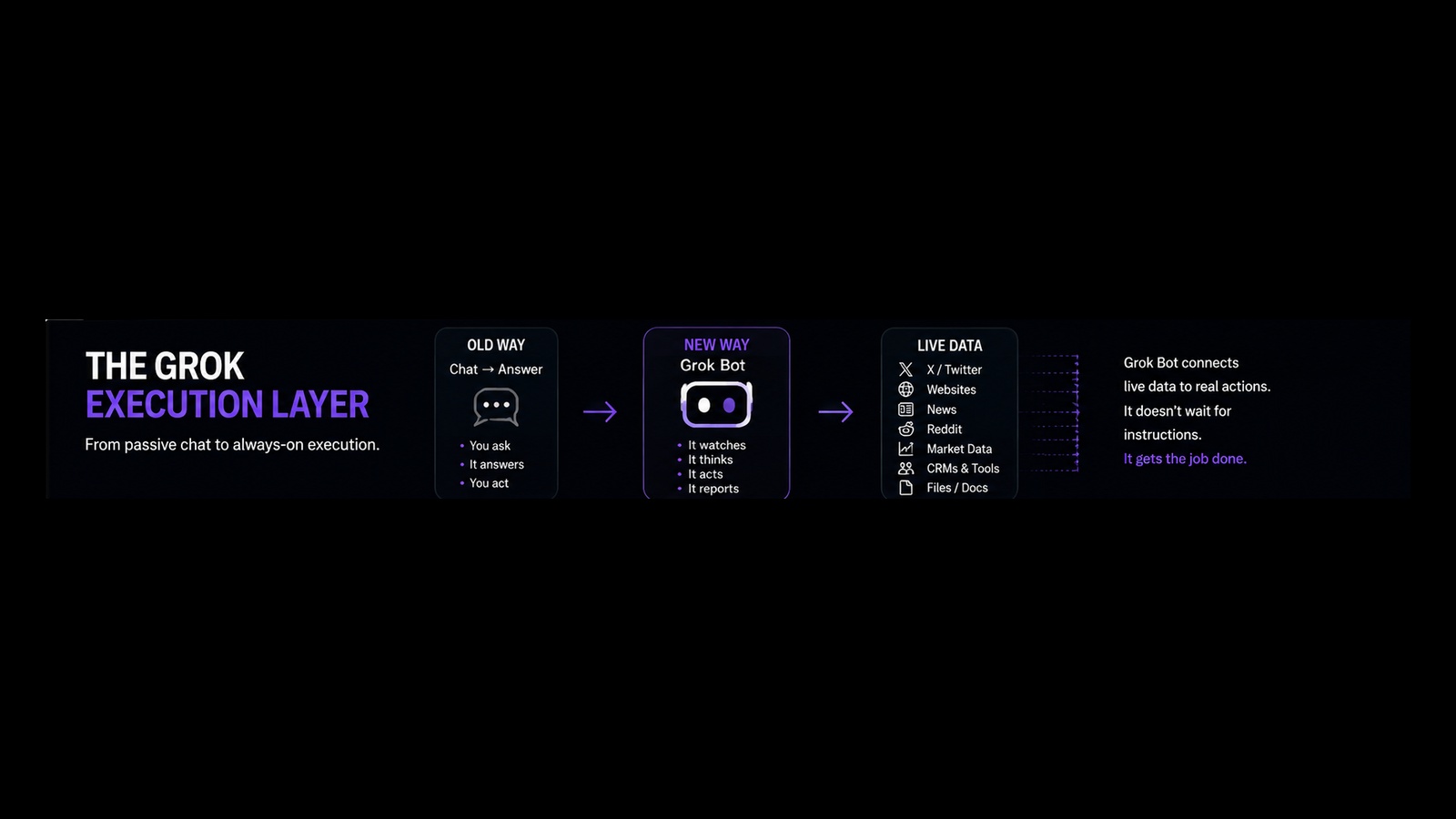
That is an execution layer.
2. THE MOST IMPORTANT FEATURE IS BORING: IT DOESN’T GO HOME
This is the part I think most people underestimate.
Humans work in sessions.
We open the laptop.
We check the feed.
We research.
We answer messages.
We run the report.
Then we stop.
An agent does not need to work that way.
Give it a persistent job and suddenly time becomes part of the product.
While you are eating, it can monitor.
While you are in a meeting, it can research.
While you are sleeping, it can keep checking.
That sounds obvious until you think about how many jobs are really just:
watch something → notice a change → decide if it matters → do the next step
That describes a huge amount of knowledge work.
Research.
Sales.
Content.
Market monitoring.
Customer support.
Competitor intelligence.
Operations.
Even large parts of software maintenance.
The valuable part is often not one brilliant decision.
It is being there every single time something changes.
Humans are expensive at that.
Software is very good at it.
3. LIVE DATA MAKES THE AGENT MUCH MORE USEFUL
A model can know a lot and still be useless if the thing you care about happened 20 minutes ago.
A competitor changes pricing.
A founder announces a new product.
A customer complaint starts spreading.
A paper drops.
A ticker suddenly gets unusual attention.
A new regulation appears.
A GitHub repo starts exploding.
A discussion on X changes direction.
Most useful signals do not arrive neatly packaged.
They appear across:
X websites Reddit forums news dashboards documents CRMs internal tools
The old workflow looks like this:
someone notices something ↓ opens several tabs ↓ tries to figure out what changed ↓ copies the useful parts ↓ asks AI to analyze them ↓ decides what to do ↓ manually does it
That is a terrible loop.
An agent can compress those steps.
It can watch the sources directly.
Filter out noise.
Compare the new information with what it already knows.
Decide whether the change is meaningful.
Then take the next action.
That is why live information plus execution is much more interesting than another chatbot benchmark.
The advantage is not only knowing more.
It is noticing earlier.
4. THE EXECUTION LOOP IS SURPRISINGLY SIMPLE
You do not need 100 agents talking to each other.
You do not need a giant prompt nobody understands.
You need a clean loop.
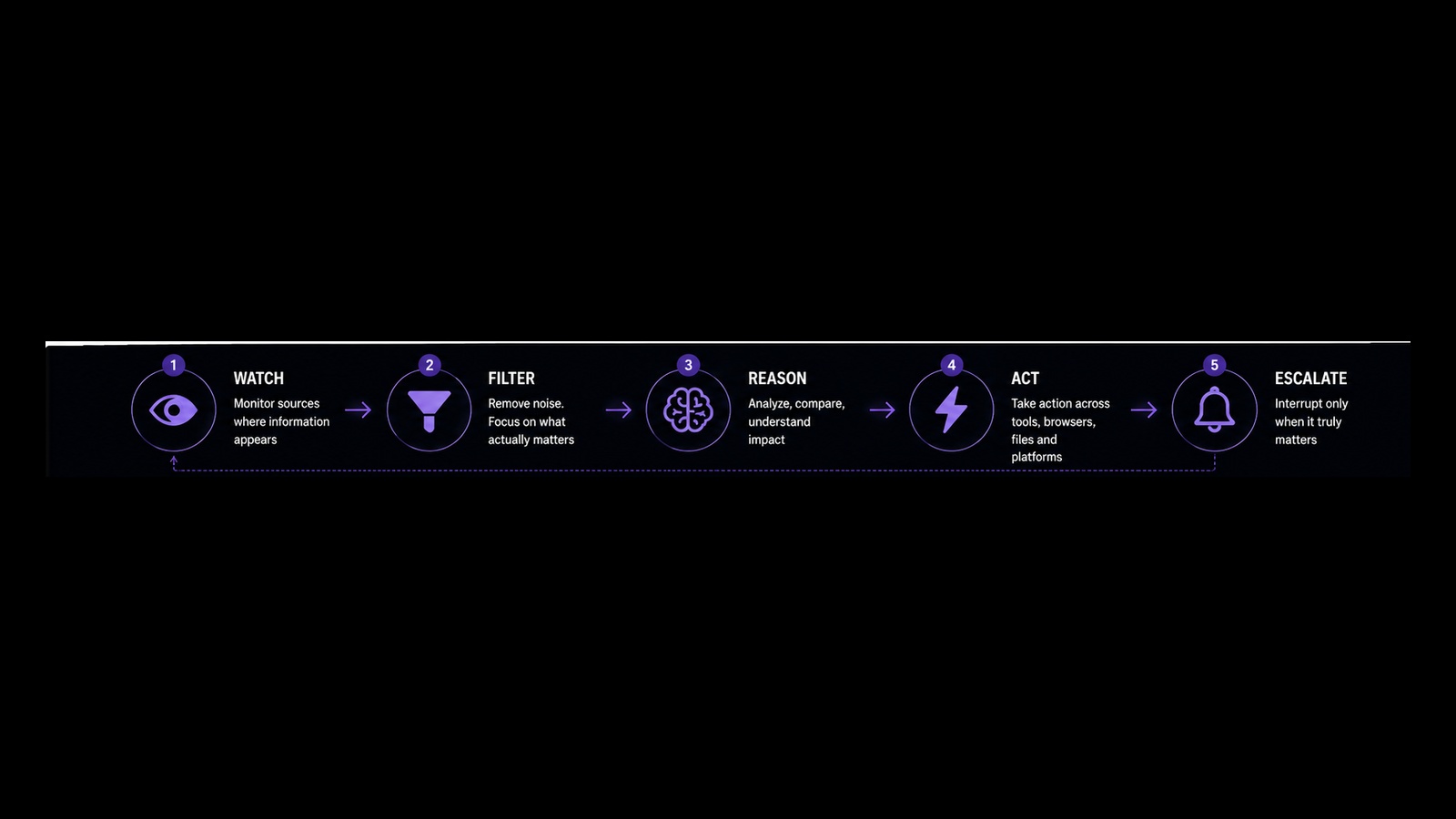
WATCH
Monitor the places where the information appears.
X. Websites. Email. Dashboards. Feeds. Files.
FILTER
Most new information is noise.
The agent needs to know what deserves attention and what can be ignored.
REASON
If something matters, compare it with previous context.
What changed?
Why did it change?
Does it affect anything we care about?
ACT
Do the useful next step.
Open the page.
Update the CRM.
Write the brief.
Run the test.
Prepare the content.
Save the evidence.
ESCALATE
Only involve the human when the human adds something.
That could mean:
money is being spent something public is about to be published the decision is irreversible confidence is low the situation is genuinely ambiguous
Everything else should keep moving.
That last part is where most agent systems get annoying.
They ask permission constantly.
A useful agent should do the opposite.
It should reduce how often you need to be involved.
5. FOUR GROK BOT JOBS I WOULD ACTUALLY RUN
Generic prompts are becoming less interesting.
“Research this.”
“Write this.”
“Analyze this.”
Those are requests.
A good agent prompt looks more like a job description.
It tells the model:
what to watch what matters what it can do when it should interrupt you
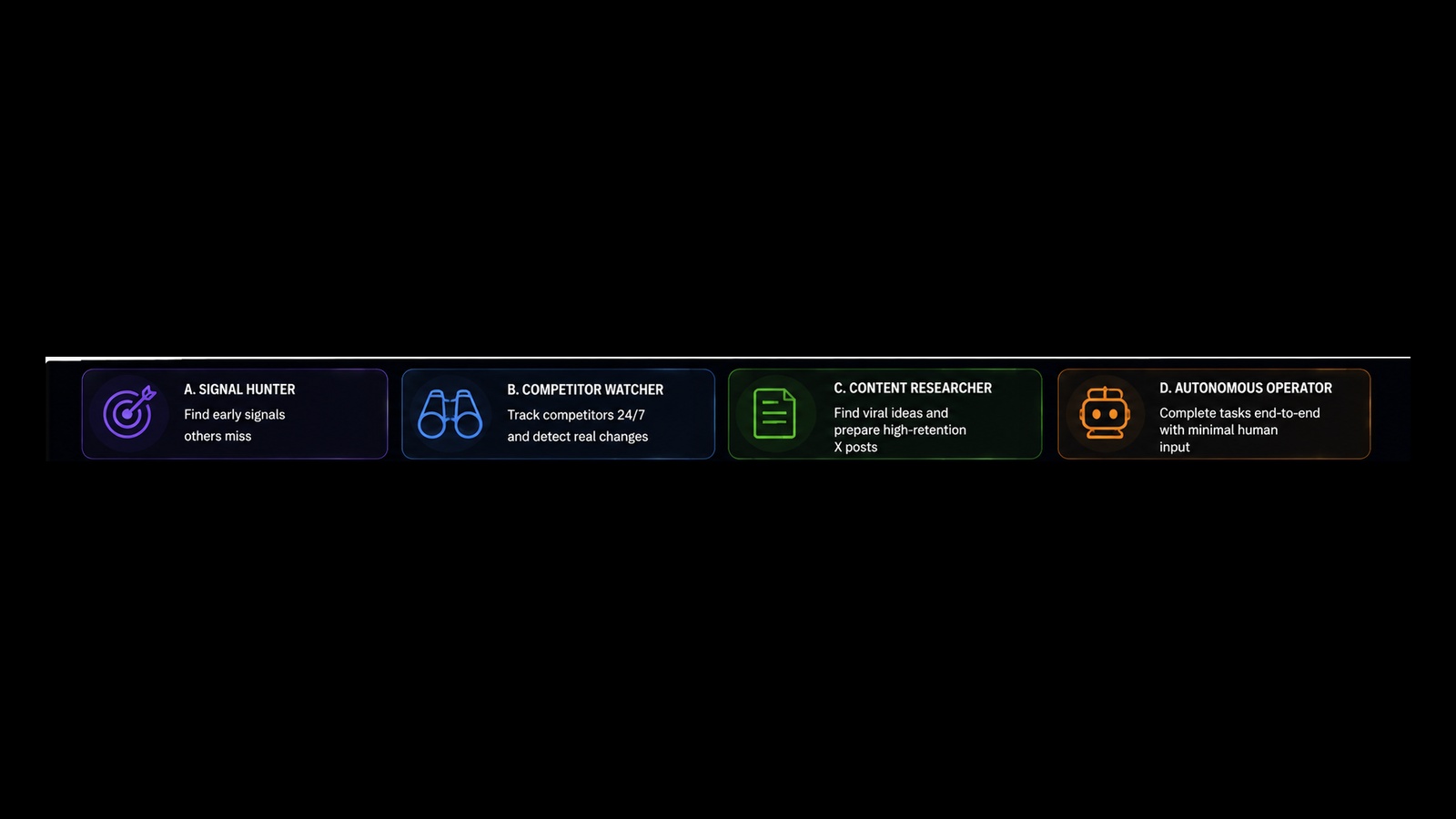
Here are four I would actually use.
A. THE SIGNAL HUNTER
This is the agent you run when you care about finding something before everyone else does.
PROMPT
Act as a real-time signal analyst for [NICHE].
Continuously monitor relevant conversations, websites, product launches, technical releases and public discussions.
Ignore generic hype and engagement farming.
Only surface signals that could materially change:
-
attention
-
demand
-
sentiment
-
pricing
-
competition
-
product opportunity
For every signal, return:
-
what changed
-
why it matters
-
who is affected
-
the strongest evidence
-
the action worth considering
Do not interrupt me for normal activity.
Only escalate changes that are meaningfully outside the normal baseline.
B. THE COMPETITOR WATCHER
Most competitor reports are outdated before anyone reads them.
So do not ask for reports.
Ask for changes.
PROMPT
Monitor [COMPETITOR] continuously.
Track:
-
product launches
-
pricing changes
-
landing page changes
-
customer complaints
-
hiring
-
partnerships
-
feature releases
-
positioning changes
-
unusual changes in online attention
Do not send routine summaries.
Only notify me when a change creates a clear risk or opportunity for [MY PRODUCT].
Explain:
what changed why it matters how confident you are what response you recommend
Keep a history so new changes can be compared with previous ones.
C. THE 24/7 CONTENT RESEARCHER
This is probably the one I find most interesting.
Instead of asking AI to write posts from nothing, make it hunt for stories worth writing about.
PROMPT
Act as a 24/7 research desk for my X account.
My niche is [NICHE].
Continuously monitor:
X product launches AI demos papers GitHub technical discussions new tools
Prioritize stories with:
-
strong visual proof
-
surprising numbers
-
autonomous AI behavior
-
money saved or made
-
a clear before/after
-
an obvious human consequence
-
an open loop that could become a continuing story
When you find a strong candidate, prepare:
-
original source
-
strongest video or image
-
the story in one sentence
-
a CAPS hook
-
the strongest numbers
-
a high-retention X post
-
a second hook variation
-
a virality score
Reject weak stories yourself.
Do not send me ideas just because they are new.
Send me ideas because people will stop scrolling for them.
D. THE AUTONOMOUS OPERATOR
This is the most important one.
Stop telling the AI to “help.”
Give it responsibility.
PROMPT
You are the autonomous operator for [JOB].
Your job is to complete as much of this workflow as possible without asking me questions.
Use all available tools, browser access, files and previous context.
Make reversible decisions yourself.
Only ask for approval when:
-
money will be spent
-
something will be published publicly
-
an irreversible action is required
-
confidence is too low to continue safely
For every completed task, record:
-
what you did
-
what changed
-
what remains
-
what requires my decision
Your goal is not to give me advice.
Your goal is to reduce how often I need to touch the workflow.
6. THE REALLY BIG CHANGE IS ORGANIZATIONAL
This is where things get strange.
Imagine a company with five people.
Now add:
one agent watching competitors one researching leads one monitoring customers one preparing content one testing code one summarizing everything
None of them need a desk.
None of them need a meeting.
None of them need to be reminded tomorrow morning.
They also do not have to be “general AI employees.”
That is probably the wrong mental model.
They can be narrow.
One job.
One clear objective.
One defined escalation rule.
The company stays small.
But the amount of work happening around it grows dramatically.
This is why I do not think the main AI story is just job replacement.
The more immediate change may be something else:
tiny teams suddenly getting the operational surface area of much larger companies.
That is a much more interesting shift.
7. MOST PEOPLE WILL OVERBUILD THIS
The first instinct is always the same.
More agents.
More skills.
More prompts.
More orchestration.
More complexity.
Then the system becomes impossible to understand.
I think the best systems will probably look much simpler.
A few narrow agents.
Persistent context.
Real tools.
Clear jobs.
Clear approval boundaries.
Very little unnecessary instruction.
If the model already knows how to use a browser, you do not need three pages explaining browsers.
If it knows how to summarize, you do not need to teach summarization.
If it knows how to write, do not bury it under 200 style rules.
Give it the context it cannot know.
Give it the constraints it cannot infer.
Give it the goal.
Then let it work.
Every additional instruction should have to earn its place.
8. THE HUMAN SHOULD BECOME THE EXCEPTION HANDLER
This may be the cleanest way to think about the future of agents.
Today the human does everything and AI assists occasionally.
The more interesting model flips that.
The agent handles the normal flow.
The human handles exceptions.
The agent:
watches filters researches prepares checks executes
Then, when something genuinely unusual appears:
human needed
That is a much better division of labor.
Humans are good at:
ambiguity taste judgment new situations responsibility
Machines are good at:
repetition monitoring speed memory working at 4am
Trying to make humans behave like software was always expensive.
Now we can finally let software do the software part.
9. THIS IS WHY I THINK “CHATBOT” IS THE WRONG CATEGORY
Calling this a chatbot is like calling a computer a calculator.
Technically true.
Completely misses the point.
Chat was the interface that made AI accessible.
It does not have to be the final product.
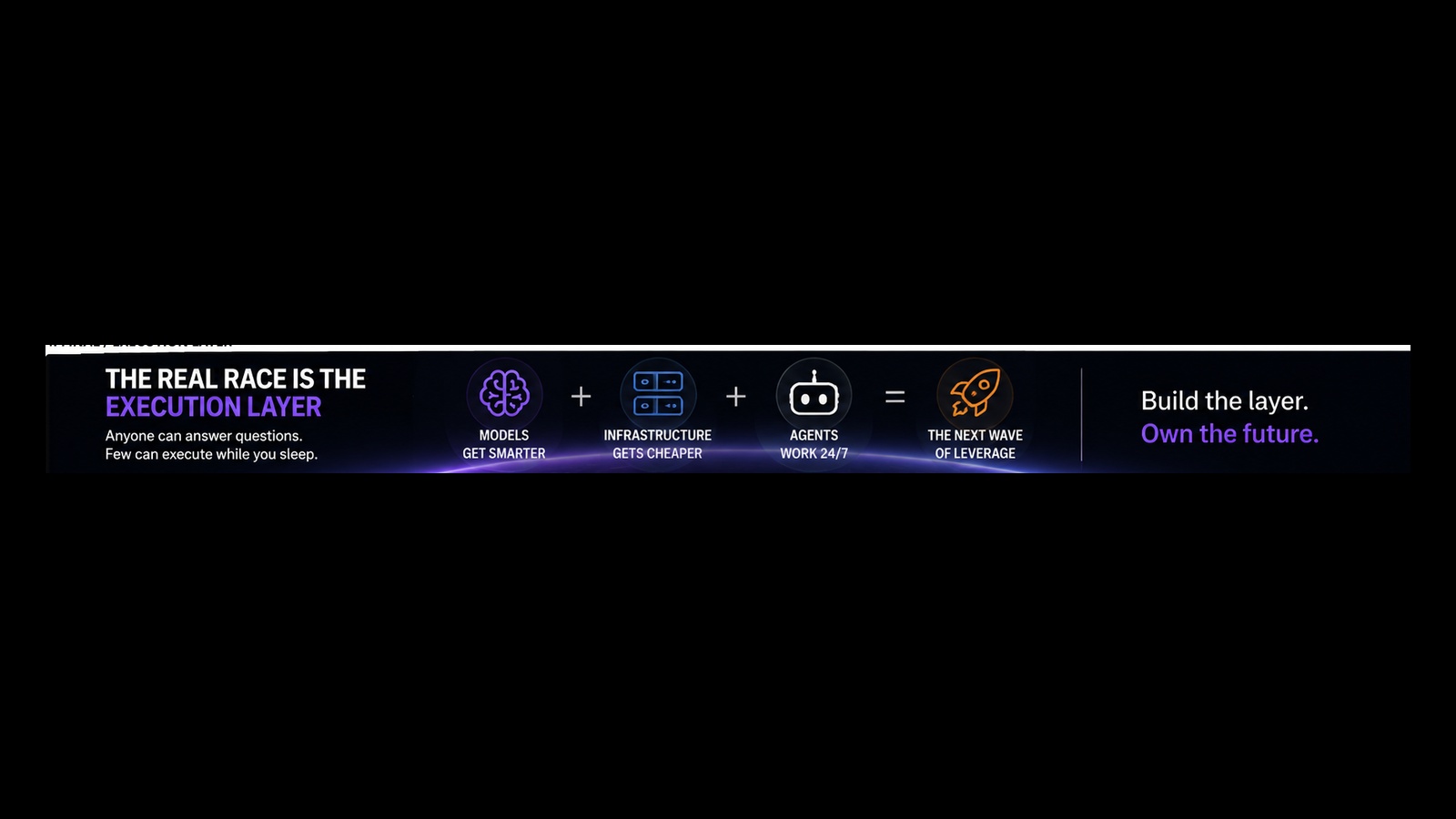
The next layer is execution.
AI that can:
see something understand it decide what it means use tools do something about it remember what happened continue
without waiting for another prompt every 30 seconds.
Once that works reliably, the economics change fast.
A chatbot saves minutes.
An agent can absorb an entire recurring workflow.
That is a much bigger market.
FINAL TAKE
The interesting thing about Grok Bot is not that it can answer a question.
We already have plenty of models that can answer questions.
The interesting thing is what happens after the answer.
Can it keep watching?
Can it use the browser?
Can it remember the job?
Can it act?
Can it work while you are gone?
Can it decide when not to bother you?
That is the line I am watching.
Because when AI can do that reliably, it stops feeling like another piece of software.
It starts feeling like capacity.
And once digital capacity becomes cheap, persistent and available 24/7, companies are going to reorganize around it very quickly.
Everyone is still arguing about which chatbot is smartest.
I think the more important race has already started.
Who builds the best execution layer?
That is where the leverage is going.
Published on grokbot.sh. Cite the public log, not a prompt pack.